Daystar Quark Chromosphere Solar Filter
Description
- Convert your refractor into an H-alpha telescope!
- Integrated 4.2X telecentric barlow lens
- 0.3Å to 0.5Å Etalon
- 21mm clear filter aperture
Free International Shipping
The Daystar Quark Chromosphere is the first Hydrogen-Alpha "eyepiece" filter that allows users to convert a standard refractor telescope into a high-fidelity solar observatory. Unlike traditional solar telescopes, the Quark is an all-in-one component that combines a 4.2x telecentric Barlow, a 12mm blocking filter, a 21mm clear filter aperture and a high-grade etalon into a single chassis.
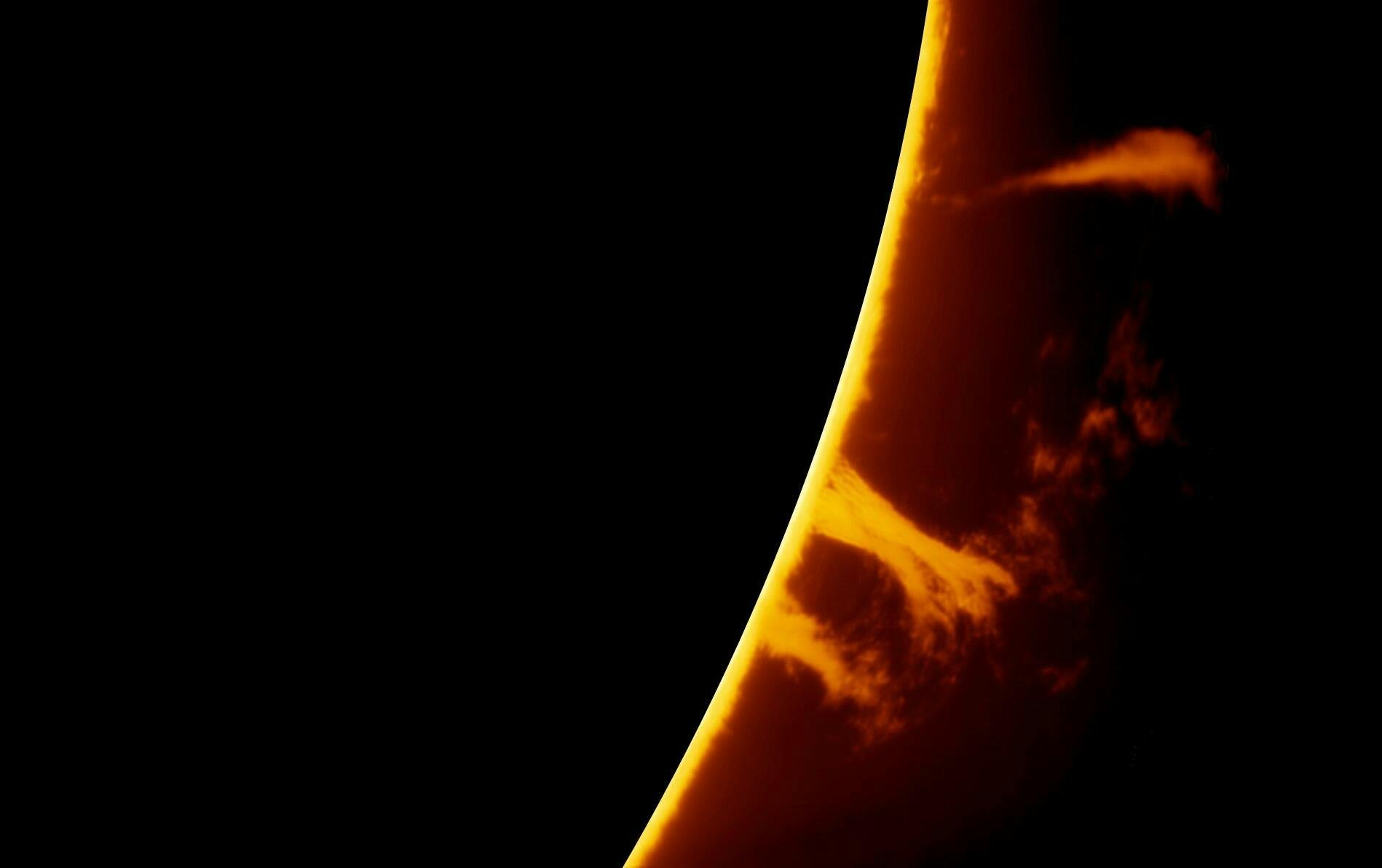
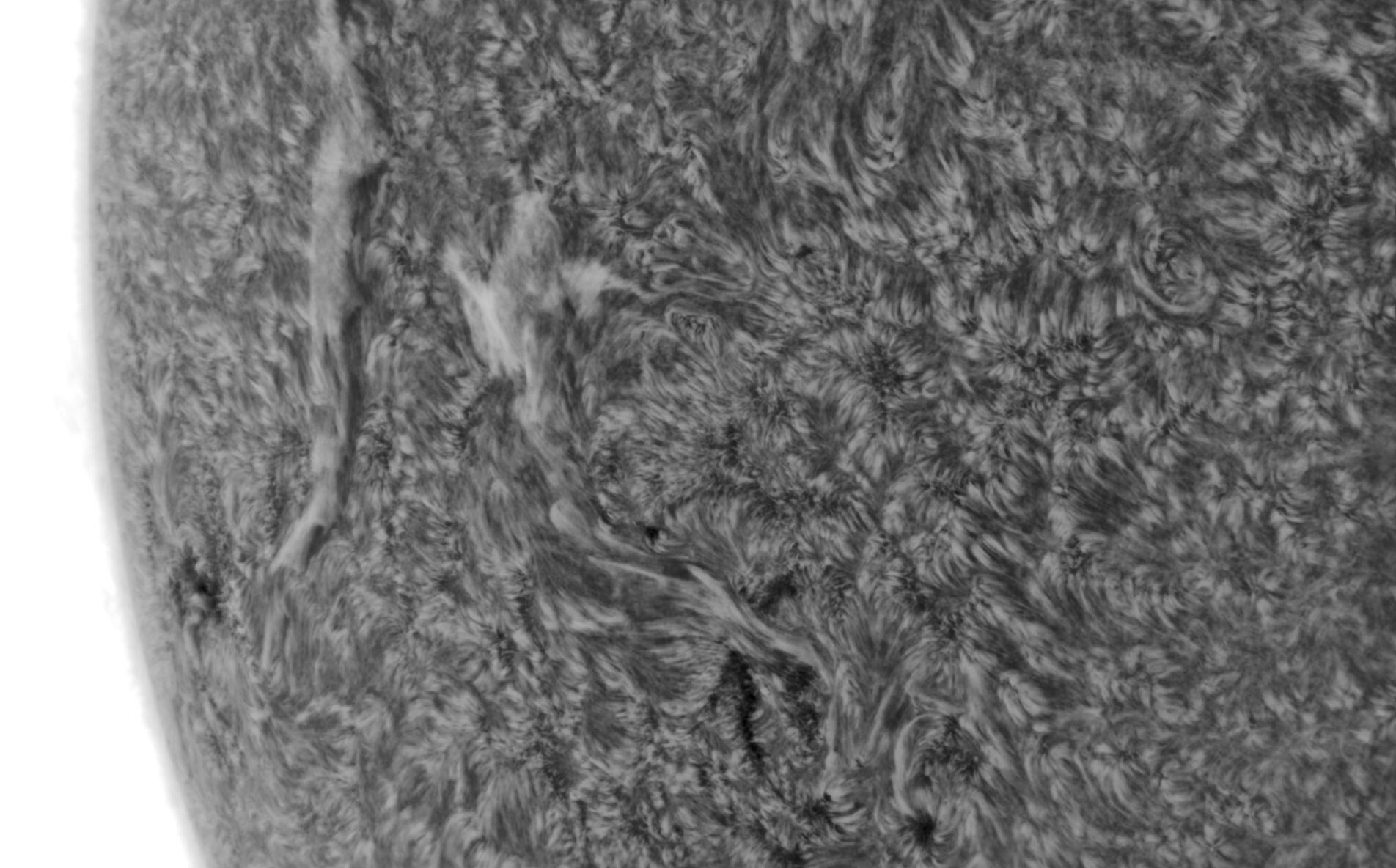
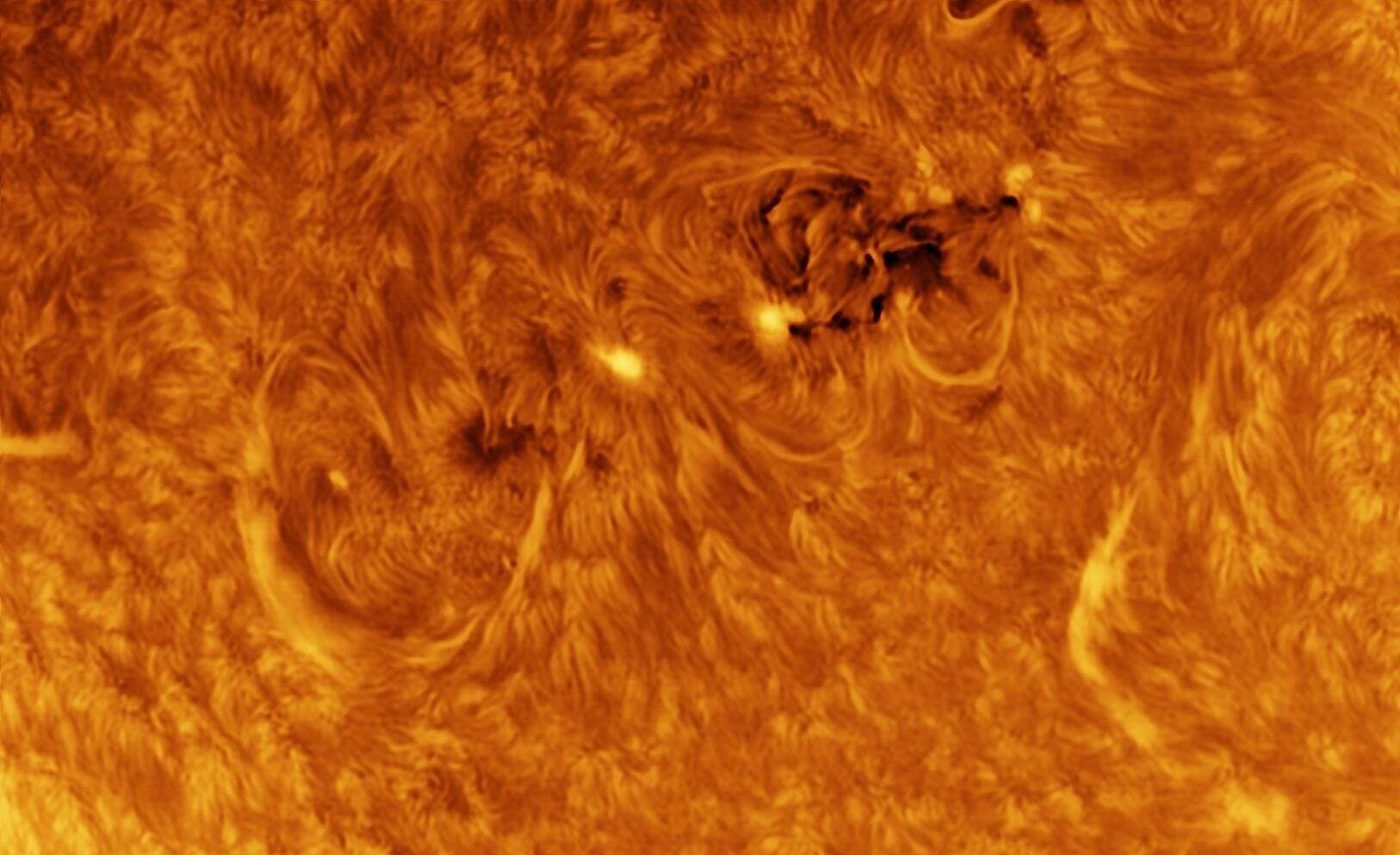
The Chromosphere model features a narrower bandpass (typically 0.3Å – 0.5Å), specifically tuned to reveal high-contrast surface details, including active regions, filaments, and super-granulation, while still maintaining the ability to view prominences on the solar limb.
The Quark’s built-in 4.2× telecentric lens is custom-engineered to optimize performance with the internal etalon. It increases your telescope’s effective focal ratio to the ideal F/15–F/30 range, ensuring the etalon operates at its designed precision.
By delivering a truly telecentric light path, where light rays strike the etalon in parallel, the Quark maintains uniform spectral performance across the entire field. The result: consistent, edge-to-edge contrast and reliable chromosphere details.
The Quark features electronically controlled thermal tuning, using a precision heater to expand or contract the etalon cavity with Angstrom-level accuracy. This ensures stable, repeatable tuning without the drift associated with mechanical systems.
By adjusting the tuning knob, you can shift the passband slightly toward the red or blue wing of H-alpha. This "Doppler tuning" reveals motion in high-velocity solar plasma, letting you highlight structures moving toward or away from the observer and adding depth and dynamism to filaments, prominences, and active regions.
The Quark is designed to integrate seamlessly with a wide range of refractors and eyepieces. The upper barrel accepts any standard 1.25" eyepiece, while the nosepiece fits both 1.25" and 2" focusers or diagonals, making setup straightforward on virtually any refractor.
Optimized for instruments in the F/4–F/8 range, the Quark automatically brings them to the ideal solar H-alpha operating ratio. Refractors up to about 450 mm focal length can deliver full-disk views, while larger refractors—with no aperture restriction—provide higher-magnification, high-resolution solar detail.
For power, the Quark uses a standard Micro-USB input (5V, 1.5A) and can run from the supplied wall adapter or a portable USB battery pack, making it easy to use both in the backyard and in the field.
Proper heat management is essential. Incorrect use can damage the Quark or your telescope.
The Quark is a rear-mounted H-alpha filter, meaning all incoming solar energy first passes through your telescope before reaching the unit. To prevent overheating of internal optics, appropriate energy rejection is mandatory.
Requirement: Simply put the Quark into the diagonal. No other heat management is required unless you do long tracking sessions, in which case use an UV/IR cut filter.
Requirement: Use a UV/IR Cut Filter.
Placement: Thread the UV/IR filter onto the diagonal’s nosepiece, positioned ahead of the Quark.
Function: Reflects ultraviolet and infrared energy, reducing thermal load so the Quark operates safely.
Without a front ERF on large apertures, concentrated solar energy can crack the Quark’s internal optics or damage diagonal mirrors.
Requirement: Use a Front-Mounted Energy Rejection Filter (ERF).
Placement: Installed over the telescope’s objective lens.
Function: Rejects heat before it enters the tube, preventing damaging heat concentration at focus.
Petzval refractors and any telescope with rear-mounted lens elements (e.g., reducers, correctors, flatteners built into the OTA) require additional caution. These designs place optics near the focal plane, where solar energy is highly concentrated.
Risk: Rear lenses can overheat, delaminate, or crack under solar load.
Requirement: Regardless of its aperture, contact us or do some researches to see if your specific telescope must use a front-mounted ERF instead of the rear-mounted UV/IR cut filter.
Reason: A UV/IR Cut filter placed near the diagonal is not sufficient, because the rear lens group absorbs the concentrated heat before the filter can reject it.

The Daystar Quark Chromosphere is tuned to the Hydrogen-Alpha line (656.3 nm), allowing you to see the "living" layer of the Sun just above the white-light surface. Below are the specific features you will observe.
The primary strength of the Chromosphere model is its high contrast on the solar face.
Despite being tuned for the surface, the Chromosphere model offers spectacular views of the solar edge.
Because the Quark allows for Doppler Tuning, you can visualize motion in 3D:
| Bandpass | ~0.3Å – 0.5Å (Angstroms) |
| Clear Aperture | 21mm |
| Blocking Filter | 12mm |
| Barlow Factor | 4.2x Telecentric |
| Focal Ratio Limit | Best performance at output F/15 to F/30 |
| Full Disk Capacity | Possible on scopes with FL < 450mm |
| Power Input | USB 5V, 1.5A min |
| Power Connector | Micro-USB |
| Telescope Interface | 1.25" or 2" Combo Nosepiece |
| Eyepiece Holder | 1.25" with brass compression ring |
| Weight | ~0.4 kg (0.9 lbs) |
Daystar Quark Filter
× 1
Twist-Case
× 1
Twist-Case
× 1
90-240V AC Wall Adapter
× 1
International Plug Adapters
× 1
USB-B to USB-Micro Cable
× 1
Eclipse Glasses
× 1