
Chroma
Chroma filters are made for people who have already eliminated every other variable in their imaging and want the filter to stop being one. Hard-coated sputtered layers on high-quality substrates give very steep transitions, excellent blocking and — the characteristic imagers notice most — an absence of halos around bright stars. David Astro carries Chroma products in Canada, stocked in Canada and shipped worldwide.
These are premium components and worth specifying carefully. Tell us your camera, wheel and focal ratio and we will size and select precisely.


Prix d'origine
$275.00
-
Prix d'origine
$830.00
Prix d'origine
$275.00
-
$830.00
$275.00
-
$830.00
Prix actuel
$275.00
Chroma Filtre SII - 8nm
Options available
Les filtres SII isolent l'émission spectrale d'atomes de soufre ionisés individuellement, également courants dans les nébuleuses. L'émission se fa...
Afficher tous les détails
Prix d'origine
$275.00
-
Prix d'origine
$830.00
Prix d'origine
$275.00
-
$830.00
$275.00
-
$830.00
Prix actuel
$275.00


Prix d'origine
$575.00
-
Prix d'origine
$1,550.00
Prix d'origine
$575.00
-
$1,550.00
$575.00
-
$1,550.00
Prix actuel
$575.00
Chroma Filtre SII Optimisé pour f/3 - 3nm
Options available
Les filtres SII isolent l'émission spectrale d'atomes de soufre ionisés individuellement, également courants dans les nébuleuses. L'émission se fa...
Afficher tous les détails
Prix d'origine
$575.00
-
Prix d'origine
$1,550.00
Prix d'origine
$575.00
-
$1,550.00
$575.00
-
$1,550.00
Prix actuel
$575.00
Prix d'origine
$275.00
-
Prix d'origine
$725.00
Prix d'origine
$275.00
-
$725.00
$275.00
-
$725.00
Prix actuel
$275.00
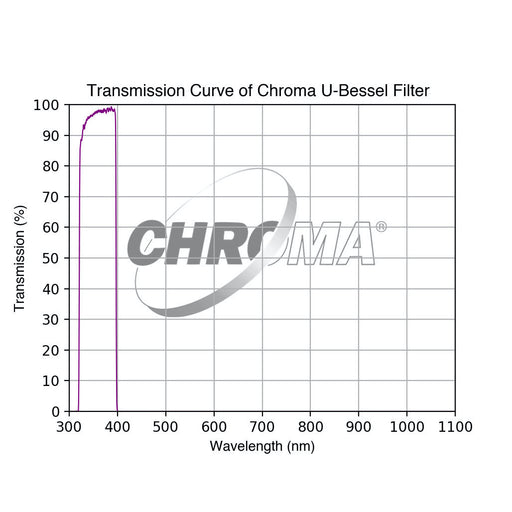
Chroma Filtre U-Bessel
Options available
Filtre photométrique UV de la série UVBRI Filtres conçus pour être utilisés avec CCD et pour f/4.0 ou moins Pas de reflets entraînant des disto...
Afficher tous les détails
Prix d'origine
$275.00
-
Prix d'origine
$725.00
Prix d'origine
$275.00
-
$725.00
$275.00
-
$725.00
Prix actuel
$275.00

Prix d'origine
$1,175.00
-
Prix d'origine
$3,425.00
Prix d'origine
$1,175.00
-
$3,425.00
$1,175.00
-
$3,425.00
Prix actuel
$1,175.00
Ensemble de filtres Chroma UBVRI
Options available
Jeu de filtres UBVRI pour l'imagerie photométrique Filtres conçus pour être utilisés avec CCD et pour f/4.0 ou moins Pas de reflets entraînant ...
Afficher tous les détails
Prix d'origine
$1,175.00
-
Prix d'origine
$3,425.00
Prix d'origine
$1,175.00
-
$3,425.00
$1,175.00
-
$3,425.00
Prix actuel
$1,175.00
Prix d'origine
$275.00
-
Prix d'origine
$725.00
Prix d'origine
$275.00
-
$725.00
$275.00
-
$725.00
Prix actuel
$275.00
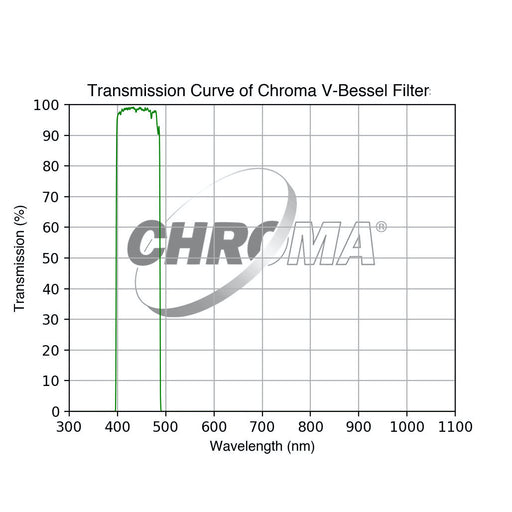
Chroma Filtre V-Bessel
Options available
Filtre photométrique vert (Visible) de la série UVBRI Filtres conçus pour être utilisés avec CCD et pour f/4.0 ou moins Pas de reflets entraîna...
Afficher tous les détails
Prix d'origine
$275.00
-
Prix d'origine
$725.00
Prix d'origine
$275.00
-
$725.00
$275.00
-
$725.00
Prix actuel
$275.00