
Chroma
Chroma filters are made for people who have already eliminated every other variable in their imaging and want the filter to stop being one. Hard-coated sputtered layers on high-quality substrates give very steep transitions, excellent blocking and — the characteristic imagers notice most — an absence of halos around bright stars. David Astro carries Chroma products in Canada, stocked in Canada and shipped worldwide.
These are premium components and worth specifying carefully. Tell us your camera, wheel and focal ratio and we will size and select precisely.
Original price
$275.00 USD
-
Original price
$725.00 USD
Original price
$275.00 USD
-
$725.00 USD
$275.00 USD
-
$725.00 USD
Current price
$275.00 USD
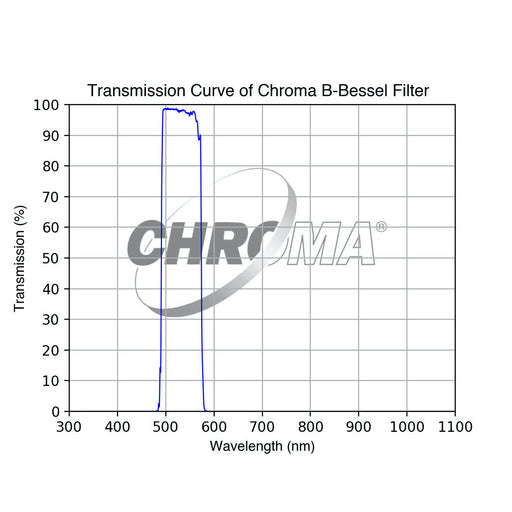
Chroma B-Bessell Filter
Standard B-Bessell photometric filter for UBVRI measurements 3.0 mm thick substrate, parfocal with other Chroma astronomy filters Transmitted wave...
View full details
Original price
$275.00 USD
-
Original price
$725.00 USD
Original price
$275.00 USD
-
$725.00 USD
$275.00 USD
-
$725.00 USD
Current price
$275.00 USD
Original price
$150.00 USD
-
Original price
$500.00 USD
Original price
$150.00 USD
-
$500.00 USD
$150.00 USD
-
$500.00 USD
Current price
$150.00 USD
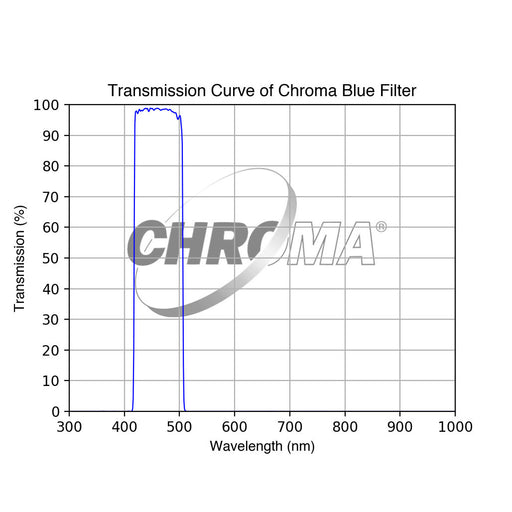
Chroma Blue Filter
Blue broadband filter for LRGB color imaging 3.0 mm thick substrate, parfocal with other Chroma astronomy filters Transmitted wavefront better tha...
View full details
Original price
$150.00 USD
-
Original price
$500.00 USD
Original price
$150.00 USD
-
$500.00 USD
$150.00 USD
-
$500.00 USD
Current price
$150.00 USD
Original price
$130.00 USD
-
Original price
$375.00 USD
Original price
$130.00 USD
-
$375.00 USD
$130.00 USD
-
$375.00 USD
Current price
$130.00 USD
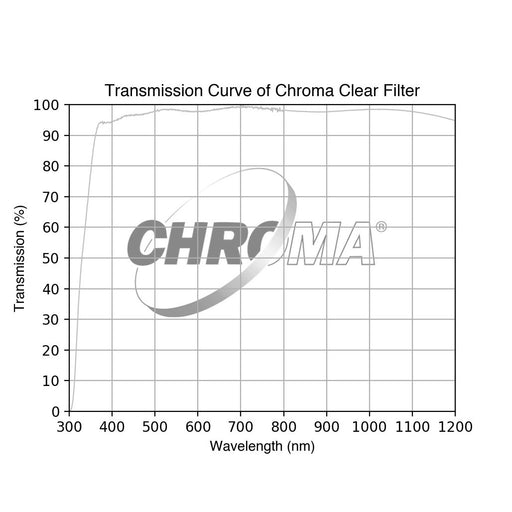
Chroma Clear Filter
Maintains parfocal focus with other 3.0mm Chroma filters Precision 3.0 mm glass substrate thickness Transmitted wavefront better than 0.25 waves/i...
View full details
Original price
$130.00 USD
-
Original price
$375.00 USD
Original price
$130.00 USD
-
$375.00 USD
$130.00 USD
-
$375.00 USD
Current price
$130.00 USD
Original price
$150.00 USD
-
Original price
$500.00 USD
Original price
$150.00 USD
-
$500.00 USD
$150.00 USD
-
$500.00 USD
Current price
$150.00 USD
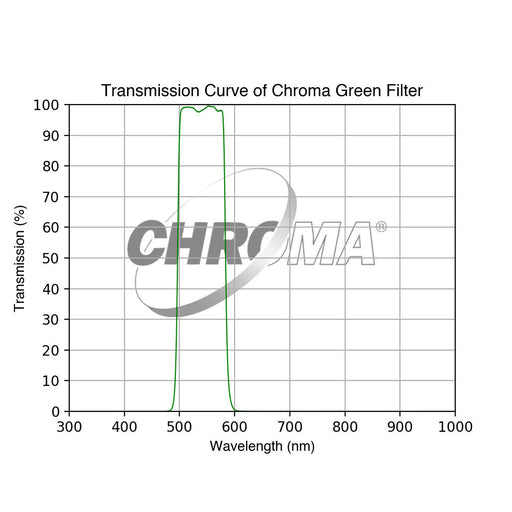
Chroma Green Filter
Captures the green portion of the visible spectrum for LRGB imaging 3.0 mm thick glass substrate ensures parfocal performance with other Chroma fi...
View full details
Original price
$150.00 USD
-
Original price
$500.00 USD
Original price
$150.00 USD
-
$500.00 USD
$150.00 USD
-
$500.00 USD
Current price
$150.00 USD
Original price
$575.00 USD
-
Original price
$1,550.00 USD
Original price
$575.00 USD
-
$1,550.00 USD
$575.00 USD
-
$1,550.00 USD
Current price
$575.00 USD
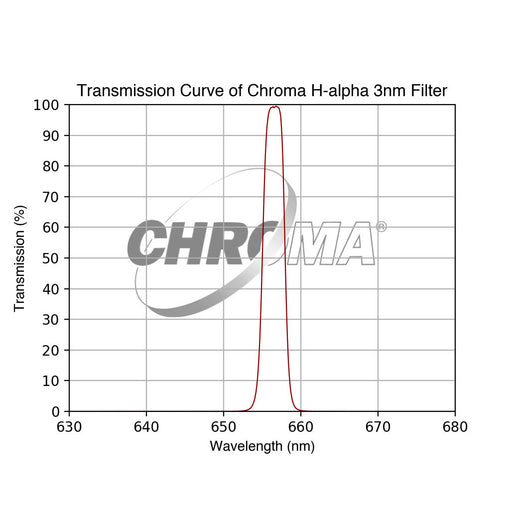
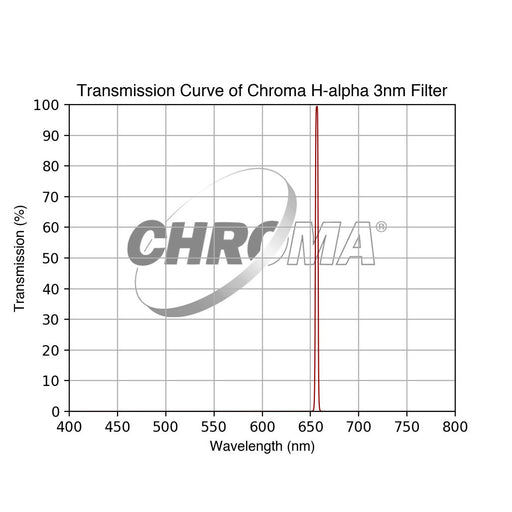
Chroma H-alpha Filter - 3nm
Isolates the 656.3 nm Hydrogen-alpha emission line 3 nm bandpass for high contrast against skyglow and light pollution Designed for imaging system...
View full details
Original price
$575.00 USD
-
Original price
$1,550.00 USD
Original price
$575.00 USD
-
$1,550.00 USD
$575.00 USD
-
$1,550.00 USD
Current price
$575.00 USD
Original price
$460.00 USD
-
Original price
$1,380.00 USD
Original price
$460.00 USD
-
$1,380.00 USD
$460.00 USD
-
$1,380.00 USD
Current price
$460.00 USD
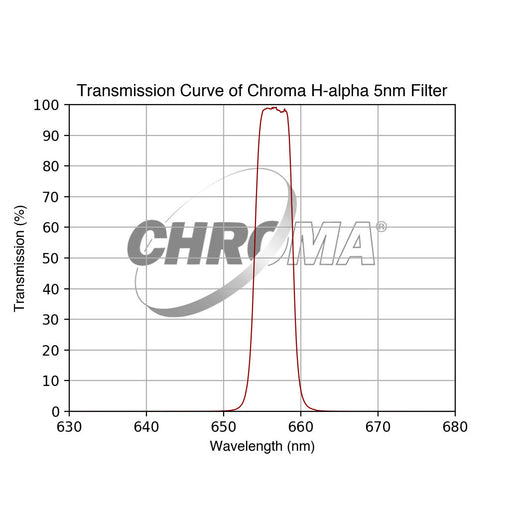
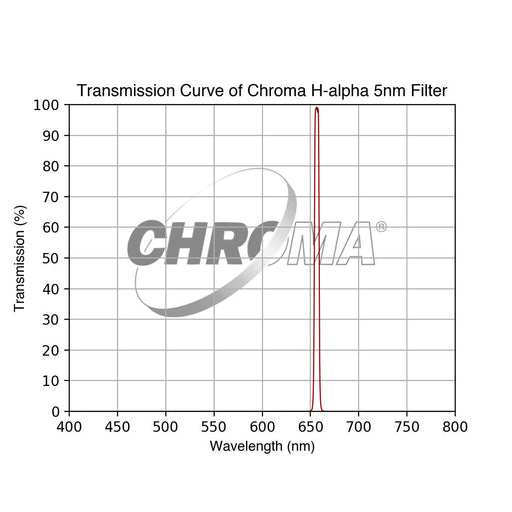
Chroma H-alpha Filter - 5nm
5nm Bandwidth (FWHM) Centered on the 656.3 nm H-alpha Emission Line Designed for f/4.0 or Slower Telescopes 3.0 mm Thick Parfocal Substrate Transm...
View full details
Original price
$460.00 USD
-
Original price
$1,380.00 USD
Original price
$460.00 USD
-
$1,380.00 USD
$460.00 USD
-
$1,380.00 USD
Current price
$460.00 USD
Original price
$275.00 USD
-
Original price
$830.00 USD
Original price
$275.00 USD
-
$830.00 USD
$275.00 USD
-
$830.00 USD
Current price
$275.00 USD
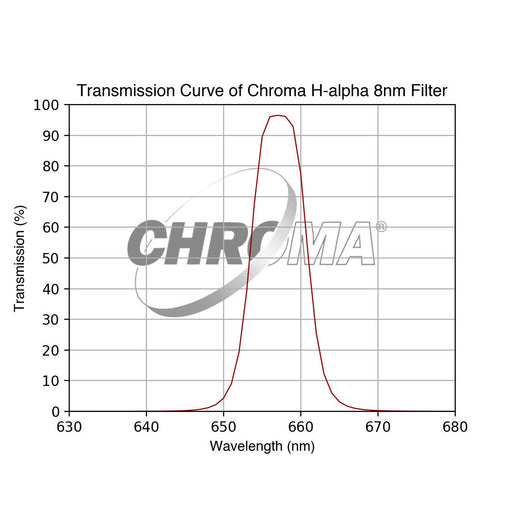
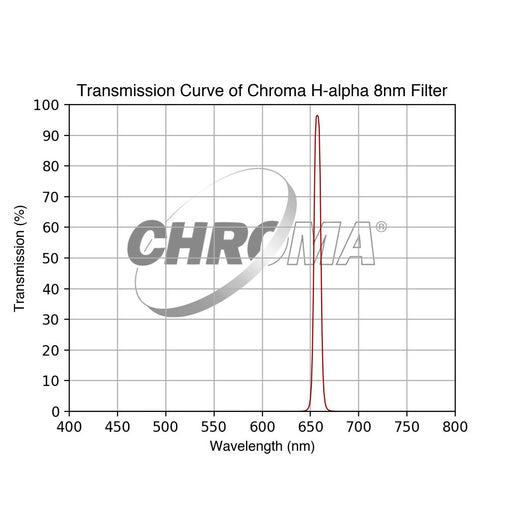
Chroma H-alpha Filter - 8nm
8nm Bandwidth (FWHM) Centered on 656.3 nm H-alpha Line 3.0 mm Parfocal Substrate Durable Sputtered Hard Coatings Transmitted Wavefront Better Than...
View full details
Original price
$275.00 USD
-
Original price
$830.00 USD
Original price
$275.00 USD
-
$830.00 USD
$275.00 USD
-
$830.00 USD
Current price
$275.00 USD
Original price
$575.00 USD
-
Original price
$1,550.00 USD
Original price
$575.00 USD
-
$1,550.00 USD
$575.00 USD
-
$1,550.00 USD
Current price
$575.00 USD
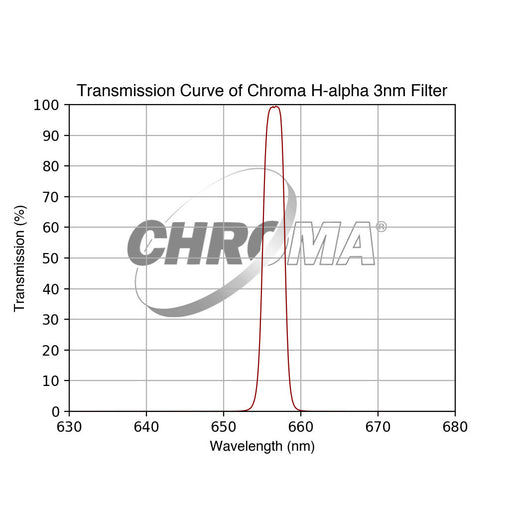
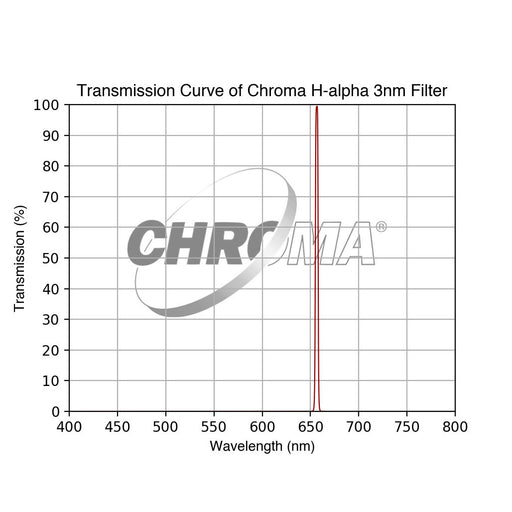
Chroma H-alpha Filter Optimized for f/3 - 3nm
Isolates the 656.3 nm Hydrogen-alpha emission line 3 nm bandpass for maximum contrast Optimized for f/2.8 to f/3.6 optical systems Peak transmissi...
View full details
Original price
$575.00 USD
-
Original price
$1,550.00 USD
Original price
$575.00 USD
-
$1,550.00 USD
$575.00 USD
-
$1,550.00 USD
Current price
$575.00 USD
Original price
$575.00 USD
-
Original price
$1,550.00 USD
Original price
$575.00 USD
-
$1,550.00 USD
$575.00 USD
-
$1,550.00 USD
Current price
$575.00 USD
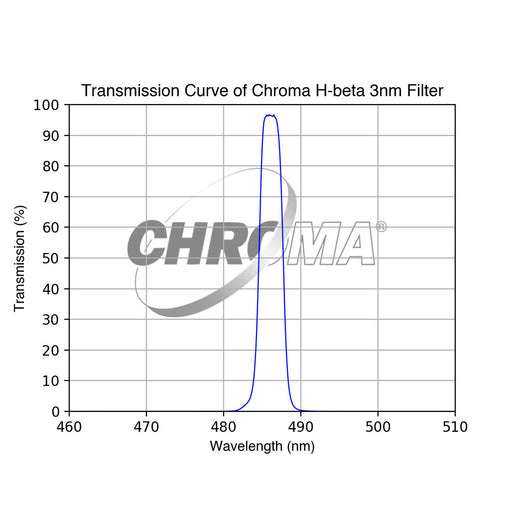
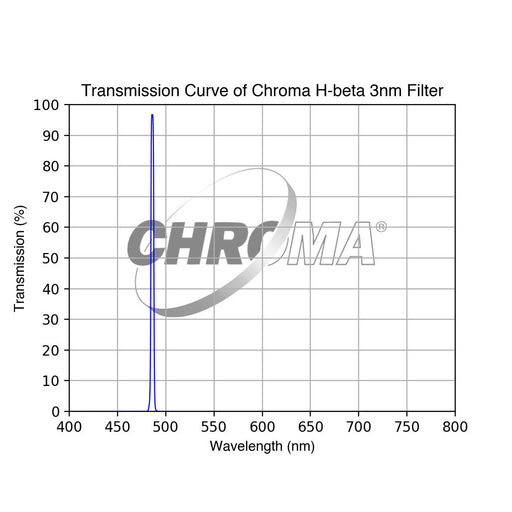
Chroma H-beta Filter - 3nm
Isolates the Hydrogen-beta emission line at 486.1 nm Narrow 3 nm bandpass for high contrast Designed for f/4.0 or slower optical systems 3.0 mm th...
View full details
Original price
$575.00 USD
-
Original price
$1,550.00 USD
Original price
$575.00 USD
-
$1,550.00 USD
$575.00 USD
-
$1,550.00 USD
Current price
$575.00 USD
Original price
$460.00 USD
-
Original price
$1,380.00 USD
Original price
$460.00 USD
-
$1,380.00 USD
$460.00 USD
-
$1,380.00 USD
Current price
$460.00 USD
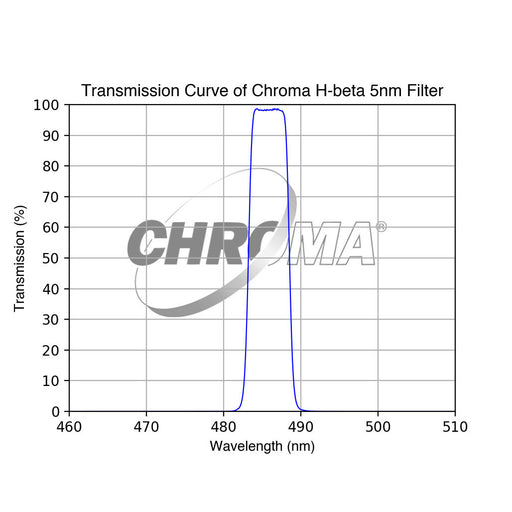
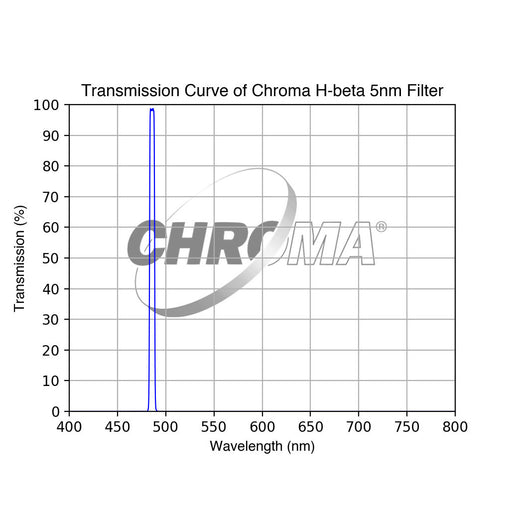
Chroma H-beta Filter - 5nm
Central Wavelength: 486.1 nm (Hydrogen-beta) Bandwidth: 5 nm FWHM Glass Thickness: 3.0 mm Parfocal with other Chroma astronomy filters (except LoG...
View full details
Original price
$460.00 USD
-
Original price
$1,380.00 USD
Original price
$460.00 USD
-
$1,380.00 USD
$460.00 USD
-
$1,380.00 USD
Current price
$460.00 USD
Original price
$775.00 USD
-
Original price
$3,350.00 USD
Original price
$775.00 USD
-
$3,350.00 USD
$775.00 USD
-
$3,350.00 USD
Current price
$775.00 USD
Chroma HaLRGB Filter Set
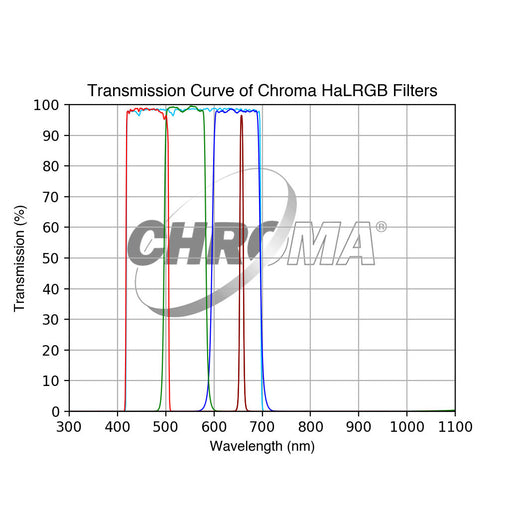
Complete 5-Filter Set: Luminance, Red, Green, Blue, and H-alpha H-alpha Bandwidth Options: Available in 3nm, 5nm, or 8nm variants Substrate Thickn...
View full details
Original price
$775.00 USD
-
Original price
$3,350.00 USD
Original price
$775.00 USD
-
$3,350.00 USD
$775.00 USD
-
$3,350.00 USD
Current price
$775.00 USD
Original price
$275.00 USD
-
Original price
$725.00 USD
Original price
$275.00 USD
-
$725.00 USD
$275.00 USD
-
$725.00 USD
Current price
$275.00 USD
Chroma I-Bessell Filter
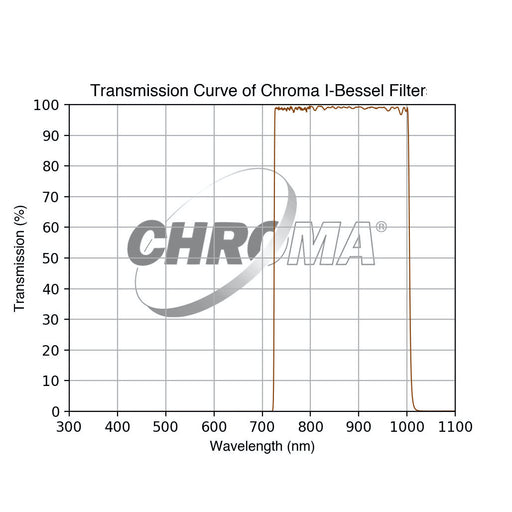
Standard I-Bessell filter for scientific photometry Durable sputtered hard coatings on a single substrate 3.0 mm substrate, parfocal with other Ch...
View full details
Original price
$275.00 USD
-
Original price
$725.00 USD
Original price
$275.00 USD
-
$725.00 USD
$275.00 USD
-
$725.00 USD
Current price
$275.00 USD
Original price
$275.00 USD
-
Original price
$790.00 USD
Original price
$275.00 USD
-
$790.00 USD
$275.00 USD
-
$790.00 USD
Current price
$275.00 USD
Chroma Jovian Methane Filter
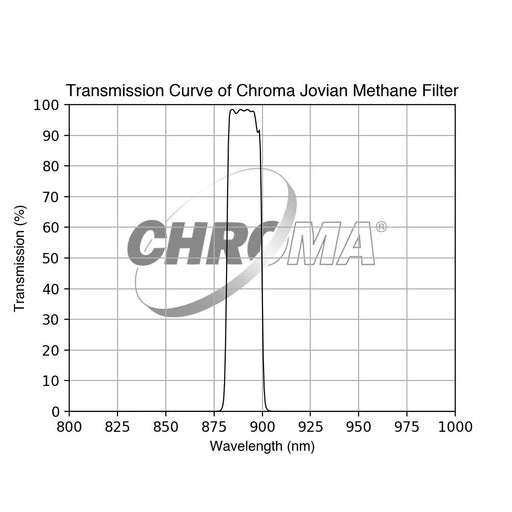
Reveals high-altitude atmospheric features on Jupiter and Saturn Targets the methane absorption band Parfocal with other 3.0mm Chroma astronomy fi...
View full details
Original price
$275.00 USD
-
Original price
$790.00 USD
Original price
$275.00 USD
-
$790.00 USD
$275.00 USD
-
$790.00 USD
Current price
$275.00 USD
Original price
$275.00 USD
-
Original price
$550.00 USD
Original price
$275.00 USD
-
$550.00 USD
$275.00 USD
-
$550.00 USD
Current price
$275.00 USD
Chroma LoGlow Filter
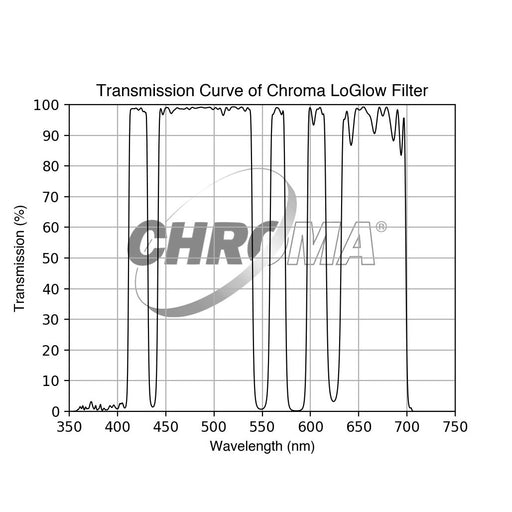
Blocks common spectral lines from metal-halide and vapor lamps Designed for balanced color in broadband imaging Designed for telescopes at f/4.0 a...
View full details
Original price
$275.00 USD
-
Original price
$550.00 USD
Original price
$275.00 USD
-
$550.00 USD
$275.00 USD
-
$550.00 USD
Current price
$275.00 USD
Original price
$525.00 USD
-
Original price
$1,925.00 USD
Original price
$525.00 USD
-
$1,925.00 USD
$525.00 USD
-
$1,925.00 USD
Current price
$525.00 USD
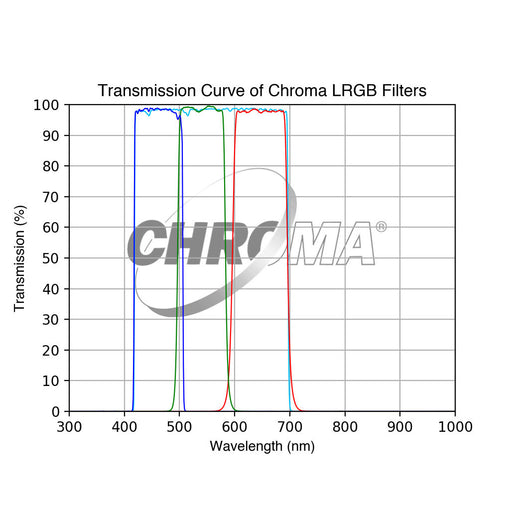
Chroma LRGB Filter Set
Complete four-filter Luminance, Red, Green, and Blue set Engineered for systems f/4.0 and slower Parfocal 3.0 mm thick substrates Transmitted wave...
View full details
Original price
$525.00 USD
-
Original price
$1,925.00 USD
Original price
$525.00 USD
-
$1,925.00 USD
$525.00 USD
-
$1,925.00 USD
Current price
$525.00 USD
Original price
$150.00 USD
-
Original price
$500.00 USD
Original price
$150.00 USD
-
$500.00 USD
$150.00 USD
-
$500.00 USD
Current price
$150.00 USD
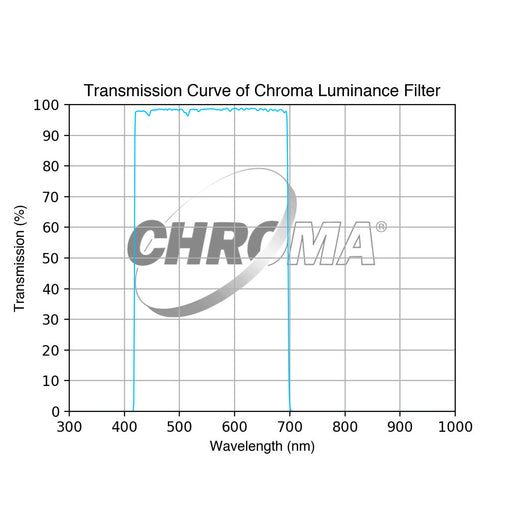
Chroma Luminance Filter
Captures the full visible spectrum for high-resolution LRGB imaging 3.0 mm substrate, parfocal with other Chroma astronomy filters (except LoGlow)...
View full details
Original price
$150.00 USD
-
Original price
$500.00 USD
Original price
$150.00 USD
-
$500.00 USD
$150.00 USD
-
$500.00 USD
Current price
$150.00 USD
Original price
$575.00 USD
-
Original price
$1,550.00 USD
Original price
$575.00 USD
-
$1,550.00 USD
$575.00 USD
-
$1,550.00 USD
Current price
$575.00 USD
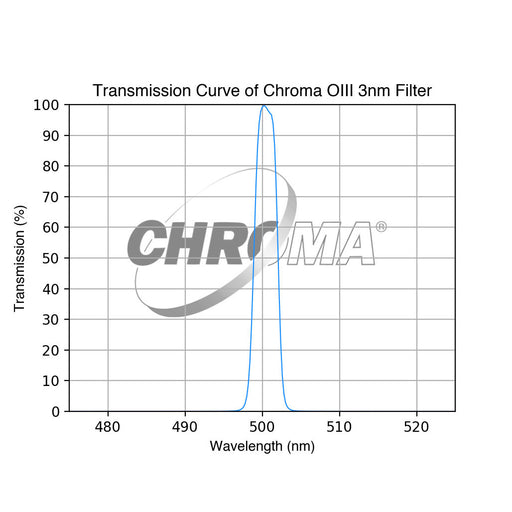
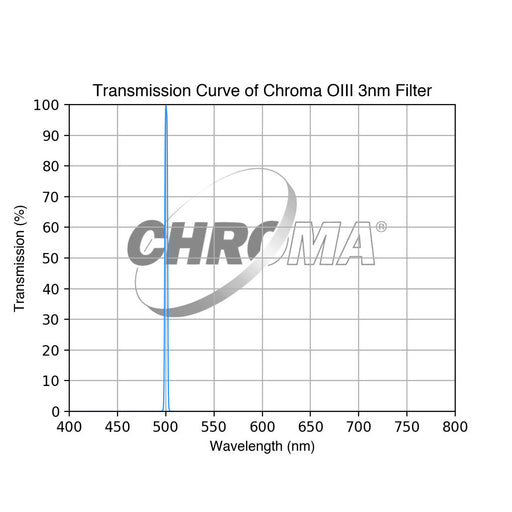
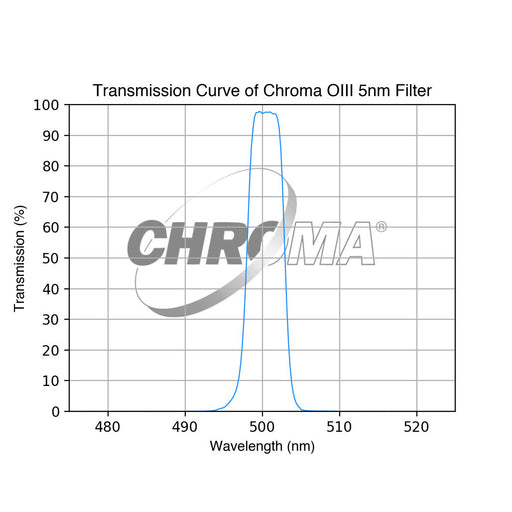
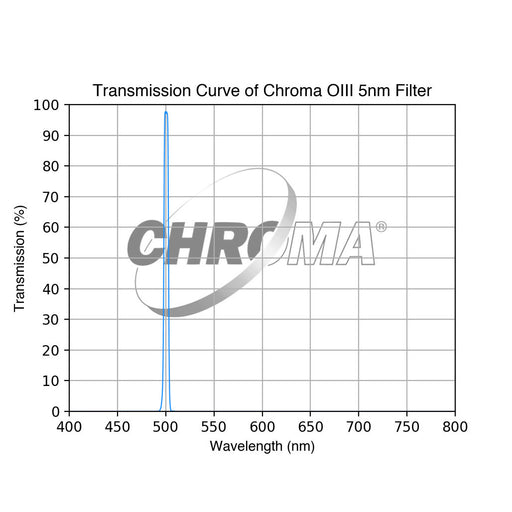
Chroma OIII Filter - 3nm
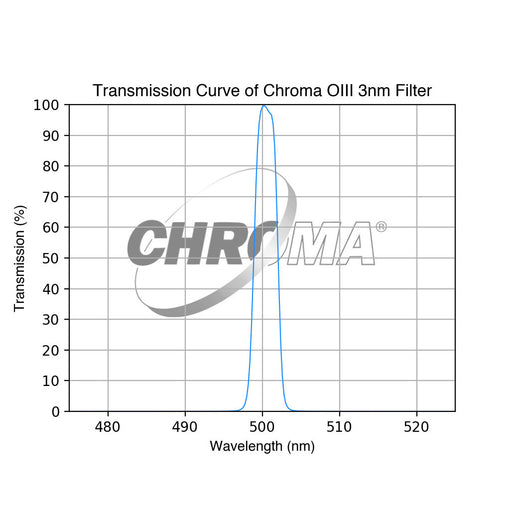
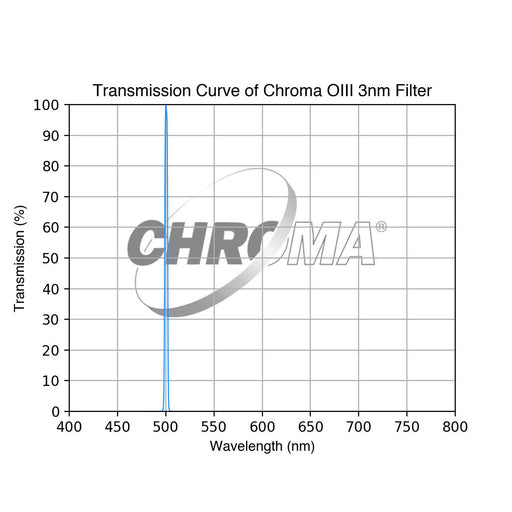
Isolates the 500.7 nm OIII emission line 3 nm bandpass for high contrast Designed for f/4.0 or slower optical systems 3.0 mm thick, single-substra...
View full details
Original price
$575.00 USD
-
Original price
$1,550.00 USD
Original price
$575.00 USD
-
$1,550.00 USD
$575.00 USD
-
$1,550.00 USD
Current price
$575.00 USD
Original price
$460.00 USD
-
Original price
$1,380.00 USD
Original price
$460.00 USD
-
$1,380.00 USD
$460.00 USD
-
$1,380.00 USD
Current price
$460.00 USD
Chroma OIII Filter - 5nm
Isolates the 500.7nm OIII emission line 5nm bandwidth (FWHM) 3.0mm thick single substrate for parfocal use Transmitted wavefront better than 0.25 ...
View full details
Original price
$460.00 USD
-
Original price
$1,380.00 USD
Original price
$460.00 USD
-
$1,380.00 USD
$460.00 USD
-
$1,380.00 USD
Current price
$460.00 USD
Original price
$275.00 USD
-
Original price
$830.00 USD
Original price
$275.00 USD
-
$830.00 USD
$275.00 USD
-
$830.00 USD
Current price
$275.00 USD
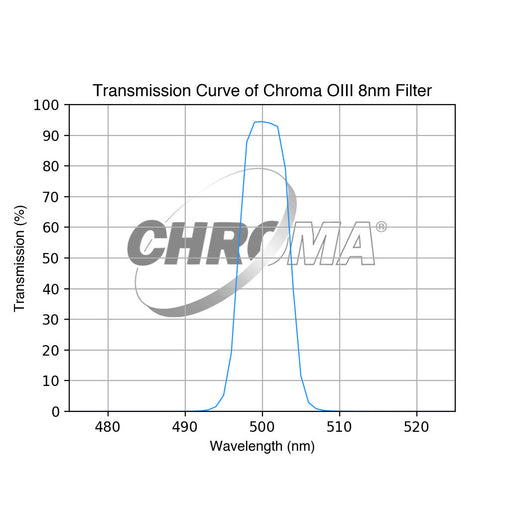
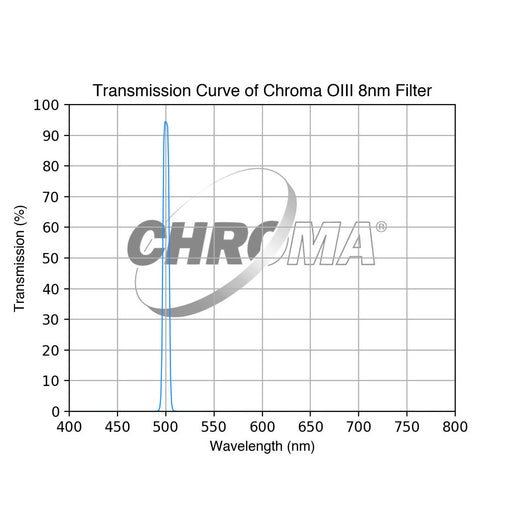
Chroma OIII Filter - 8nm
Isolates the 500.7nm OIII emission line 8nm bandpass for high signal throughput Designed for f/4.0 or slower; measured 99.7% peak transmission at ...
View full details
Original price
$275.00 USD
-
Original price
$830.00 USD
Original price
$275.00 USD
-
$830.00 USD
$275.00 USD
-
$830.00 USD
Current price
$275.00 USD
Original price
$575.00 USD
-
Original price
$1,550.00 USD
Original price
$575.00 USD
-
$1,550.00 USD
$575.00 USD
-
$1,550.00 USD
Current price
$575.00 USD
Chroma OIII Filter Optimized for f/3 - 3nm
Isolates the 500.7 nm OIII emission line 3 nm bandpass for high-contrast imaging Optimized for f/2.8 to f/3.6 optical systems Measured 99.2% peak ...
View full details
Original price
$575.00 USD
-
Original price
$1,550.00 USD
Original price
$575.00 USD
-
$1,550.00 USD
$575.00 USD
-
$1,550.00 USD
Current price
$575.00 USD

Original price
$275.00 USD
-
Original price
$725.00 USD
Original price
$275.00 USD
-
$725.00 USD
$275.00 USD
-
$725.00 USD
Current price
$275.00 USD
Chroma R-Bessell Filter
Standardized R-Bessell band for scientific photometry 3.0 mm thick substrate, parfocal with other Chroma astronomy filters (except LoGlow) Transmi...
View full details
Original price
$275.00 USD
-
Original price
$725.00 USD
Original price
$275.00 USD
-
$725.00 USD
$275.00 USD
-
$725.00 USD
Current price
$275.00 USD
Original price
$150.00 USD
-
Original price
$500.00 USD
Original price
$150.00 USD
-
$500.00 USD
$150.00 USD
-
$500.00 USD
Current price
$150.00 USD
Chroma Red Filter
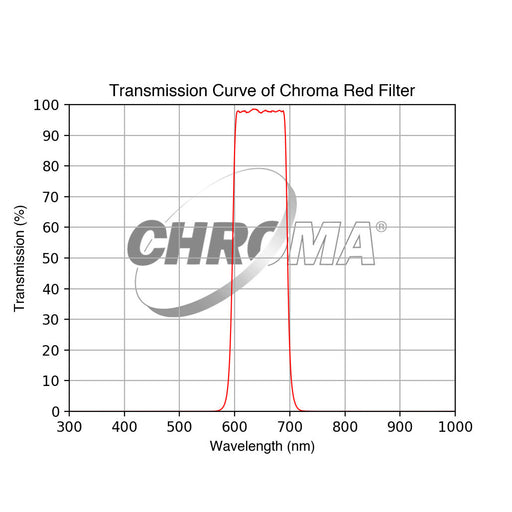
Captures the red portion of the visible spectrum for LRGB color imaging 3.0 mm substrate, parfocal with other Chroma astronomy filters (except LoG...
View full details
Original price
$150.00 USD
-
Original price
$500.00 USD
Original price
$150.00 USD
-
$500.00 USD
$150.00 USD
-
$500.00 USD
Current price
$150.00 USD


Original price
$575.00 USD
-
Original price
$1,550.00 USD
Original price
$575.00 USD
-
$1,550.00 USD
$575.00 USD
-
$1,550.00 USD
Current price
$575.00 USD
Chroma SII Filter - 3nm
Central Wavelength: 672.4 nm (Sulfur-II) Bandwidth (FWHM): 3 nm Substrate Thickness: 3.0 mm Parfocal: Yes, with other Chroma astronomy filters...
View full details
Original price
$575.00 USD
-
Original price
$1,550.00 USD
Original price
$575.00 USD
-
$1,550.00 USD
$575.00 USD
-
$1,550.00 USD
Current price
$575.00 USD


Original price
$460.00 USD
-
Original price
$1,380.00 USD
Original price
$460.00 USD
-
$1,380.00 USD
$460.00 USD
-
$1,380.00 USD
Current price
$460.00 USD
Chroma SII Filter - 5nm
Bandwidth: 5 nm Central Wavelength: 672.4 nm Target Emission: Sulfur-II Doublet (671.6 nm / 673.1 nm) Substrate Thickness: 3.0 mm Parfocal: Y...
View full details
Original price
$460.00 USD
-
Original price
$1,380.00 USD
Original price
$460.00 USD
-
$1,380.00 USD
$460.00 USD
-
$1,380.00 USD
Current price
$460.00 USD