
Passer au contenu
IMPORTANT: Our store is located in Canada. All orders that include products manufactured outside of Canada or USA will be subject to tariffs and duties, regardless of the order value. US customers are responsible for all applicable duties and tariffs, and those will be billed by the carrier, except for the Lacerta upgrade kit, for which we collect them at checkout.

Langue

Pays

Lentilles

A camera lens on a tracker is still the most efficient wide-field astrophotography instrument available. Fast apertures, wide fields that no telescope covers, and optics you may already own — the Milky Way, large nebula complexes and constellation-scale fields are all lens territory rather than telescope territory. David Astro carries lenses in Canada, in stock, with fast shipping across Canada and worldwide.

Lens performance wide open at the corners is what matters for astrophotography, and it differs from daytime performance. Tell us your camera and targets and we will advise.

Filtres

Prix d'origine $22.00 - Prix d'origine $22.00
Prix d'origine
$22.00
$22.00 - $22.00
Prix actuel $22.00

Player One 2.1mm CS lens

POA-21LENS

2.1mm Focal Length CS-Mount Interface 190° Field of View on 1/2" Sensors 150° Field of View on 1/3" Sensors All-Sky and Wide-Field Monitoring D...

Afficher tous les détails
Prix d'origine $22.00 - Prix d'origine $22.00
Prix d'origine
$22.00
$22.00 - $22.00
Prix actuel $22.00
Prix d'origine $22.00 - Prix d'origine $22.00
Prix d'origine
$22.00
$22.00 - $22.00
Prix actuel $22.00

Player One 2.5mm CS lens

POA-25LENS

2.5mm Focal Length CS-Mount Standard Ultra-Wide Field of View Ideal for All-Sky Cameras Description FAQ Specifications In the Box Downloads War...

Afficher tous les détails
Prix d'origine $22.00 - Prix d'origine $22.00
Prix d'origine
$22.00
$22.00 - $22.00
Prix actuel $22.00
Prix d'origine $395.00 - Prix d'origine $395.00
Prix d'origine
$395.00
$395.00 - $395.00
Prix actuel $395.00
QHYCCD SWIR Lens for QHY990/991

QHY-070005

Engineered for Short-Wave Infrared (SWIR) wavelengths Optimized for QHY990 and QHY991 SWIR cameras High-transmission coatings for the SWIR band De...

Afficher tous les détails
Prix d'origine $395.00 - Prix d'origine $395.00
Prix d'origine
$395.00
$395.00 - $395.00
Prix actuel $395.00
Prix d'origine $22.00 - Prix d'origine $22.00
Prix d'origine
$22.00
$22.00 - $22.00
Prix actuel $22.00
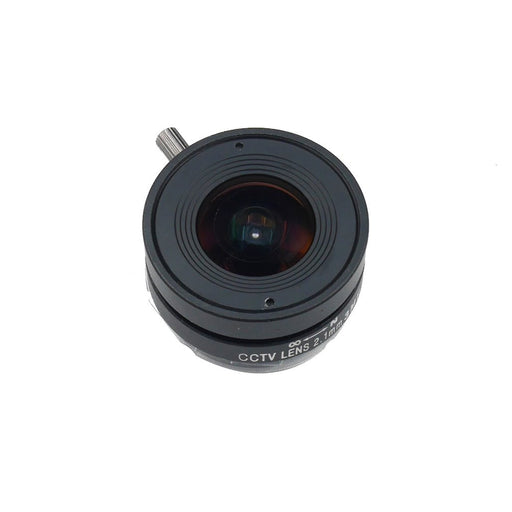
ZWO Objectif 1/3"2.1mm 150°

ZWO-LENS-2.1
4 en stock

Objectif ZWO 1/3″ 2.1mm 150 degrés Paramètre technique: Prise en charge des formats : capteur 1/3″ Focale : 2,1 mm Ange large : 150 degrés Mo...

Afficher tous les détails
Prix d'origine $22.00 - Prix d'origine $22.00
Prix d'origine
$22.00
$22.00 - $22.00
Prix actuel $22.00
Prix d'origine $22.00 - Prix d'origine $22.00
Prix d'origine
$22.00
$22.00 - $22.00
Prix actuel $22.00

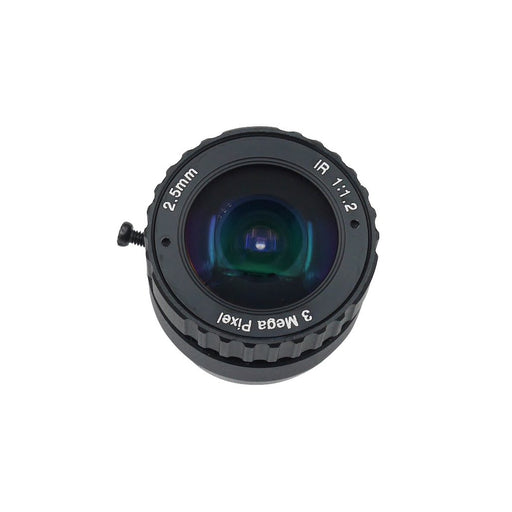
ZWO Lentille 2.5mm 170°

ZWO-LENS-2-5
5 en stock

Objectif ZWO 2,5 mm à 170 degrés Paramètre technique: Prise en charge des formats : capteur 1/2″ Focale : 2,5 mm Grand ange : 170 degrés Modèl...

Afficher tous les détails
Prix d'origine $22.00 - Prix d'origine $22.00
Prix d'origine
$22.00
$22.00 - $22.00
Prix actuel $22.00
Prix d'origine $38.00 - Prix d'origine $38.00
Prix d'origine
$38.00
$38.00 - $38.00
Prix actuel $38.00

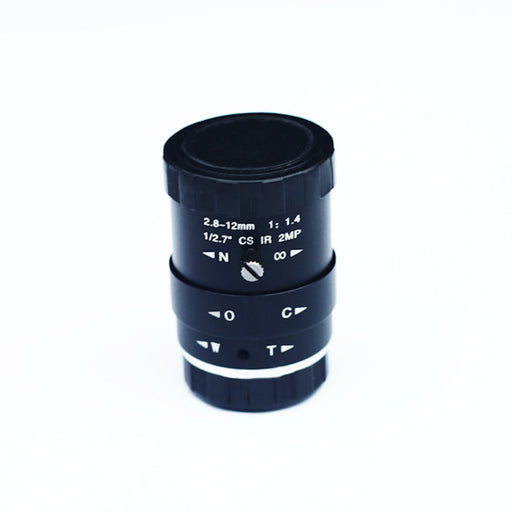
ZWO Objectif CS 2.8mm-12mm F1.4

ZWO-LENS-2.8-12
5 en stock

L'objectif 2.8mm-12mm F1.4 convient aux modèles ASI120MM/MC, ASI290MM/MC et ASI224MC Cet objectif a un diamètre plus grand que l'objectif de 2,1 ...

Afficher tous les détails
Prix d'origine $38.00 - Prix d'origine $38.00
Prix d'origine
$38.00
$38.00 - $38.00
Prix actuel $38.00

Lenses for Wide-Field Astrophotography

The specifications that matter for stars are not the ones that matter for daytime photography, which is why some celebrated lenses disappoint under the sky.

  • Corner performance wide open: Stars are point sources and reveal coma and astigmatism ruthlessly. A lens that is excellent in the centre may show winged stars at the edges.
  • Stopping down: Most fast lenses improve substantially closed down one or two stops, and that is usually the right compromise between speed and star shape.
  • Focal length and field: 14 to 24 mm covers whole constellations and the Milky Way; 50 to 135 mm frames large nebula complexes; 200 mm and up approaches telescope territory.
  • Manual focus capability: Autofocus is useless on stars. A lens with a usable manual focus ring and a hard infinity reference is far easier to work with.
  • Focus shift with temperature: Lenses drift as they cool through the night, and a focus lock or periodic recheck is necessary.
  • Dew control: A front element facing the sky dews as readily as a telescope objective, and a small heater band is worth having.

Why Choose David Astro for Lenses

We evaluate lenses by what they do to stars rather than by daytime reputation.

  • Corner star shape prioritized: We advise based on how a lens renders point sources at the edges wide open, which is the astrophotography criterion.
  • Aperture advice: We will suggest the stop at which a given lens performs well rather than assuming you will shoot it wide open.
  • Tracker payload checked: Lens, camera and ball head together often exceed what people estimate, and we check against your tracker's rating.
  • Dew and focus advice: We recommend a lens heater and explain focus locking, both of which cost little and save whole sessions.
  • Ships from Canada: No duties or brokerage fees for Canadian buyers.

Lenses in Canada — Frequently Asked Questions

Why do my corner stars have wings?
Coma, which most fast lenses show wide open. Stopping down one or two stops usually improves it dramatically at modest cost in exposure time.
What focal length should I start with?
Somewhere between 24 and 50 mm is forgiving and covers a lot of interesting sky. Wider lenses show more Milky Way; longer ones demand better tracking and polar alignment.
Can I use autofocus?
No. Autofocus cannot work on stars. Focus manually using live view on a bright star at maximum magnification, then lock the focus ring so it does not shift.
Do lenses need dew heaters?
Yes, a front element pointed at the sky dews exactly as a telescope objective does. A small heater band around the lens barrel prevents losing the second half of a session.

Shooting wide field?

Tell us your camera, tracker and targets and we will advise on focal length and aperture. Domestic shipping, expert support.