
Passer au contenu

Langue

Pays

Filtres à bande étroite

Narrowband imaging is what makes deep-sky astrophotography possible from a Canadian city. By passing only a few nanometres around a specific emission line, these filters reject almost all artificial light and most moonlight, so a nebula that is invisible visually from a suburban driveway becomes a viable multi-hour imaging target. David Astro stocks narrowband filters in Canada, held in Canadian inventory.

Bandwidth choice interacts with your telescope's focal ratio in ways that catch people out. Tell us your optic and camera and we will recommend a bandwidth that will actually perform in your system.

Filtres

Prix d'origine $93.33 - Prix d'origine $93.33
Prix d'origine
$93.33
$93.33 - $93.33
Prix actuel $93.33
SVBONY SV227 SII 5nm Narrowband Filter - 2"

SV-W9187DA

Captures Sulfur-II (SII) emission at a 672nm center wavelength Extremely narrow 5nm bandpass for maximum contrast Peak light transmission of ≥90% ...

Afficher tous les détails
Prix d'origine $93.33 - Prix d'origine $93.33
Prix d'origine
$93.33
$93.33 - $93.33
Prix actuel $93.33
Prix d'origine $369.00 - Prix d'origine $699.00
Prix d'origine
$369.00 - $699.00
$369.00 - $699.00
Prix actuel $369.00
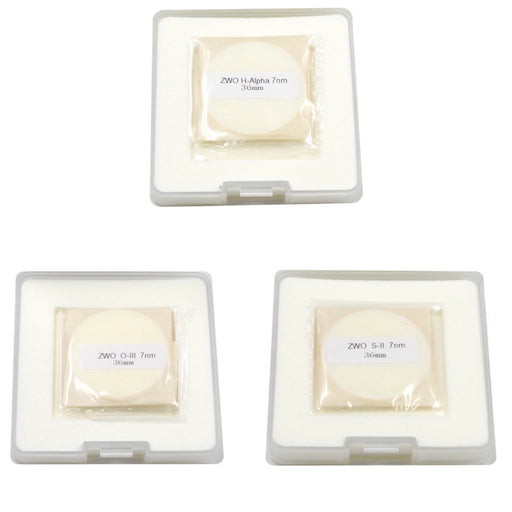
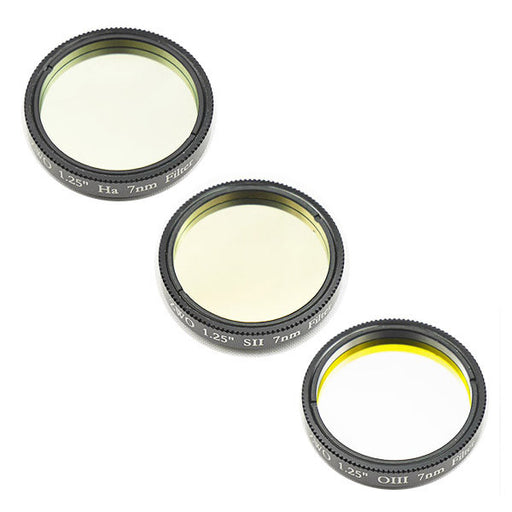
ZWO Jeu de filtres à bande étroite - 7nm H-alpha, OIII et SII

Options available
1 variants in stock

Comprend des filtres H-alpha, OIII et SII 1.25" Bande passante de 7nm pour une imagerie à fort contraste Idéal pour créer des images en « palette ...

Afficher tous les détails
Prix d'origine $369.00 - Prix d'origine $699.00
Prix d'origine
$369.00 - $699.00
$369.00 - $699.00
Prix actuel $369.00
Prix d'origine $129.00 - Prix d'origine $249.00
Prix d'origine
$129.00 - $249.00
$129.00 - $249.00
Prix actuel $129.00
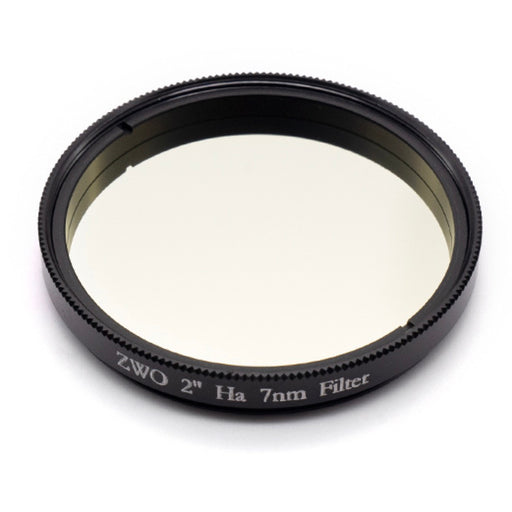
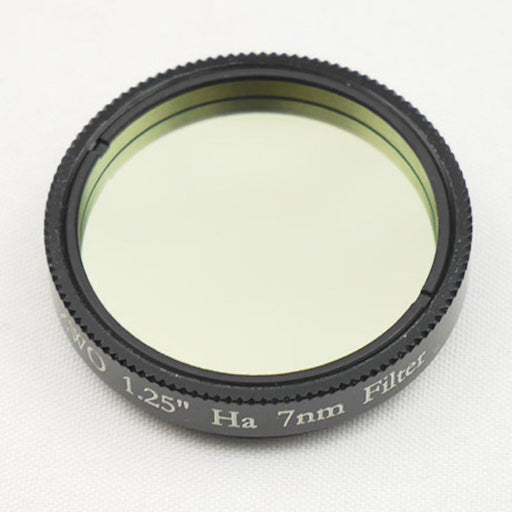
ZWO Filtre à bande étroite H-alpha - 7nm

Options available

Isole la lumière hydrogène alpha avec une bande passante de 7nm Monture métallique filetée standard 1.25" Bloque la pollution lumineuse et la lumi...

Afficher tous les détails
Prix d'origine $129.00 - Prix d'origine $249.00
Prix d'origine
$129.00 - $249.00
$129.00 - $249.00
Prix actuel $129.00
Prix d'origine $129.00 - Prix d'origine $249.00
Prix d'origine
$129.00 - $249.00
$129.00 - $249.00
Prix actuel $129.00
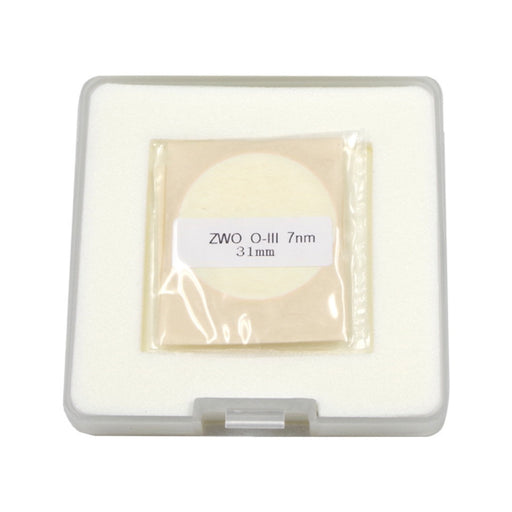
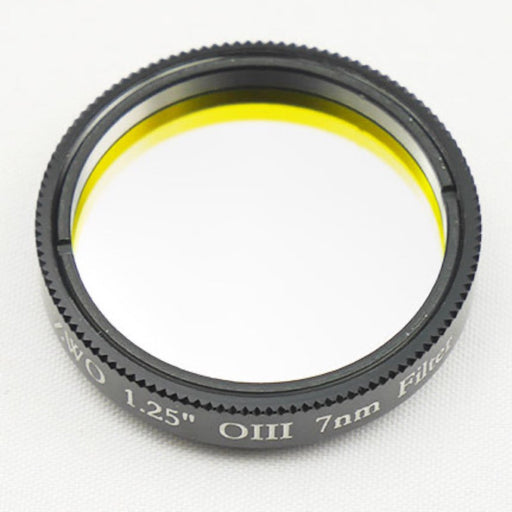
ZWO Filtre à bande étroite OIII - 7nm

Options available
1 variants in stock

Bande passante de 7nm centrée sur la raie d'émission OIII Isole les nébuleuses planétaires et les rémanents de supernova Cellule filetée standard ...

Afficher tous les détails
Prix d'origine $129.00 - Prix d'origine $249.00
Prix d'origine
$129.00 - $249.00
$129.00 - $249.00
Prix actuel $129.00
Prix d'origine $129.00 - Prix d'origine $249.00
Prix d'origine
$129.00 - $249.00
$129.00 - $249.00
Prix actuel $129.00

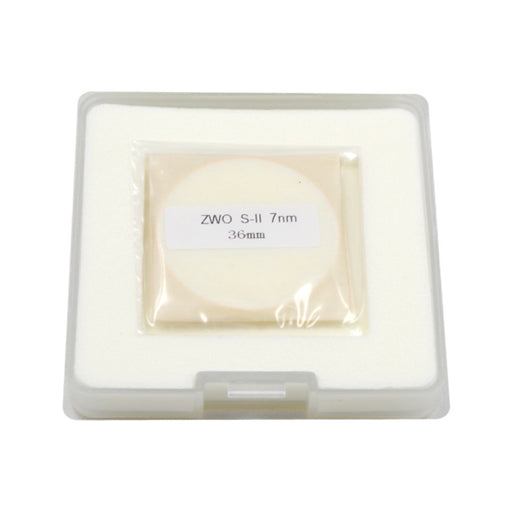
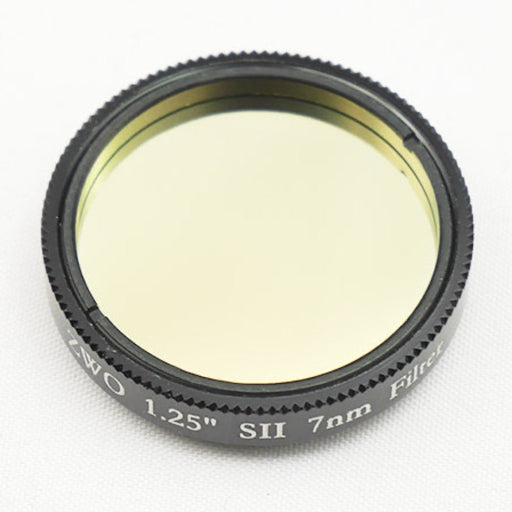
ZWO Filtre à bande étroite SII - 7nm

Options available
2 variants in stock

Isole la raie d'émission du soufre II à 672nm Bande passante de 7nm pour une imagerie à fort contraste Barillet métallique fileté standard 1.25" S...

Afficher tous les détails
Prix d'origine $129.00 - Prix d'origine $249.00
Prix d'origine
$129.00 - $249.00
$129.00 - $249.00
Prix actuel $129.00

Emission Lines, Bandwidth and Focal Ratio

Narrowband filters isolate the specific wavelengths that ionized gas emits. Narrower is not always better, because the passband shifts in a fast light cone and the exposure requirement rises.

  • Hydrogen-alpha at 656.3 nm: The strongest and most widely used emission line, showing nebulosity in extraordinary detail and working well even under a bright Moon.
  • Oxygen III at 500.7 nm: Reveals planetary nebulae, supernova remnants and the outer shells of emission nebulae; typically the weakest signal of the three and needs the most integration.
  • Sulphur II at 672.4 nm: The third channel of the Hubble palette, adding structural differentiation in bright nebulae.
  • 3 to 5 nm bandwidth: Maximum contrast under light pollution, best suited to f/5 and slower systems and to accurate, temperature-compensated focus.
  • 6 to 12 nm bandwidth: More forgiving of fast optics and shorter exposures, and a better match for one-shot colour cameras and systems faster than f/4.
  • Dual and multi-band filters: Pass two or more lines simultaneously for one-shot colour cameras, giving narrowband-like contrast without a filter wheel.

Why Choose David Astro for Narrowband Filters

A filter that is wrong for your focal ratio will underperform in a way that looks like a quality problem but is a specification problem.

  • Focal ratio matched: Below roughly f/4 the incident cone shifts a narrow passband off the emission line. We recommend bandwidths or fast-optic designs that account for this.
  • Sizing to sensor and wheel geometry: We calculate the filter size needed to avoid vignetting given your sensor diagonal and filter-to-sensor distance.
  • Focus offsets explained: Narrowband channels often need per-filter focus offsets, and we help set them up so you are not refocusing manually every filter change.
  • Authorized dealer: Genuine filters with verified coatings and full manufacturer warranty, in Canadian stock.
  • Domestic shipping: No duties or brokerage fees for Canadian orders.

Narrowband Filters in Canada — Frequently Asked Questions

Can I use narrowband with a colour camera?
Yes, most effectively with a dual-band filter that passes Ha and OIII together, since a colour sensor's Bayer array can separate them. Single-line filters work but waste three quarters of the pixels.
Is a 3 nm filter always better than 7 nm?
Not in fast systems. Below about f/4 the steep light cone shifts the passband and a 3 nm filter can lose signal. In an f/6 system under city skies, 3 nm gives noticeably better contrast.
Can I image through a full Moon?
With Ha, largely yes. Moonlight is broadband scattered sunlight, and a narrow Ha filter rejects nearly all of it. OIII suffers more because its wavelength sits closer to the peak of scattered light.
How long should narrowband exposures be?
Longer than broadband — typically 300 to 600 seconds per sub, depending on focal ratio and camera read noise. Total integration for a good narrowband image is usually measured in tens of hours.

Imaging from a light-polluted site?

Tell us your telescope, camera and focal ratio and we will recommend the right bandwidths. Ships from Canada.