
Cameras
Camera choice in astrophotography is less about megapixels than about matching pixel size to your telescope and your sky. A camera that resolves beautifully at 400 mm focal length will oversample badly at 2000 mm, and a sensor that suits pristine mountain seeing will simply record blur under an average Canadian night. David Astro stocks astronomy cameras in Canada — cooled and uncooled CMOS, monochrome and colour, deep-sky, planetary and guiding — in stock and shipped from our Canadian warehouse.
We match cameras to telescopes for customers constantly. Send us your focal length, your typical seeing and what you want to photograph, and we will calculate the pixel scale before recommending anything.
Original price
$219.95
-
Original price
$219.95
Original price
$219.95
$219.95
-
$219.95
Current price
$219.95
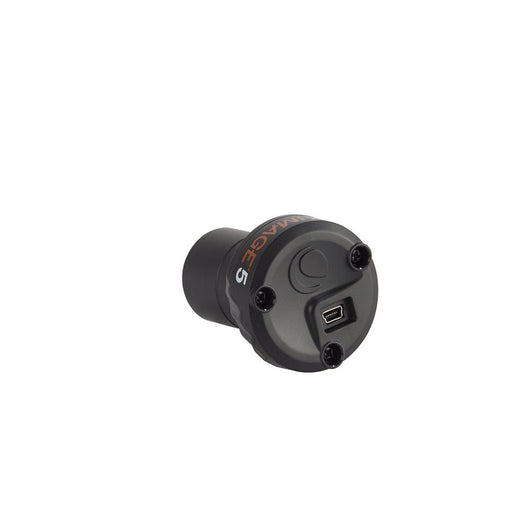
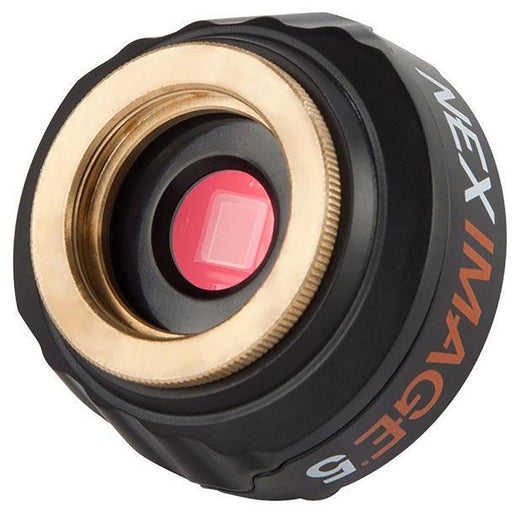
Celestron NexImage 5 Solar System Imager (5MP)
CEL-93711
5.0 Megapixel color CMOS sensor 2.2 micron square pixels for high-resolution sampling Frame rates from 0.71 up to 52.37 FPS Standard 1.25" barrel ...
View full details
Original price
$219.95
-
Original price
$219.95
Original price
$219.95
$219.95
-
$219.95
Current price
$219.95

Original price
$269.00
-
Original price
$269.00
Original price
$269.00
$269.00
-
$269.00
Current price
$269.00
iOptron iCAM178M Mono Camera
IOP-3371
6.4 Megapixel Sony IMX178 Mono Sensor 2.4µm Pixel Size for High-Resolution Sampling 60 Frames Per Second at Full Resolution Low Read Noise of 1.3e...
View full details
Original price
$269.00
-
Original price
$269.00
Original price
$269.00
$269.00
-
$269.00
Current price
$269.00

Original price
$275.00
-
Original price
$275.00
Original price
$275.00
$275.00
-
$275.00
Current price
$275.00
iOptron iCAM462C Planetary Camera
IOP-3372
Sony IMX462 Color CMOS Sensor 2.1 Megapixel Resolution (1944 x 1096) 2.9µm Pixel Size Up to 136 FPS Frame Rate USB 3.0 and ST-4 Ports Descripti...
View full details
Original price
$275.00
-
Original price
$275.00
Original price
$275.00
$275.00
-
$275.00
Current price
$275.00

Original price
$199.00
-
Original price
$199.00
Original price
$199.00
$199.00
-
$199.00
Current price
$199.00
iOptron iCAM464C Planetary Camera
IOP-3373
Sony IMX464 4.2MP Color CMOS Sensor 93 FPS at Full 2712 x 1538 Resolution 2.9 µm Pixel Size for High-Resolution Sampling Ultra-Low Read Noise Down...
View full details
Original price
$199.00
-
Original price
$199.00
Original price
$199.00
$199.00
-
$199.00
Current price
$199.00

Original price
$168.00
-
Original price
$168.00
Original price
$168.00
$168.00
-
$168.00
Current price
$168.00
iOptron iE5100 Planetarium Imager
IOP-5250
Description FAQ Specifications In the Box Warranty iOptron iE5100 Planetarium Imager The iOptron iE5100 Planetarium Imager is a digital c...
View full details
Original price
$168.00
-
Original price
$168.00
Original price
$168.00
$168.00
-
$168.00
Current price
$168.00

Original price
$1,998.00
-
Original price
$1,998.00
Original price
$1,998.00
$1,998.00
-
$1,998.00
Current price
$1,998.00
Pegasus SmartEye Electronic Eyepiece
PEG-SMARTEYE
9MP Sony IMX533 Color CMOS Sensor (3008x3008) Ultra HD 2560x2560 Display 90° Apparent Field of View 2-Stage TEC Cooling up to 30°C Below Ambient D...
View full details
Original price
$1,998.00
-
Original price
$1,998.00
Original price
$1,998.00
$1,998.00
-
$1,998.00
Current price
$1,998.00

Original price
$69.00
-
Original price
$69.00
Original price
$69.00
$69.00
-
$69.00
Current price
$69.00
Player One Active Cooling System (ACS) for Uncooled Cameras
POA-ACS
1 in stock
External air-cooling system for select Player One cameras Dramatically reduces sensor temperature during operation Ideal for solar, planetary, and...
View full details
Original price
$69.00
-
Original price
$69.00
Original price
$69.00
$69.00
-
$69.00
Current price
$69.00

Original price
$799.00
-
Original price
$799.00
Original price
$799.00
$799.00
-
$799.00
Current price
$799.00
Player One Apollo 428M MAX Mono Solar Camera
POA-Apollo-428M-MAX
Features a Sony IMX428 1.1-inch monochrome CMOS sensor Delivers 7.1 Megapixel resolution (3216×2208) for detailed solar imaging 4.5μm pixels provi...
View full details
Original price
$799.00
-
Original price
$799.00
Original price
$799.00
$799.00
-
$799.00
Current price
$799.00

Original price
$999.00
-
Original price
$999.00
Original price
$999.00
$999.00
-
$999.00
Current price
$999.00
Player One Apollo 428M MAX Pro Mono Cooled Solar Camera
POA-Apollo-428M-MAX-Pro
Sony IMX428 1.1" monochrome CMOS sensor with global shutter 7.1 Megapixel resolution (3216x2208) with 4.5μm pixels High frame rate of 51 FPS at fu...
View full details
Original price
$999.00
-
Original price
$999.00
Original price
$999.00
$999.00
-
$999.00
Current price
$999.00

Original price
$499.00
-
Original price
$499.00
Original price
$499.00
$499.00
-
$499.00
Current price
$499.00
Player One Apollo-C IMX174 Color Solar Camera
POA-Apollo-C
2.3 Megapixel Sony IMX174 color CMOS sensor Global shutter design eliminates motion artifacts from atmospheric turbulence Captures up to 164 FPS a...
View full details
Original price
$499.00
-
Original price
$499.00
Original price
$499.00
$499.00
-
$499.00
Current price
$499.00

Original price
$499.00
-
Original price
$499.00
Original price
$499.00
$499.00
-
$499.00
Current price
$499.00
Player One Apollo-M IMX174 Mono Solar Camera
POA-Apollo-M
Features the 2.3MP Sony IMX174 monochrome CMOS sensor Global shutter design eliminates motion artifacts from atmospheric turbulence Achieves a max...
View full details
Original price
$499.00
-
Original price
$499.00
Original price
$499.00
$499.00
-
$499.00
Current price
$499.00

Original price
$599.00
-
Original price
$599.00
Original price
$599.00
$599.00
-
$599.00
Current price
$599.00
Player One Apollo-M MAX IMX432 Mono Solar Camera
POA-Apollo-M-MAX
1.1" Sony IMX432 Monochrome CMOS Sensor 9µm Pixel Size 100,000 e- Full Well Capacity 126 FPS at Full Resolution (1608x1104) Global Shutter for Dis...
View full details
Original price
$599.00
-
Original price
$599.00
Original price
$599.00
$599.00
-
$599.00
Current price
$599.00

Original price
$799.00
-
Original price
$799.00
Original price
$799.00
$799.00
-
$799.00
Current price
$799.00
Player One Apollo-M MAX Pro Mono IMX432 Cooled Solar Camera
POA-Apollo-M-MAX-Pro
1.7 Megapixel Sony IMX432 Mono Sensor Large 9µm Pixel Size Massive 100k e- Full Well Capacity Global Shutter for Distortion-Free Imaging 126 FPS a...
View full details
Original price
$799.00
-
Original price
$799.00
Original price
$799.00
$799.00
-
$799.00
Current price
$799.00

Original price
$399.00
-
Original price
$399.00
Original price
$399.00
$399.00
-
$399.00
Current price
$399.00
Player One Apollo-M MINI IMX429 Mono Solar Camera
POA-Apollo-M-MINI
2.8 Megapixel SONY IMX429 monochrome sensor 4.5μm pixels for high-resolution solar and lunar imaging Global shutter eliminates motion artifacts fr...
View full details
Original price
$399.00
-
Original price
$399.00
Original price
$399.00
$399.00
-
$399.00
Current price
$399.00

Original price
$799.00
-
Original price
$799.00
Original price
$799.00
$799.00
-
$799.00
Current price
$799.00
Player One Ares-C Pro Color Cooled Astrophotography Camera
POA-Ares-C-Pro
1 in stock
Features the 1-inch square format Sony IMX533 color sensor 9MP resolution (3008x3008) with 3.76µm pixels Deep 73k e- full well capacity for high d...
View full details
Original price
$799.00
-
Original price
$799.00
Original price
$799.00
$799.00
-
$799.00
Current price
$799.00

Original price
$999.00
-
Original price
$999.00
Original price
$999.00
$999.00
-
$999.00
Current price
$999.00
Player One Ares-M Pro Mono IMX533 Cooled Astrophotography Camera
POA-Ares-M-Pro
1 in stock
Features Sony's IMX533 1" square monochrome CMOS sensor 9 Megapixel resolution (3008x3008) with 3.76μm pixels Deep 73k e- full well capacity for h...
View full details
Original price
$999.00
-
Original price
$999.00
Original price
$999.00
$999.00
-
$999.00
Current price
$999.00

Original price
$899.00
-
Original price
$899.00
Original price
$899.00
$899.00
-
$899.00
Current price
$899.00
Player One Artemis-C Pro Color IMX294 Cooled Astrophotography Camera
POA-Artemis-C-Pro
11.7 Megapixel Sony IMX294 Color CMOS Sensor 4/3" Format with 23.2mm Diagonal 4.63μm Pixel Size 2-Stage TEC Cooling with 40°C Delta-T 14-bit ADC a...
View full details
Original price
$899.00
-
Original price
$899.00
Original price
$899.00
$899.00
-
$899.00
Current price
$899.00

Original price
$1,180.00
-
Original price
$1,180.00
Original price
$1,180.00
$1,180.00
-
$1,180.00
Current price
$1,180.00
Player One Artemis-M Pro Mono IMX492 Cooled Astrophotography Camera
POA-Artemis-M-Pro
Features the 4/3" Sony IMX492 monochrome CMOS sensor with a 23.2mm diagonal Native 47 MP resolution (8288x5648) with 2.315μm pixels in 12-bit BIN1...
View full details
Original price
$1,180.00
-
Original price
$1,180.00
Original price
$1,180.00
$1,180.00
-
$1,180.00
Current price
$1,180.00

Original price
$179.00
-
Original price
$179.00
Original price
$179.00
$179.00
-
$179.00
Current price
$179.00
Player One Ceres 462M Mono Guide Camera
POA-Ceres-462M
3 in stock
2.1 Megapixel Sony IMX462 Mono CMOS Sensor 136 FPS at Full 1944x1096 Resolution Peak Quantum Efficiency ≈91% Read Noise as low as 0.7e Ultra-light...
View full details
Original price
$179.00
-
Original price
$179.00
Original price
$179.00
$179.00
-
$179.00
Current price
$179.00

Original price
$269.00
-
Original price
$269.00
Original price
$269.00
$269.00
-
$269.00
Current price
$269.00
Player One Mars 662M Mono Planetary Camera
POA-Mars-662M
1 in stock
2.1 Megapixel Sony IMX662 monochrome sensor 108 FPS capture rate at full 1936x1100 resolution Large 54k e- full well capacity Extremely low readou...
View full details
Original price
$269.00
-
Original price
$269.00
Original price
$269.00
$269.00
-
$269.00
Current price
$269.00

Original price
$199.00
-
Original price
$199.00
Original price
$199.00
$199.00
-
$199.00
Current price
$199.00
Player One Mars-C II IMX662 Color Planetary Camera
POA-Mars-C-II
3 in stock
Sensor: Sony IMX662 1/2.8" Color CMOS Resolution: 2.1 Megapixels (1936x1100) Max Frame Rate: 108 FPS at full resolution Full Well Capacity: 54,000...
View full details
Original price
$199.00
-
Original price
$199.00
Original price
$199.00
$199.00
-
$199.00
Current price
$199.00

Original price
$139.00
-
Original price
$139.00
Original price
$139.00
$139.00
-
$139.00
Current price
$139.00
Player One Mars-C IMX462 Color Planetary Camera
POA-Mars-C
2 in stock
Features a 2.1 Megapixel Sony IMX462 color sensor Achieves a maximum frame rate of 136 FPS at full 1944x1096 resolution 2.9μm pixels and 12k e- fu...
View full details
Original price
$139.00
-
Original price
$139.00
Original price
$139.00
$139.00
-
$139.00
Current price
$139.00

Original price
$249.00
-
Original price
$249.00
Original price
$249.00
$249.00
-
$249.00
Current price
$249.00
Player One Mars-M II IMX462 Mono Planetary Camera
POA-Mars-M-II
1 in stock
2.1 Megapixel Monochrome IMX462 Sensor 2.9μm Pixel Size 136 FPS at Full Resolution (10-bit) ≈91% Peak Quantum Efficiency 12.5mm Back Focal Length ...
View full details
Original price
$249.00
-
Original price
$249.00
Original price
$249.00
$249.00
-
$249.00
Current price
$249.00

Original price
$179.00
-
Original price
$179.00
Original price
$179.00
$179.00
-
$179.00
Current price
$179.00
Player One Mars-M IMX290 Mono Planetary Camera
POA-Mars-M
Sensor: Sony IMX290 1/2.8" Mono CMOS Resolution: 1944x1096 (2.1 Megapixels) Pixel Size: 2.9µm Max Frame Rate: 136 FPS (10-bit) Read Noise: 0.98e (...
View full details
Original price
$179.00
-
Original price
$179.00
Original price
$179.00
$179.00
-
$179.00
Current price
$179.00