
Dual / Multi-Band Filters (Color)
A dual-band filter passes two narrow emission lines at once, usually hydrogen-alpha and oxygen III, and blocks almost everything else. With a colour camera, the red pixels record H-alpha and the green and blue pixels record OIII, so you get narrowband contrast in a single exposure, without a mono camera or filter wheel. It is the biggest single upgrade for a colour camera under city or suburban skies.
We carry Optolong L-Enhance, L-Extreme, L-Ultimate, L-Synergy, L-Para and L-Quad Enhance, Antlia ALP-T, Askar Colour Magic, SVBONY SV220, Player One Anti-Halo PRO and others, in 1.25-inch, 2-inch and smart telescope formats.

Original price
$390.00 USD
-
Original price
$390.00 USD
Original price
$390.00 USD
$390.00 USD
-
$390.00 USD
Current price
$390.00 USD
Antlia ALP-T Dual Band Ha&OIII 3nm
Passes H-alpha (656.3nm) and OIII (500.7nm) emission lines 3nm (+0.6/-0.1nm) FWHM on both lines Peak transmission of 90% (H-alpha) and 82% (OIII) ...
View full details
Original price
$390.00 USD
-
Original price
$390.00 USD
Original price
$390.00 USD
$390.00 USD
-
$390.00 USD
Current price
$390.00 USD

Original price
$710.00 USD
-
Original price
$710.00 USD
Original price
$710.00 USD
$710.00 USD
-
$710.00 USD
Current price
$710.00 USD
Antlia ALP-T Dual Band Ha&OIII 3nm + SII&Hb 3.5nm 2" Filter Set
Two dual-band filters for four narrowband channels with color cameras; also usable with mono cameras Ha & OIII Filter: 3nm FWHM at 656.3nm and...
View full details
Original price
$710.00 USD
-
Original price
$710.00 USD
Original price
$710.00 USD
$710.00 USD
-
$710.00 USD
Current price
$710.00 USD
Original price
$360.00 USD
-
Original price
$360.00 USD
Original price
$360.00 USD
$360.00 USD
-
$360.00 USD
Current price
$360.00 USD
Antlia ALP-T Dual Band SII&Hβ 3.5nm
Dual-band filter passing Sulfur-II (672.4nm) and Hydrogen-beta (486.1nm) 3.5nm (+/-0.5nm) FWHM on both lines Peak transmission of 90% (SII) and 85...
View full details
Original price
$360.00 USD
-
Original price
$360.00 USD
Original price
$360.00 USD
$360.00 USD
-
$360.00 USD
Current price
$360.00 USD
Original price
$690.00 USD
-
Original price
$690.00 USD
Original price
$690.00 USD
$690.00 USD
-
$690.00 USD
Current price
$690.00 USD
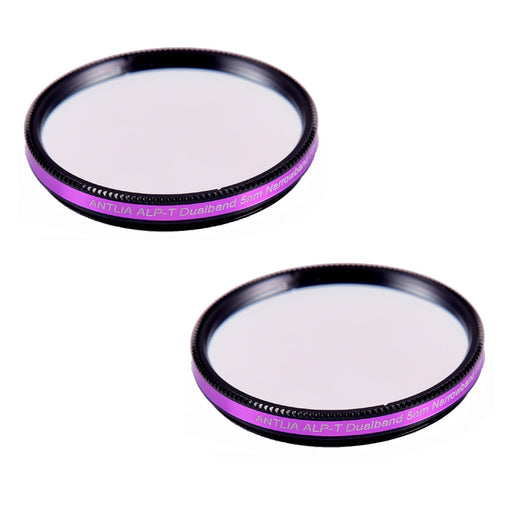
Antlia ALP-T Dualband 5nm Ha/OIII and SII/Hb Filter Set - 2"
2-filter set captures four narrowband channels (Ha, OIII, SII, H-beta) with one-shot color cameras Ha/OIII filter isolates H-alpha (656.3nm) and O...
View full details
Original price
$690.00 USD
-
Original price
$690.00 USD
Original price
$690.00 USD
$690.00 USD
-
$690.00 USD
Current price
$690.00 USD
Original price
$380.00 USD
-
Original price
$380.00 USD
Original price
$380.00 USD
$380.00 USD
-
$380.00 USD
Current price
$380.00 USD
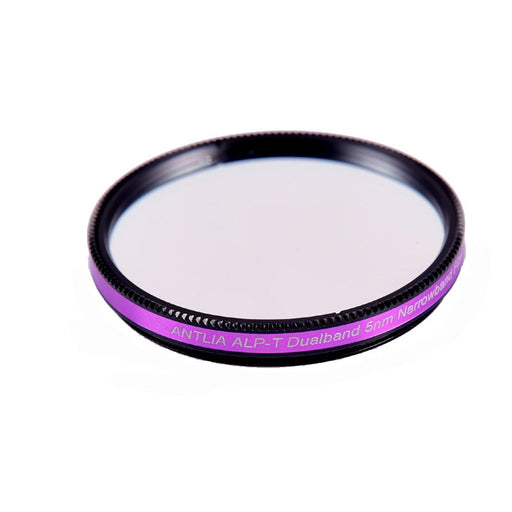
Antlia ALP-T Dualband 5nm Ha/OIII Filter
Dual line-pass filter for Hydrogen-alpha (656.3nm) and Oxygen III (500.7nm) Tight 5nm FWHM bandpass for both emission lines Peak transmission of 9...
View full details
Original price
$380.00 USD
-
Original price
$380.00 USD
Original price
$380.00 USD
$380.00 USD
-
$380.00 USD
Current price
$380.00 USD
Original price
$380.00 USD
-
Original price
$380.00 USD
Original price
$380.00 USD
$380.00 USD
-
$380.00 USD
Current price
$380.00 USD
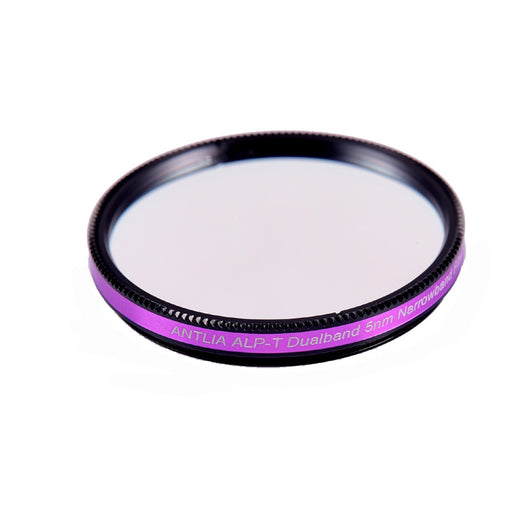
Antlia ALP-T Dualband 5nm Ha/OIII Highspeed Filter
Dual 5nm bandpasses for Hydrogen-alpha (657.8nm) and Oxygen-III (502.2nm) Optimized for high-speed imaging systems from f/2.2 to f/3.6 Peak transm...
View full details
Original price
$380.00 USD
-
Original price
$380.00 USD
Original price
$380.00 USD
$380.00 USD
-
$380.00 USD
Current price
$380.00 USD
Original price
$350.00 USD
-
Original price
$350.00 USD
Original price
$350.00 USD
$350.00 USD
-
$350.00 USD
Current price
$350.00 USD
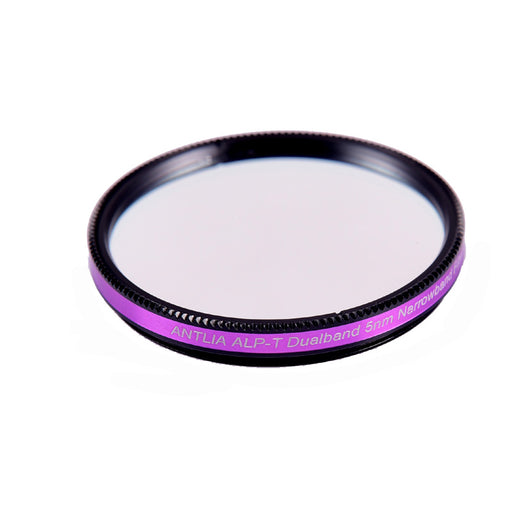
Antlia ALP-T Dualband 5nm SII/Hb Filter
Dual-bandpass 5nm design for one-shot color (OSC) cameras Passes Sulfur-II (672.4nm) and Hydrogen-Beta (486.1nm) emission lines Peak transmission ...
View full details
Original price
$350.00 USD
-
Original price
$350.00 USD
Original price
$350.00 USD
$350.00 USD
-
$350.00 USD
Current price
$350.00 USD


Original price
$230.00 USD
-
Original price
$230.00 USD
Original price
$230.00 USD
$230.00 USD
-
$230.00 USD
Current price
$230.00 USD
Antlia S1 Dual-Band 5nm H-Alpha/OIII Filter for Seestar S50 Pro
Designed specifically for the Seestar S50 Pro Dual-band filter passes H-alpha and OIII emission lines Narrow 5nm bandpass for high-contrast imagin...
View full details
Original price
$230.00 USD
-
Original price
$230.00 USD
Original price
$230.00 USD
$230.00 USD
-
$230.00 USD
Current price
$230.00 USD