
Imaging Filters
Not every imaging filter is narrowband or LRGB. Ultraviolet and infrared cut filters, luminance filters, methane band filters for planetary work and dedicated infrared pass filters each solve a specific problem, and several of them are more useful than their obscurity suggests. David Astro carries imaging filters in Canada, in Canadian inventory and shipped domestically.
These filters address particular situations rather than general imaging. Tell us what problem you are seeing and we will say whether one of them fixes it.
Original price
$192.00
-
Original price
$883.00
Original price
$192.00
-
$883.00
$192.00
-
$883.00
Current price
$192.00
Baader Photometric SLOAN/SDSS g' Individual Filter
Options available
SLOAN/SDSS g' Bandpass: Conforms to the modern standard for astronomical photometry. Photometric Grade: Produces scientifically valid data for r...
View full details
Original price
$192.00
-
Original price
$883.00
Original price
$192.00
-
$883.00
$192.00
-
$883.00
Current price
$192.00
Original price
$192.00
-
Original price
$883.00
Original price
$192.00
-
$883.00
$192.00
-
$883.00
Current price
$192.00
Baader Photometric SLOAN/SDSS i' Individual Filter
Options available
SLOAN/SDSS i' Standard: Conforms to the standardized Sloan Digital Sky Survey photometric system for consistent, comparable scientific data. Pho...
View full details
Original price
$192.00
-
Original price
$883.00
Original price
$192.00
-
$883.00
$192.00
-
$883.00
Current price
$192.00
Original price
$192.00
-
Original price
$883.00
Original price
$192.00
-
$883.00
$192.00
-
$883.00
Current price
$192.00
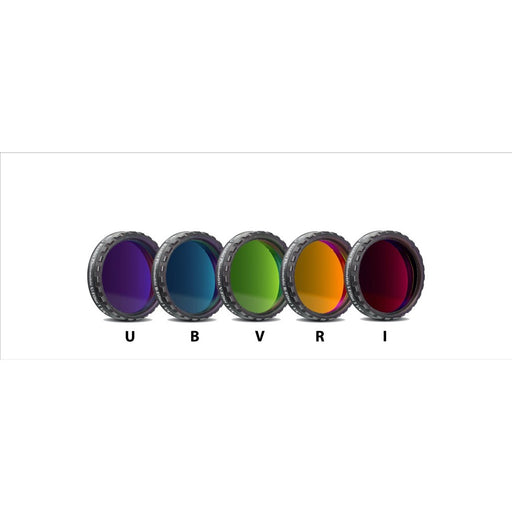
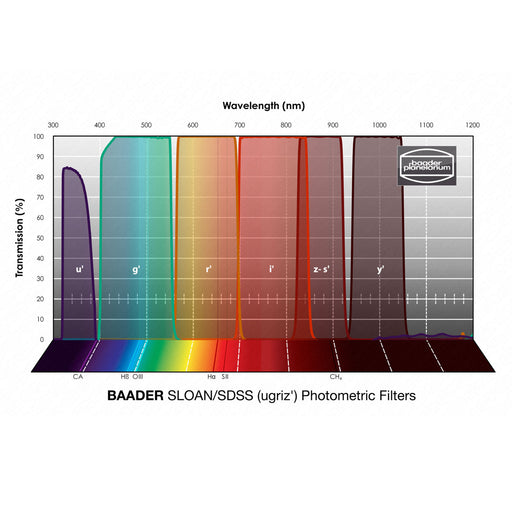
Baader Photometric SLOAN/SDSS r' Individual Filter
Options available
Conforms to the scientific SLOAN/SDSS r' photometric system Engineered for professional and amateur astronomical research Available in 8 formats, ...
View full details
Original price
$192.00
-
Original price
$883.00
Original price
$192.00
-
$883.00
$192.00
-
$883.00
Current price
$192.00
Original price
$199.00
-
Original price
$893.00
Original price
$199.00
-
$893.00
$199.00
-
$893.00
Current price
$199.00
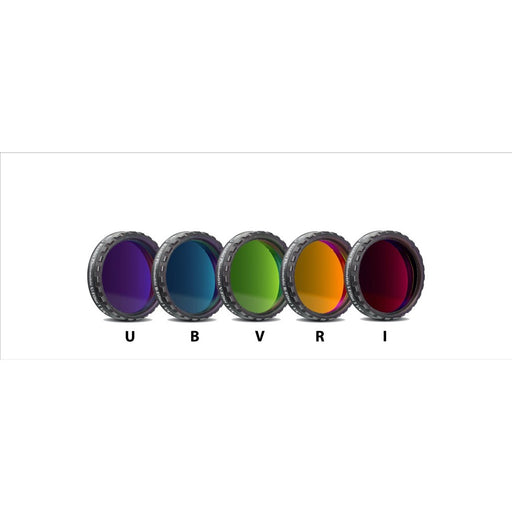
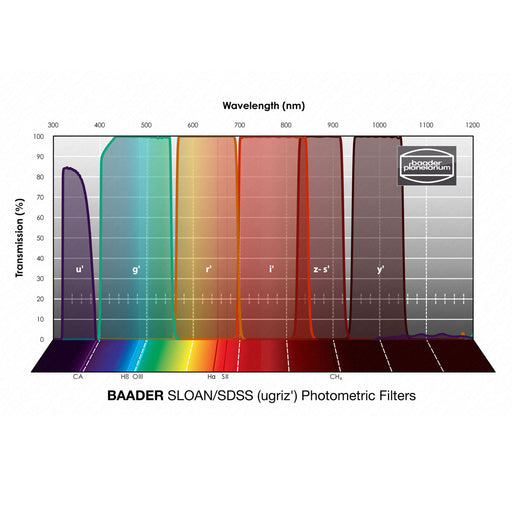
Baader Photometric SLOAN/SDSS u' Individual Filter
Options available
Standardized SLOAN/SDSS u'-band photometric filter Isolates the near-ultraviolet (UV) spectrum for scientific analysis Designed for repeatable, hi...
View full details
Original price
$199.00
-
Original price
$893.00
Original price
$199.00
-
$893.00
$199.00
-
$893.00
Current price
$199.00
Original price
$960.00
-
Original price
$4,634.00
Original price
$960.00
-
$4,634.00
$960.00
-
$4,634.00
Current price
$960.00
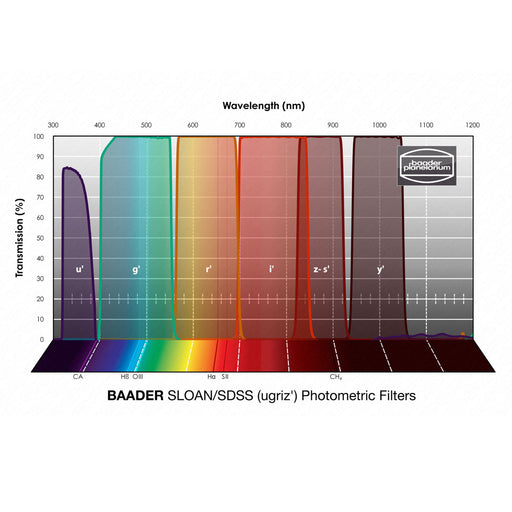
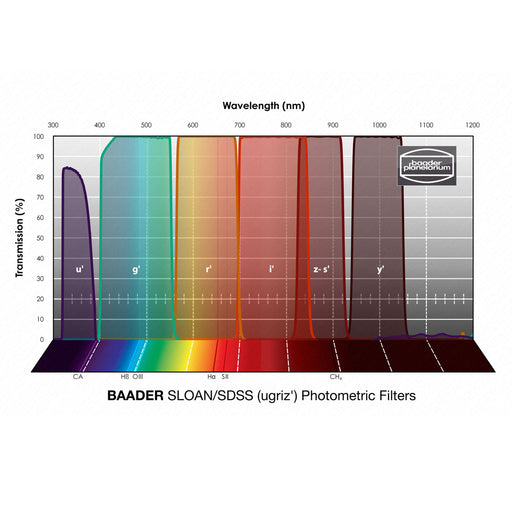
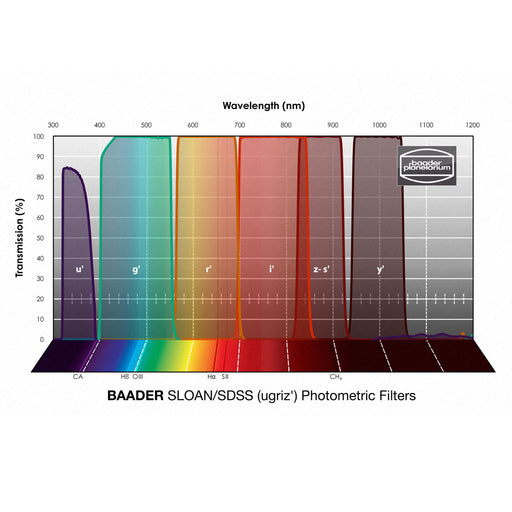
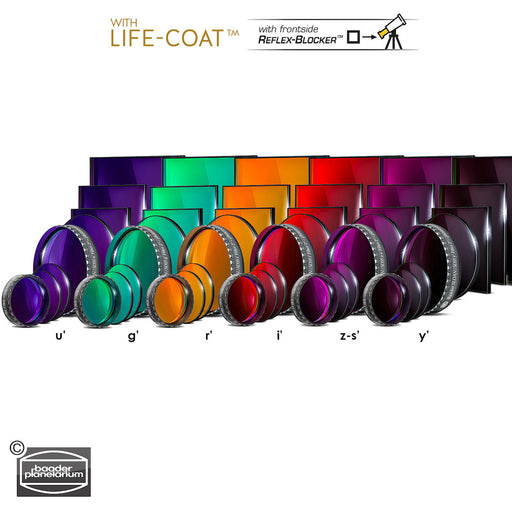
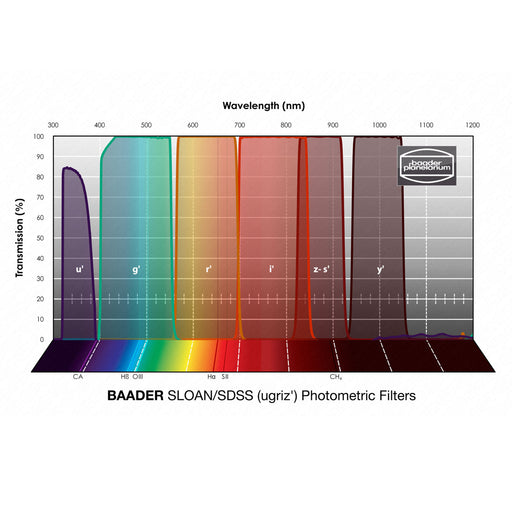
Baader Photometric SLOAN/SDSS ugriz' Filter Set
Options available
Conforms to the Sloan Digital Sky Survey (SDSS) photometric system Includes five filters: u' (ultraviolet), g' (green), r' (red), i' (infrared), a...
View full details
Original price
$960.00
-
Original price
$4,634.00
Original price
$960.00
-
$4,634.00
$960.00
-
$4,634.00
Current price
$960.00
Original price
$182.00
-
Original price
$883.00
Original price
$182.00
-
$883.00
$182.00
-
$883.00
Current price
$182.00
Baader Photometric SLOAN/SDSS y' Individual Filter
Options available
Conforms to the SLOAN/SDSS y' photometric standard Designed for scientific magnitude measurements Ideal for variable star and exoplanet transit re...
View full details
Original price
$182.00
-
Original price
$883.00
Original price
$182.00
-
$883.00
$182.00
-
$883.00
Current price
$182.00
Original price
$182.00
-
Original price
$883.00
Original price
$182.00
-
$883.00
$182.00
-
$883.00
Current price
$182.00
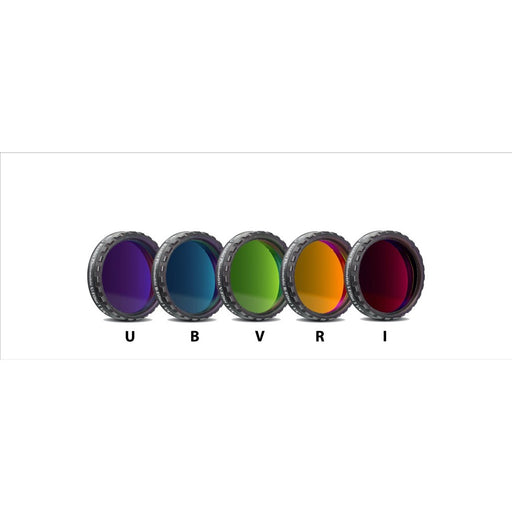
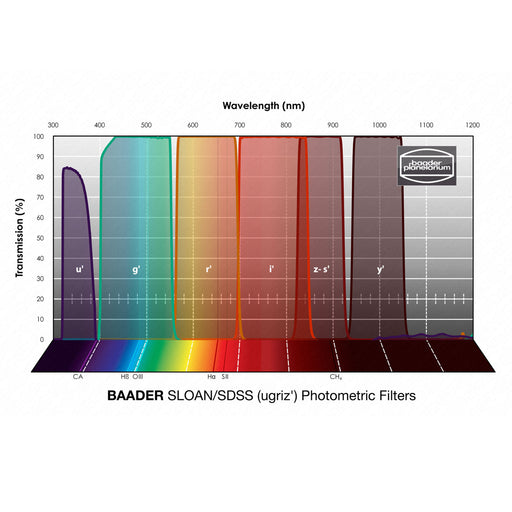
Baader Photometric SLOAN/SDSS z-s' Individual Filter
Options available
Photometric filter for the SLOAN/SDSS z-s' bandpass Conforms to the Sloan Digital Sky Survey photometric system standard Enables calibrated, scien...
View full details
Original price
$182.00
-
Original price
$883.00
Original price
$182.00
-
$883.00
$182.00
-
$883.00
Current price
$182.00
Original price
$856.00
-
Original price
$3,863.00
Original price
$856.00
-
$3,863.00
$856.00
-
$3,863.00
Current price
$856.00
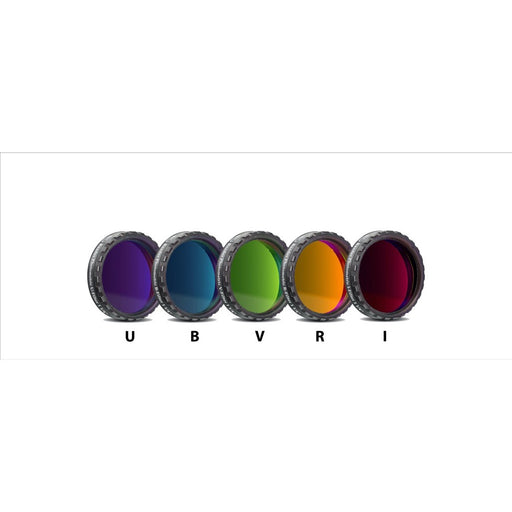
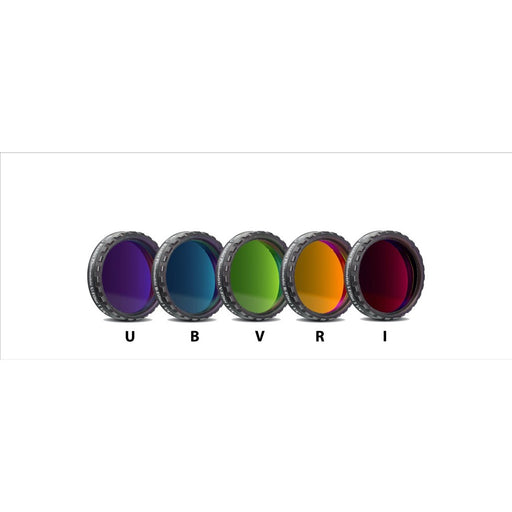
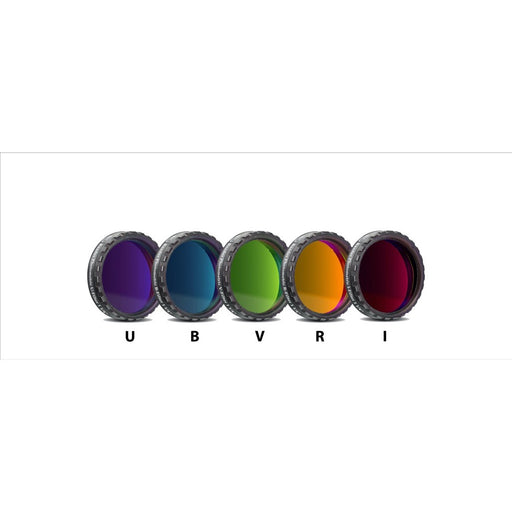
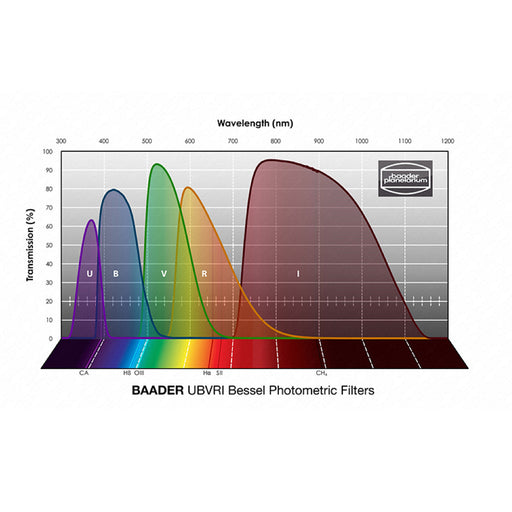
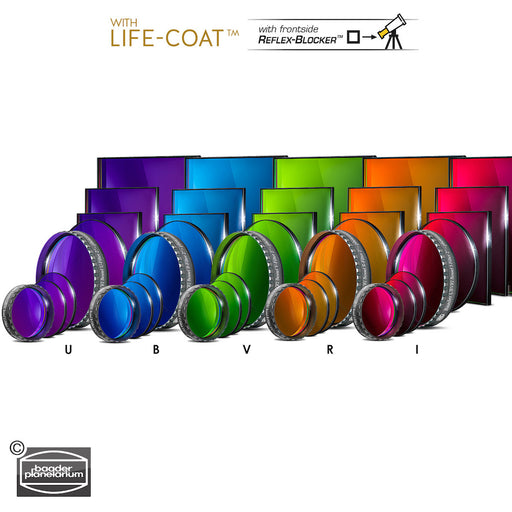
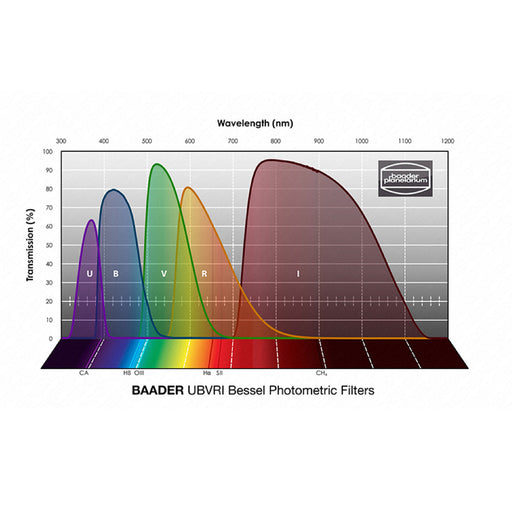
Baader Photometric UBVRI Filter Set
Options available
Standardized UBVRI Bessel passbands for scientific photometry Enables measurement of variable stars, asteroids, and exoplanet transits Precision p...
View full details
Original price
$856.00
-
Original price
$3,863.00
Original price
$856.00
-
$3,863.00
$856.00
-
$3,863.00
Current price
$856.00
Original price
$183.00
-
Original price
$873.00
Original price
$183.00
-
$873.00
$183.00
-
$873.00
Current price
$183.00
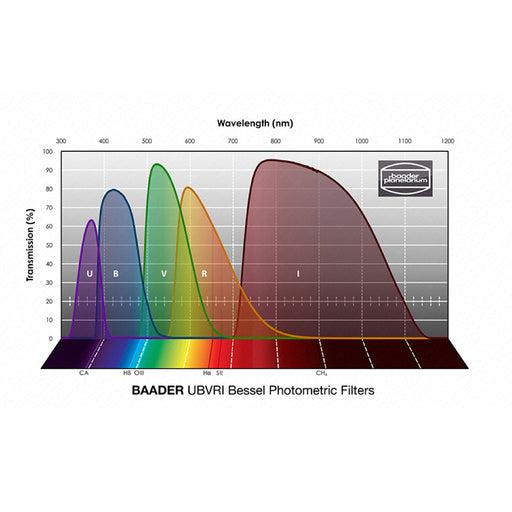
Baader Photometric UBVRI-B Individual Filter
Options available
Conforms to the standardized Johnson-Cousins/Bessel B-band passband Designed for research-grade scientific photometry Advanced anti-reflection and...
View full details
Original price
$183.00
-
Original price
$873.00
Original price
$183.00
-
$873.00
$183.00
-
$873.00
Current price
$183.00
Original price
$207.00
-
Original price
$940.00
Original price
$207.00
-
$940.00
$207.00
-
$940.00
Current price
$207.00
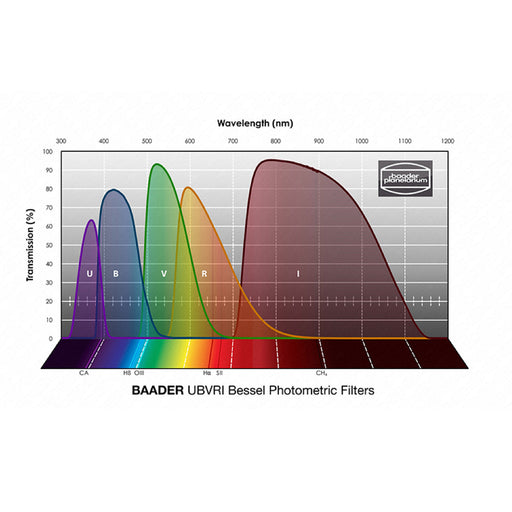
Baader Photometric UBVRI-I Individual Filter
Options available
Conforms to the Johnson-Cousins UBVRI Photometric System Optimized for the Bessel I-Band (Infrared) Homofocal Design for Parfocal Operation with o...
View full details
Original price
$207.00
-
Original price
$940.00
Original price
$207.00
-
$940.00
$207.00
-
$940.00
Current price
$207.00
Original price
$183.00
-
Original price
$873.00
Original price
$183.00
-
$873.00
$183.00
-
$873.00
Current price
$183.00
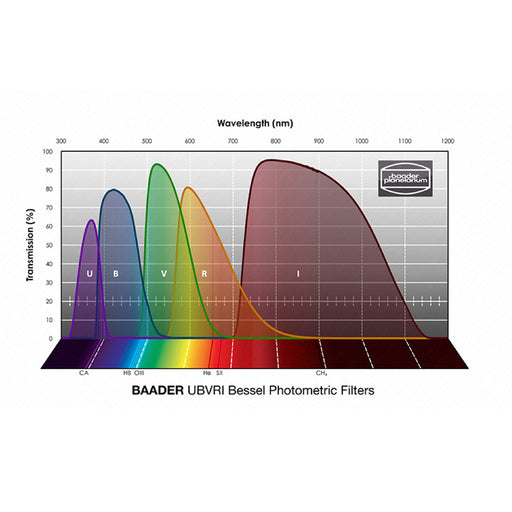
Baader Photometric UBVRI-R Individual Filter
Options available
Conforms to the Johnson-Cousins-Bessel R-Band Photometric Standard Engineered for Scientific Photometry and Data Collection Plane-Parallel Substra...
View full details
Original price
$183.00
-
Original price
$873.00
Original price
$183.00
-
$873.00
$183.00
-
$873.00
Current price
$183.00
Original price
$207.00
-
Original price
$940.00
Original price
$207.00
-
$940.00
$207.00
-
$940.00
Current price
$207.00
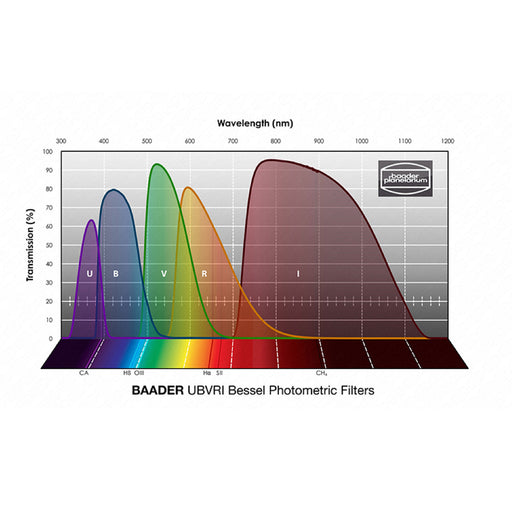
Baader Photometric UBVRI-U Individual Filter
Options available
1 variants in stock
Conforms to the Johnson-Cousins/Bessel U-Band Photometric Standard Designed for Scientific Photometry of Variable Stars and Stellar Classification...
View full details
Original price
$207.00
-
Original price
$940.00
Original price
$207.00
-
$940.00
$207.00
-
$940.00
Current price
$207.00
Original price
$183.00
-
Original price
$873.00
Original price
$183.00
-
$873.00
$183.00
-
$873.00
Current price
$183.00
Baader Photometric UBVRI-V Individual Filter
Options available
1 variants in stock
Bessel V-Band Standard: Precisely conforms to the internationally recognized Johnson-Cousins-Bessel V-band for consistent, scientific-grade magni...
View full details
Original price
$183.00
-
Original price
$873.00
Original price
$183.00
-
$873.00
$183.00
-
$873.00
Current price
$183.00


Original price
$929.00
-
Original price
$1,971.00
Original price
$929.00
-
$1,971.00
$929.00
-
$1,971.00
Current price
$929.00
Baader Planetarium 3.5 / 4nm f/3 Ultra-Highspeed Filter-Set – CMOS-optimized (H-alpha / O-III / S-II)
Options available
3.5 / 4nm Ultra-Narrow H-alpha, O-III & S-II Bandpasses Pre-Shifted for Fast f/3 "Ultra-Highspeed" Optical Systems CMOS-Optimized with Anti-Re...
View full details
Original price
$929.00
-
Original price
$1,971.00
Original price
$929.00
-
$1,971.00
$929.00
-
$1,971.00
Current price
$929.00


Original price
$77.00
-
Original price
$77.00
Original price
$77.00
$77.00
-
$77.00
Current price
$77.00
Baader Planetarium FCCT 2" Unmounted Clearglass Filter (Ø 47.4 mm)
BAA-2458416U
2-inch (47.4 mm) unmounted clearglass filter Designed to be parfocal with other Baader narrowband filters CMOS-optimized anti-reflection coatings ...
View full details
Original price
$77.00
-
Original price
$77.00
Original price
$77.00
$77.00
-
$77.00
Current price
$77.00


Original price
$115.00
-
Original price
$201.00
Original price
$115.00
-
$201.00
$115.00
-
$201.00
Current price
$115.00
Baader Planetarium H-alpha Bandpass Filter (20nm)
Options available
H-alpha Bandpass Filter in 1.25" & 2" Sizes 20nm FWHM Bandwidth 656.3nm Center Wavelength Optimized for Color CMOS/CCD Cameras High-Contrast f...
View full details
Original price
$115.00
-
Original price
$201.00
Original price
$115.00
-
$201.00
$115.00
-
$201.00
Current price
$115.00


Original price
$199.00
-
Original price
$487.00
Original price
$199.00
-
$487.00
$199.00
-
$487.00
Current price
$199.00
Baader Planetarium H-alpha f/2 Highspeed-Filter (6.5nm) – CMOS-optimized
Options available
Engineered for ultra-fast f/2 optical systems 6.5nm H-alpha bandpass for high-contrast imaging CMOS-optimized to suppress halos and internal refle...
View full details
Original price
$199.00
-
Original price
$487.00
Original price
$199.00
-
$487.00
$199.00
-
$487.00
Current price
$199.00


Original price
$363.00
-
Original price
$873.00
Original price
$363.00
-
$873.00
$363.00
-
$873.00
Current price
$363.00
Baader Planetarium H-alpha f/2 Ultra-Highspeed-Filter (3.5nm) – CMOS-optimized
Options available
Engineered for f/2 ultra-highspeed optical systems 3.5nm bandpass for maximum H-alpha contrast CMOS-optimized with anti-reflection coatings Availa...
View full details
Original price
$363.00
-
Original price
$873.00
Original price
$363.00
-
$873.00
$363.00
-
$873.00
Current price
$363.00


Original price
$347.00
-
Original price
$770.00
Original price
$347.00
-
$770.00
$347.00
-
$770.00
Current price
$347.00
Baader Planetarium H-alpha f/3 Ultra-Highspeed-Filter (3.5nm) – CMOS-optimized
Options available
3.5nm H-alpha Bandpass Optimized for f/3 Ultra-High-Speed Systems Available in 1.25" & 2" mounted, 31mm, 36mm & 50.4mm round unmounted, an...
View full details
Original price
$347.00
-
Original price
$770.00
Original price
$347.00
-
$770.00
$347.00
-
$770.00
Current price
$347.00


Original price
$352.00
-
Original price
$795.00
Original price
$352.00
-
$795.00
$352.00
-
$795.00
Current price
$352.00
Baader Planetarium H-alpha Ultra-Narrowband-Filter (3.5nm) – CMOS-optimized
Options available
3.5nm Ultra-Narrow Bandpass Available in 1.25" & 2" mounted, 31mm, 36mm & 50.4mm round unmounted, and 50x50mm & 65x65mm square sizes C...
View full details
Original price
$352.00
-
Original price
$795.00
Original price
$352.00
-
$795.00
$352.00
-
$795.00
Current price
$352.00


Original price
$244.00
-
Original price
$559.00
Original price
$244.00
-
$559.00
$244.00
-
$559.00
Current price
$244.00
Baader Planetarium H-Beta Narrowband-Filter (5.5nm) – CMOS-optimized
Options available
Isolates Hydrogen-Beta (H-Beta) Emission Line 5.5nm FWHM Narrowband Passband Available in 1.25" & 2" Mounted, 31/36/50.4mm Round Unmounted and...
View full details
Original price
$244.00
-
Original price
$559.00
Original price
$244.00
-
$559.00
$244.00
-
$559.00
Current price
$244.00


Original price
$199.00
-
Original price
$479.00
Original price
$199.00
-
$479.00
$199.00
-
$479.00
Current price
$199.00
Baader Planetarium O-III f/2 Highspeed-Filter (6.5nm) – CMOS-optimized
Options available
6.5nm FWHM Bandpass for O-III Optimized for f/2 to f/3.5 High-Speed Optical Systems Available in 1.25" & 2" Mounted, 31mm, 36mm, 47.4mm (FCCT)...
View full details
Original price
$199.00
-
Original price
$479.00
Original price
$199.00
-
$479.00
$199.00
-
$479.00
Current price
$199.00


Original price
$333.00
-
Original price
$669.00
Original price
$333.00
-
$669.00
$333.00
-
$669.00
Current price
$333.00
Baader Planetarium O-III f/2 Ultra-Highspeed-Filter (4nm) – CMOS-optimized
Options available
4nm FWHM Bandpass Optimized for f/2 Ultra-Highspeed Systems Available in 1.25" & 2" Mounted, 31mm, 36mm, 47.4mm (FCCT) & 50.4mm Round Unmo...
View full details
Original price
$333.00
-
Original price
$669.00
Original price
$333.00
-
$669.00
$333.00
-
$669.00
Current price
$333.00


Original price
$317.00
-
Original price
$667.00
Original price
$317.00
-
$667.00
$317.00
-
$667.00
Current price
$317.00
Baader Planetarium O-III f/3 Ultra-Highspeed-Filter (4nm) – CMOS-optimized
Options available
4nm FWHM Ultra-Narrow Bandpass Optimized for f/3 and Faster Optical Systems Available in 1.25" & 2" Mounted, 31mm, 36mm & 50.4mm Round Unm...
View full details
Original price
$317.00
-
Original price
$667.00
Original price
$317.00
-
$667.00
$317.00
-
$667.00
Current price
$317.00