Skip to content
IMPORTANT: Our store is located in Canada. All orders that include products manufactured outside of Canada or USA will be subject to tariffs and duties, regardless of the order value. US customers are responsible for all applicable duties and tariffs, and those will be billed by the carrier, except for the Lacerta upgrade kit, for which we collect them at checkout.

Language

Country

iOptron 250mm f/4 Imaging Newtonian

by iOptron
SKU IOP-6313
Original price $799.00 - Original price $799.00
Original price
$799.00
$799.00 - $799.00
Current price $799.00
Price Match Policy!
  • 250mm (10") Parabolic Primary Mirror
  • 1000mm Focal Length
  • Fast f/4 Focal Ratio
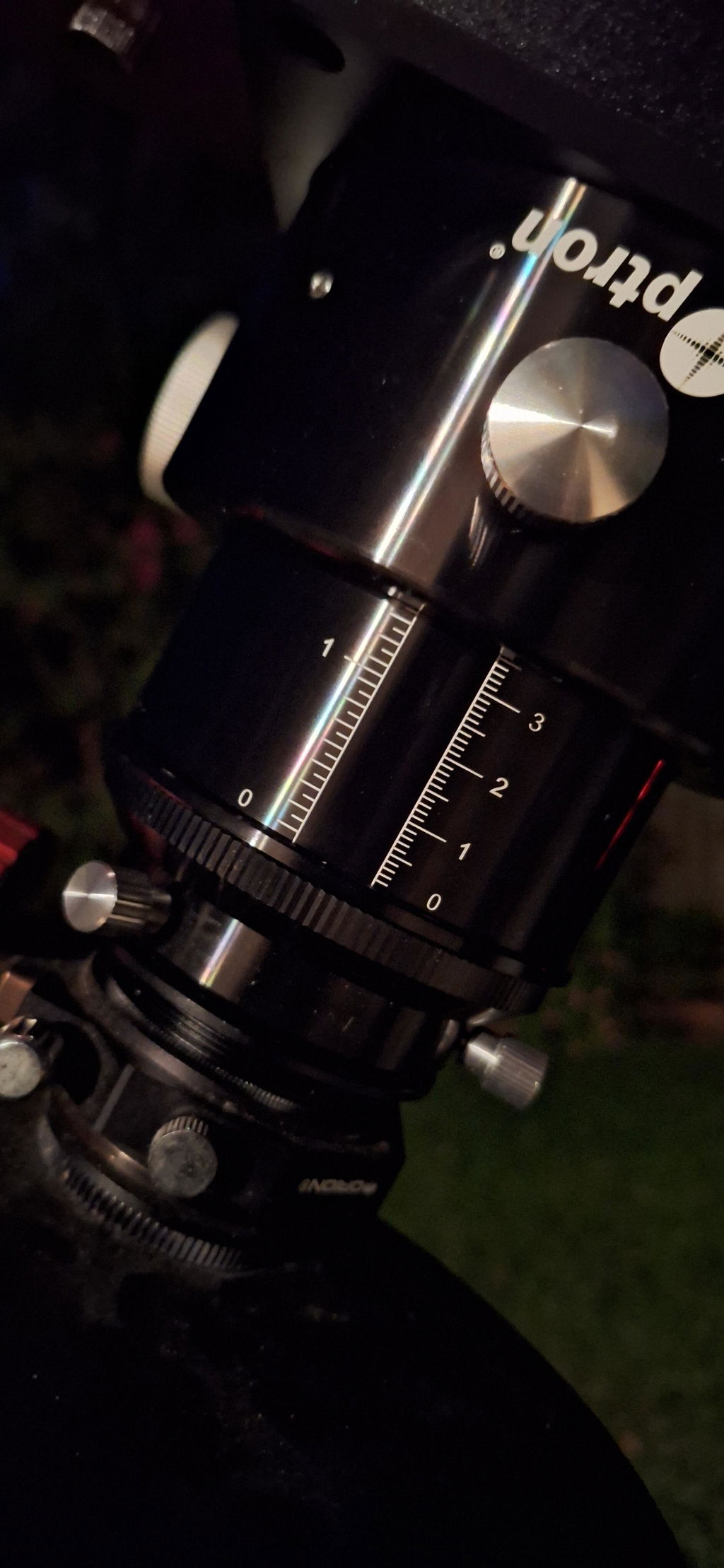
  • 10:1 Dual-Speed Focuser
  • 34 lb 1 oz Optical Tube Assembly Weight
Backordered
Availability Info
FREE Shipping in CONUS
Visual Simulator Preview
Visual Simulator Instant FOV Preview

Preview your eyepiece's FOV

Simulate the exact field of view of the iOptron 250mm f/4 Imaging Newtonian with your specific telescope.

Launch Visual Assistant
Framing Simulator Preview
Framing Simulator Instant FOV Preview

Preview your camera's FOV

Simulate the exact field of view of the iOptron 250mm f/4 Imaging Newtonian with your specific telescope.

Launch Imaging Assistant
  • Description
  • FAQ
  • Specifications
  • In the Box
  • Warranty
  • iOptron 250mm f/4 Imaging Newtonian

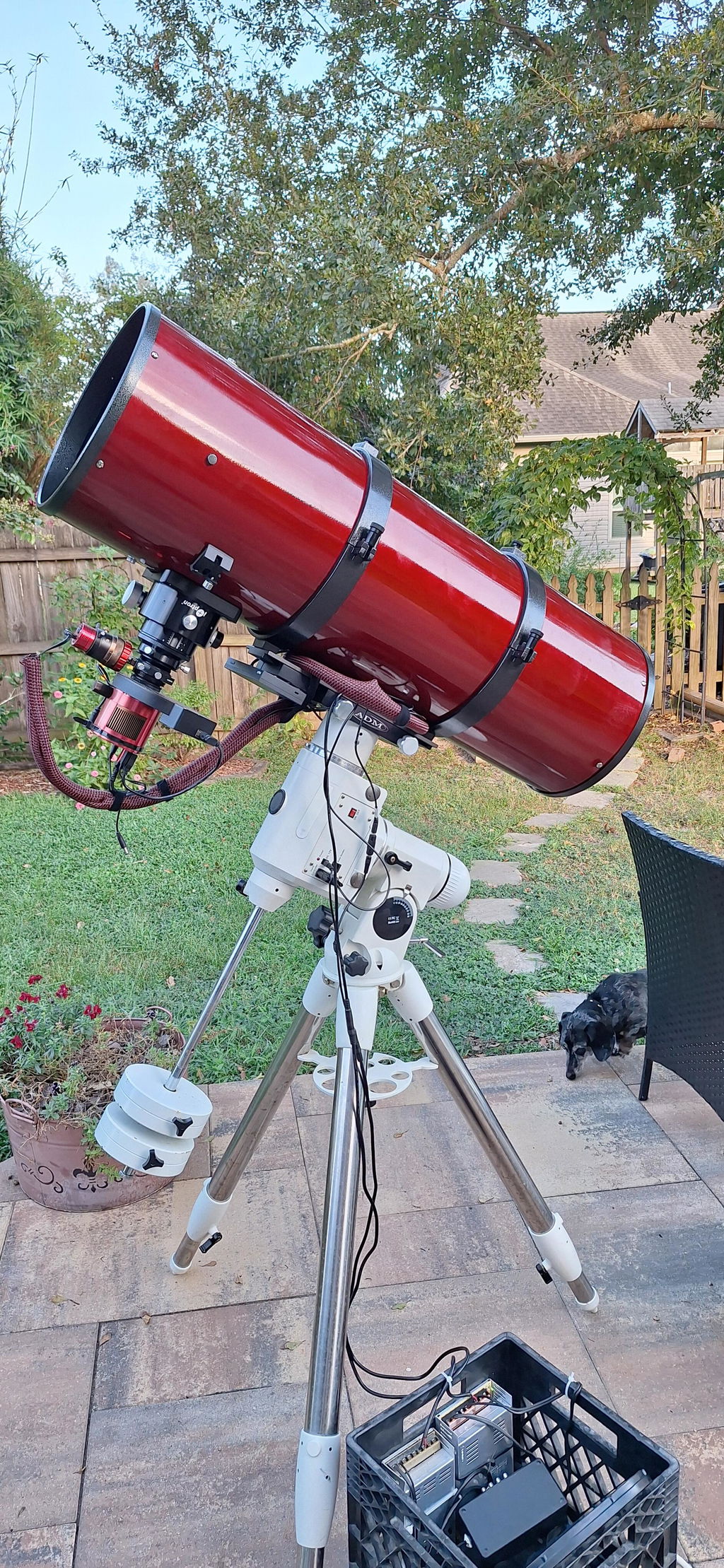
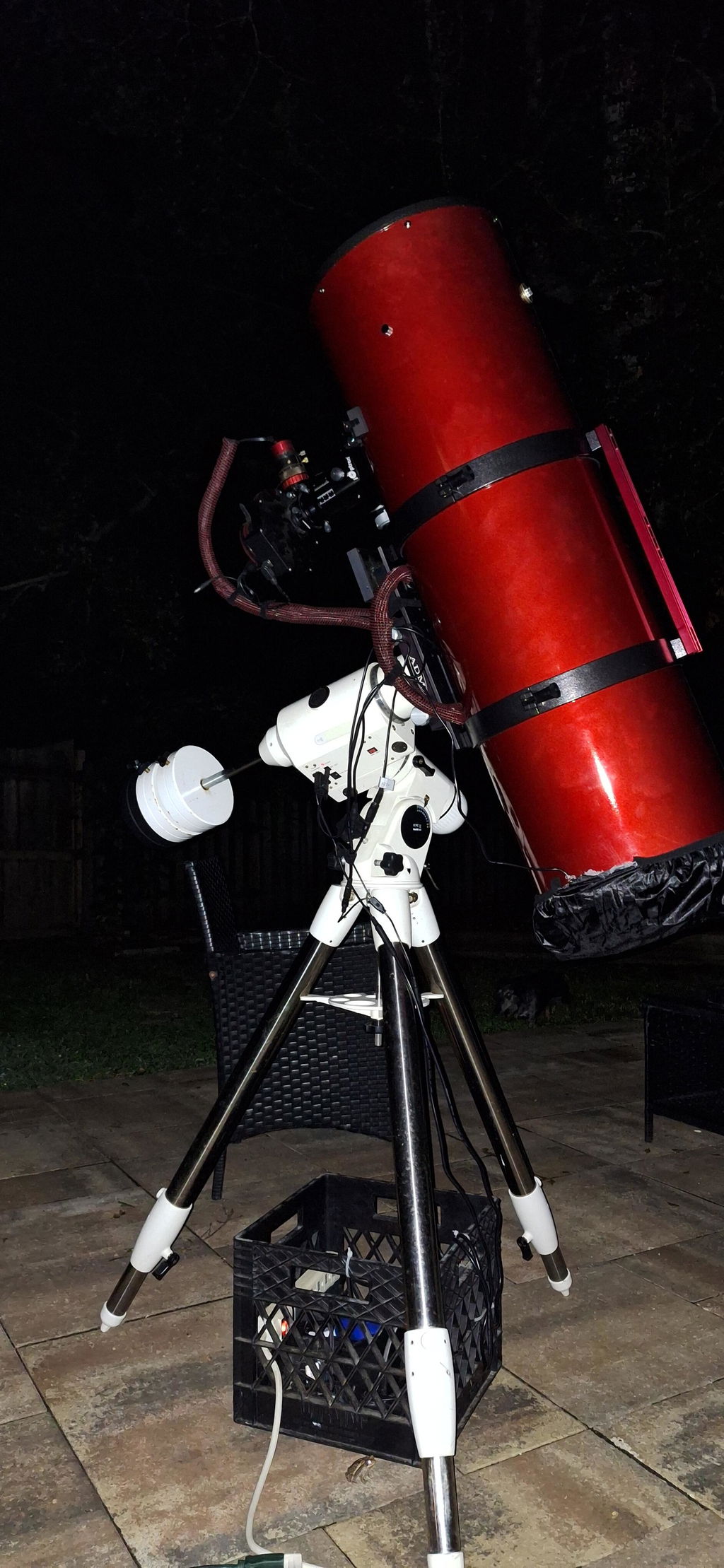
    The iOptron 250mm f/4 Imaging Newtonian combines a massive 250mm aperture with a fast f/4 optical system to create a powerful instrument for deep-sky astrophotography. Its 1000mm focal length provides an ideal image scale for capturing galaxies and nebulae, while the 34 lb 1 oz optical tube assembly is built for serious imaging platforms. Fine focusing is achieved with a 10:1 dual-speed focuser, ensuring critically sharp stars across your field of view.

    250mm f/4 Optics: A Wide-Field, Light-Gathering Powerhouse

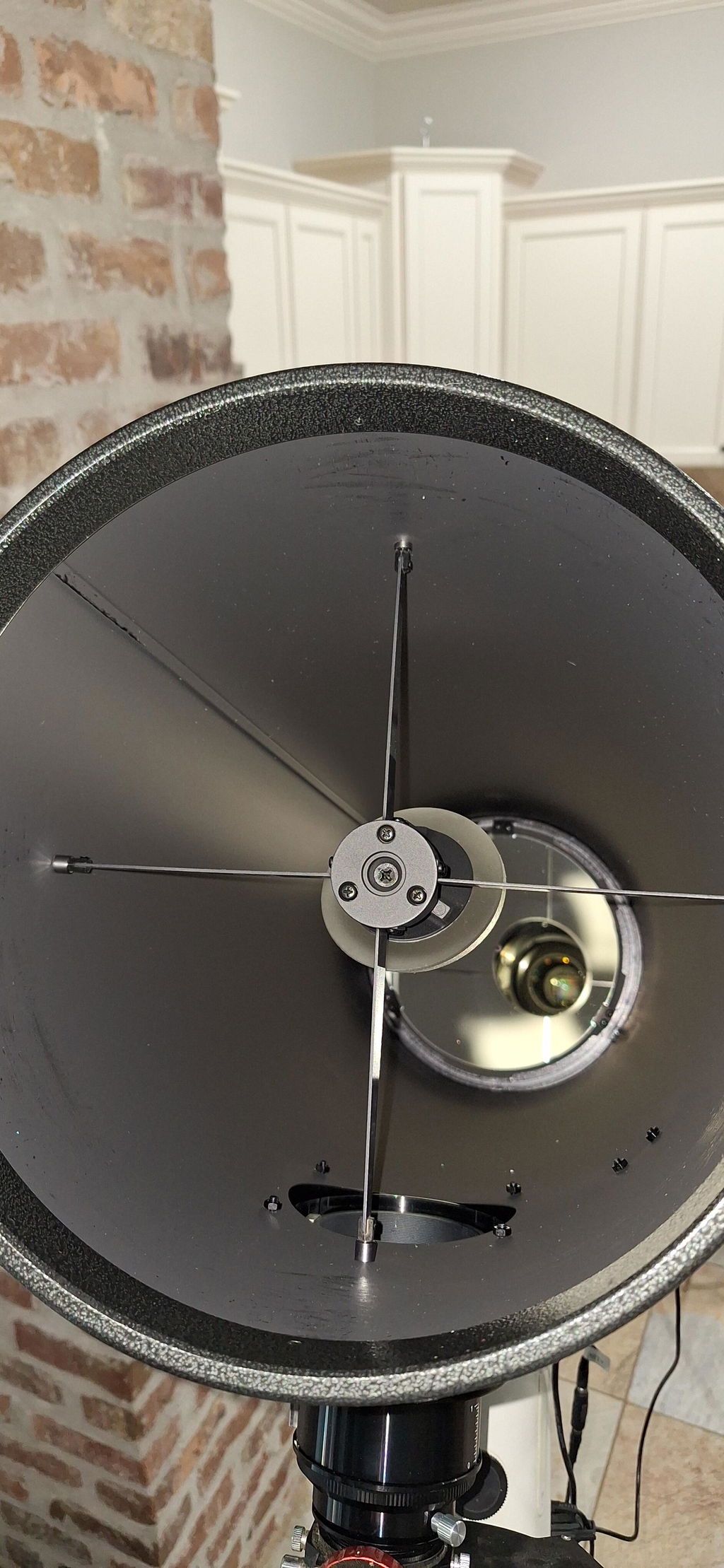
    The heart of this telescope is its 250mm (10-inch) primary mirror. This large aperture gathers a tremendous amount of light, allowing you to resolve faint details in distant celestial objects. Paired with a fast f/4 focal ratio, this Newtonian drastically reduces required exposure times compared to slower f/8 or f/10 systems, letting you collect more data in a single night.

    The 1000mm focal length offers a generous field of view, perfect for framing large targets like the Andromeda Galaxy (M31) or the North American Nebula (NGC 7000). For imagers using modern CMOS or DSLR cameras, this combination of aperture and speed is purpose-built for capturing high-signal, low-noise images of the deep sky.

    Imaging-Ready Design: 34 lb OTA with a 10:1 Dual-Speed Focuser

    Engineered for astrophotography, this OTA includes critical features for obtaining the best results. The 10:1 dual-speed focuser allows for precise, minute adjustments, which is essential for achieving perfect focus at a fast f/4 focal ratio. An included 2-inch, 35mm long extension tube helps ensure your camera can reach focus with various imaging train configurations.

    At 34 lb 1 oz, the optical tube requires a substantial equatorial mount with sufficient payload capacity to ensure stable, accurate tracking for long exposures. The 12-inch outside diameter means standard, widely available tube rings and accessories will be compatible with this instrument.

    250mm vs. 200mm Newtonians: The 56% Light-Gathering Advantage

    When choosing an imaging Newtonian, aperture is a primary consideration. Compared to a smaller 200mm (8-inch) Newtonian, the iOptron 250mm model offers a significant step up in light-gathering capability.

    • Light Grasp: A 250mm mirror has approximately 56% more surface area than a 200mm mirror. This translates directly into brighter images and the ability to capture fainter details in the same amount of time.
    • Resolution: The larger aperture also provides higher theoretical resolution, allowing you to resolve finer details in globular clusters like M13 or planetary nebulae like the Ring Nebula (M57), assuming good seeing conditions.
    • Mount Requirements: The trade-off for this increase in aperture is weight. The 34 lb 1 oz OTA weight necessitates a more robust (and costly) mount than a typical 8-inch Newtonian requires.
  • What kind of mount is required for the iOptron 250mm f/4 Newtonian?

    With an optical tube weight of 34 lb 1 oz, you will need a robust equatorial mount. For imaging, a good rule of thumb is to keep the payload at 50-60% of the mount's stated capacity. Therefore, a mount in the 60-70 lb payload class (like an iOptron CEM70 or similar) is recommended for stable, precise tracking.

    How does the f/4 focal ratio of the iOptron 250mm Newtonian affect imaging times?

    The f/4 focal ratio is considered very fast in astrophotography. Compared to an f/8 system of the same aperture, an f/4 system is four times faster. This means you can capture the same amount of signal in one-quarter of the time, allowing you to complete projects more quickly or go deeper on faint targets.

    Is the iOptron 250mm f/4 Newtonian suitable for visual astronomy?

    While designed for imaging, this telescope is also a capable visual instrument. The large 250mm aperture will provide stunning, bright views of deep-sky objects. However, the f/4 focal ratio will be demanding on eyepieces and will show significant coma away from the center of the field without a visual coma corrector.

    What accessories are needed to start imaging with the iOptron 250mm f/4 OTA?

    This product is an Optical Tube Assembly (OTA) only. To begin imaging, you will need to supply several key components separately:

    • Tube Rings and a Dovetail Plate: To attach the telescope to your mount.
    • A Coma Corrector: Essential for achieving sharp stars across the field with a fast f/4 Newtonian.
    • A Finder Scope or Guide Scope: For locating objects and autoguiding.
    • An Equatorial Mount: With sufficient payload capacity (see above).
    • A Camera: A dedicated astronomy camera or DSLR.

    How will the iOptron 250mm f/4 Newtonian perform on large targets like the Andromeda Galaxy (M31)?

    The 1000mm focal length combined with the f/4 speed makes it an excellent choice for large targets like M31. When paired with a camera sensor like an APS-C or even full-frame (with a suitable coma corrector), you can frame the entire galaxy, including its faint outer arms, in a single shot while the 250mm aperture resolves dust lanes and star-forming regions within its spiral structure.

    Do I need a coma corrector with the iOptron 250mm f/4 Imaging Newtonian?

    Yes, for imaging, a coma corrector is considered mandatory for an f/4 Newtonian. Coma is an optical aberration inherent to parabolic mirrors that makes stars at the edge of the field appear comet-shaped. A coma corrector is a lens assembly that corrects this, ensuring pinpoint stars across your entire camera sensor.

  • Optical Design Newtonian
    Clear Aperture 250mm
    Focal Length 1000mm
    Focal Ratio f/4
    Focuser 10:1 dual-speed
    OTA Weight 34lb. 1oz
    Outside Diameter 12 inches
    Extension Tube 2" diameter 35mm L |
    OTA Length inches
    Gross Weight (Shipping) 48 lbs
    Shipping Dimensions 44 x 20 x 18 in
  • iOptron 2-Year Telescope Warranty