
Chroma
Chroma filters are made for people who have already eliminated every other variable in their imaging and want the filter to stop being one. Hard-coated sputtered layers on high-quality substrates give very steep transitions, excellent blocking and — the characteristic imagers notice most — an absence of halos around bright stars. David Astro carries Chroma products in Canada, stocked in Canada and shipped worldwide.
These are premium components and worth specifying carefully. Tell us your camera, wheel and focal ratio and we will size and select precisely.
Original price
$275.00
-
Original price
$725.00
Original price
$275.00
-
$725.00
$275.00
-
$725.00
Current price
$275.00
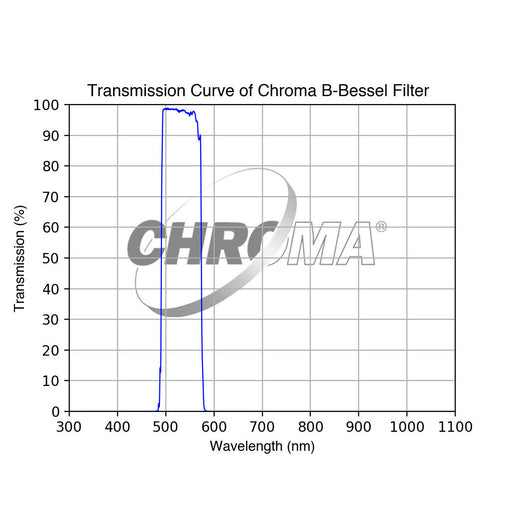
Chroma B-Bessel Filter
Options available
Blue photometric filter in UVBRI series Filters designed for use with CCD and for f/4.0 or slower No reflections leading to image distortions or ""...
View full details
Original price
$275.00
-
Original price
$725.00
Original price
$275.00
-
$725.00
$275.00
-
$725.00
Current price
$275.00
Original price
$150.00
-
Original price
$500.00
Original price
$150.00
-
$500.00
$150.00
-
$500.00
Current price
$150.00
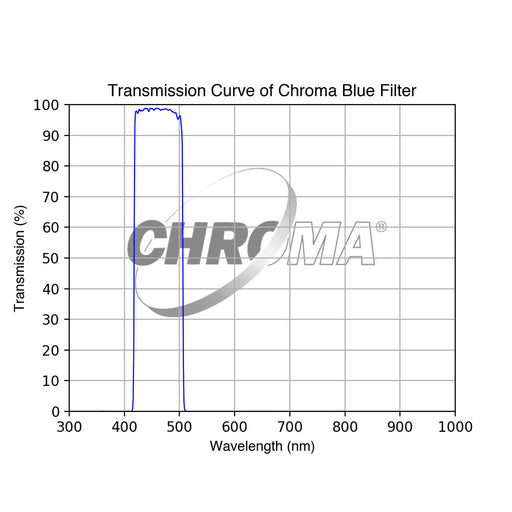
Chroma Blue Filter
Options available
Blue filter for color rendering with RGB set Filters designed for use with CCD and for f/4.0 or slower No reflections leading to image distortions ...
View full details
Original price
$150.00
-
Original price
$500.00
Original price
$150.00
-
$500.00
$150.00
-
$500.00
Current price
$150.00
Original price
$130.00
-
Original price
$375.00
Original price
$130.00
-
$375.00
$130.00
-
$375.00
Current price
$130.00
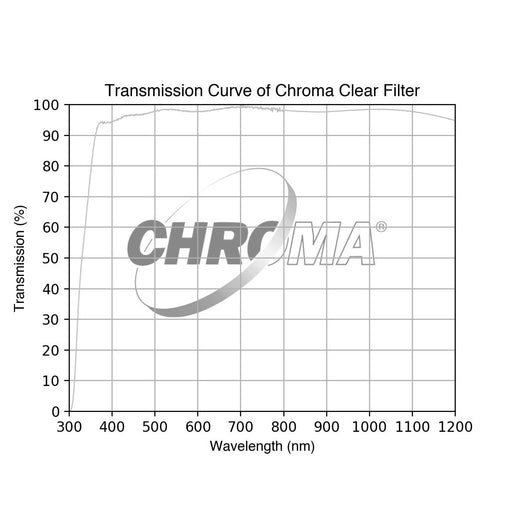
Chroma Clear Filter
Options available
Filters designed for use with CCD and for f/4.0 or slower No reflections leading to image distortions or "back reflections" Transmitted wavefront ...
View full details
Original price
$130.00
-
Original price
$375.00
Original price
$130.00
-
$375.00
$130.00
-
$375.00
Current price
$130.00
Original price
$150.00
-
Original price
$500.00
Original price
$150.00
-
$500.00
$150.00
-
$500.00
Current price
$150.00
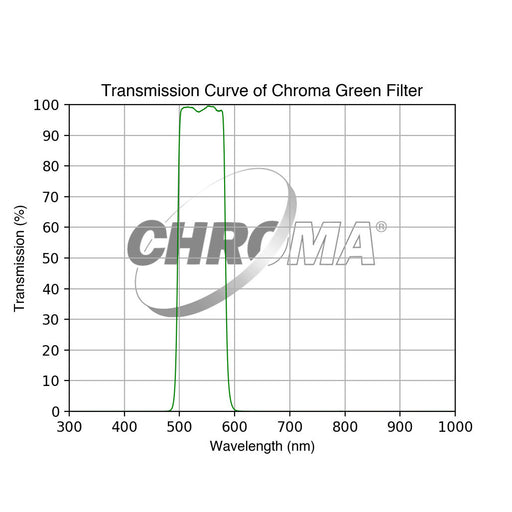
Chroma Green Filter
Options available
Green filter for color rendering with RGB set Filters designed for use with CCD and for f/4.0 or slower No reflections leading to image distortions...
View full details
Original price
$150.00
-
Original price
$500.00
Original price
$150.00
-
$500.00
$150.00
-
$500.00
Current price
$150.00
Original price
$575.00
-
Original price
$1,550.00
Original price
$575.00
-
$1,550.00
$575.00
-
$1,550.00
Current price
$575.00
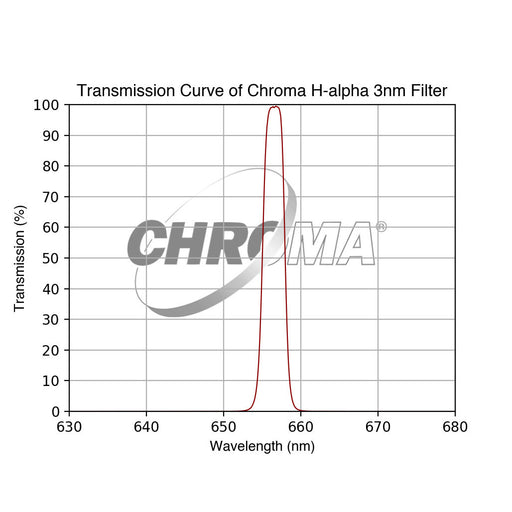
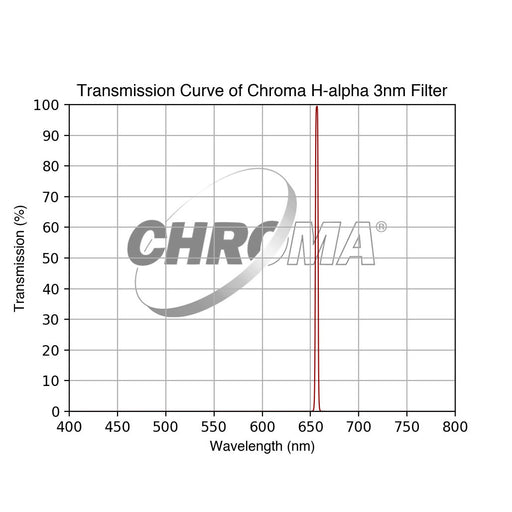
Chroma H-alpha Filter - 3nm
Options available
H-alpha filters are essential for imaging nebulae and other objects which are rich in ionized hydrogen. At 656.3nm, a narrow-band emission filter i...
View full details
Original price
$575.00
-
Original price
$1,550.00
Original price
$575.00
-
$1,550.00
$575.00
-
$1,550.00
Current price
$575.00
Original price
$460.00
-
Original price
$1,380.00
Original price
$460.00
-
$1,380.00
$460.00
-
$1,380.00
Current price
$460.00
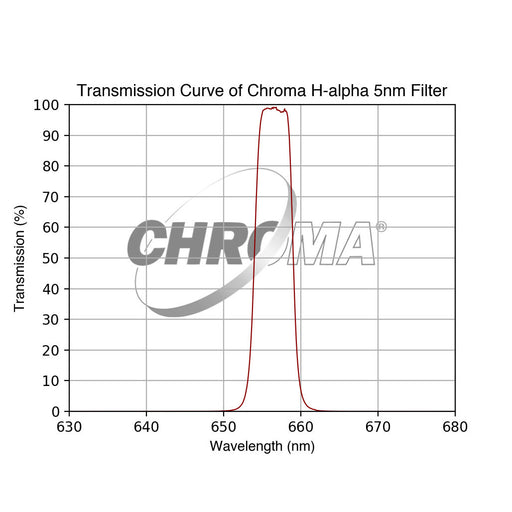
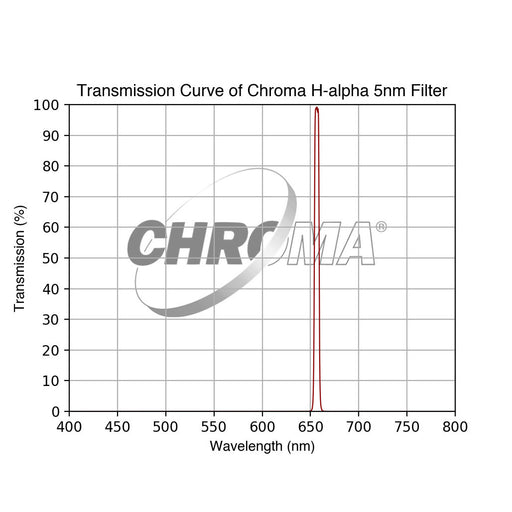
Chroma H-alpha Filter - 5nm
Options available
H-alpha filters are essential for imaging nebulae and other objects which are rich in ionized hydrogen. At 656.3nm, a narrow-band emission filter i...
View full details
Original price
$460.00
-
Original price
$1,380.00
Original price
$460.00
-
$1,380.00
$460.00
-
$1,380.00
Current price
$460.00
Original price
$275.00
-
Original price
$830.00
Original price
$275.00
-
$830.00
$275.00
-
$830.00
Current price
$275.00
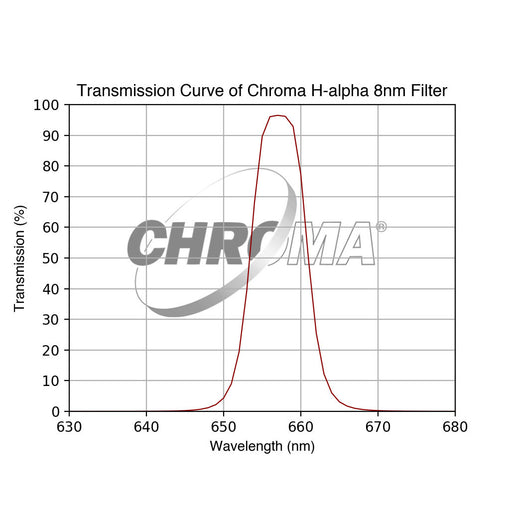
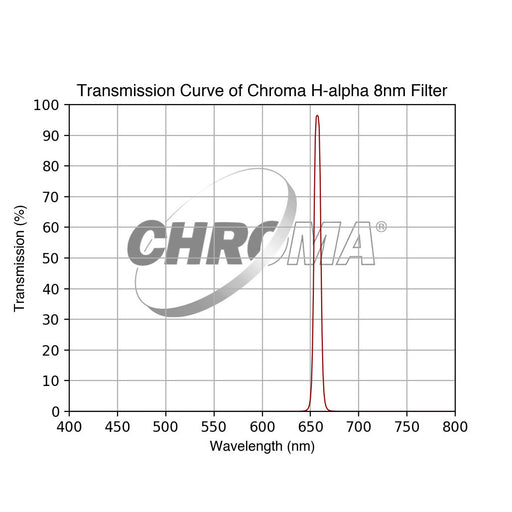
Chroma H-alpha Filter - 8nm
Options available
H-alpha filters are essential for imaging nebulae and other objects which are rich in ionized hydrogen. At 656.3nm, a narrow-band emission filter i...
View full details
Original price
$275.00
-
Original price
$830.00
Original price
$275.00
-
$830.00
$275.00
-
$830.00
Current price
$275.00
Original price
$575.00
-
Original price
$1,550.00
Original price
$575.00
-
$1,550.00
$575.00
-
$1,550.00
Current price
$575.00
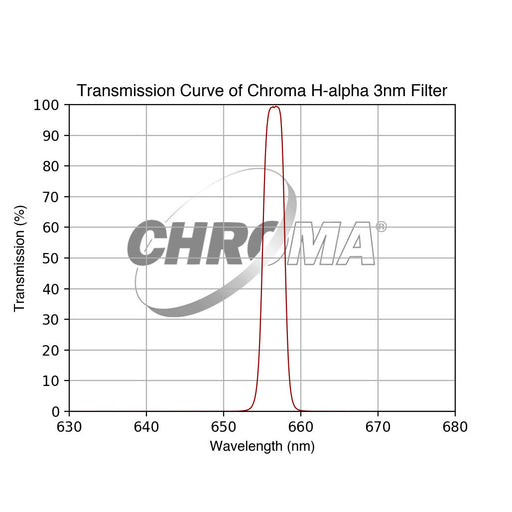
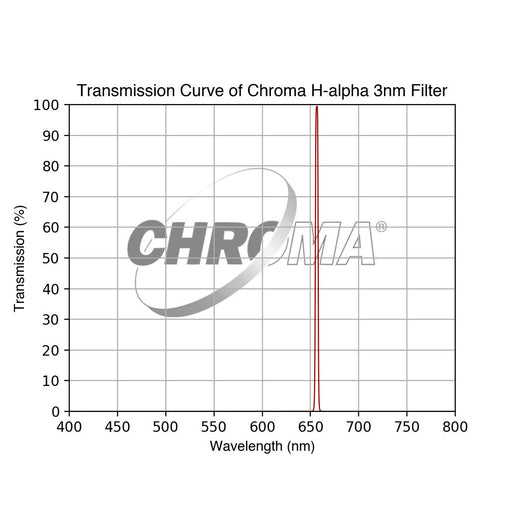
Chroma H-alpha Filter Optimized for f/3 - 3nm
Options available
H-alpha filters are essential for imaging nebulae and other objects which are rich in ionized hydrogen. At 656.3nm, a narrow-band emission filter i...
View full details
Original price
$575.00
-
Original price
$1,550.00
Original price
$575.00
-
$1,550.00
$575.00
-
$1,550.00
Current price
$575.00
Original price
$575.00
-
Original price
$1,550.00
Original price
$575.00
-
$1,550.00
$575.00
-
$1,550.00
Current price
$575.00
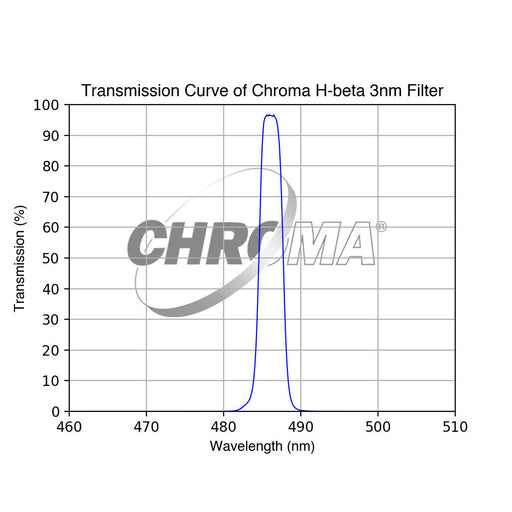
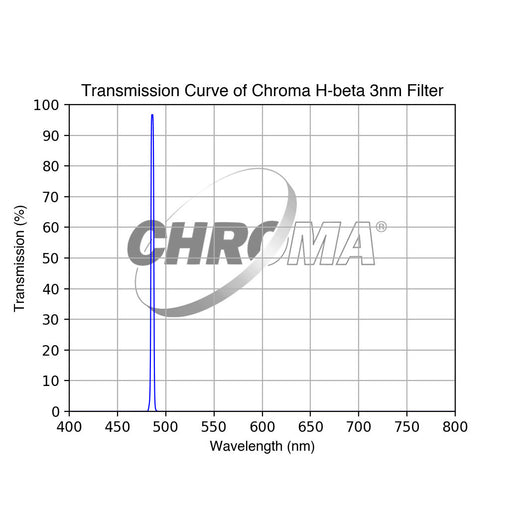
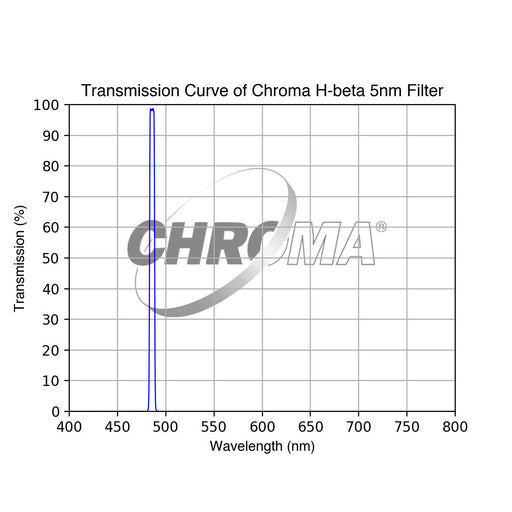
Chroma H-beta Filter - 3nm
Options available
H-beta filters are also useful for imaging nebulae and objects rich in ionized hydrogen. At 486.1nm, a narrow-band filter is required to separate H...
View full details
Original price
$575.00
-
Original price
$1,550.00
Original price
$575.00
-
$1,550.00
$575.00
-
$1,550.00
Current price
$575.00
Original price
$460.00
-
Original price
$1,380.00
Original price
$460.00
-
$1,380.00
$460.00
-
$1,380.00
Current price
$460.00
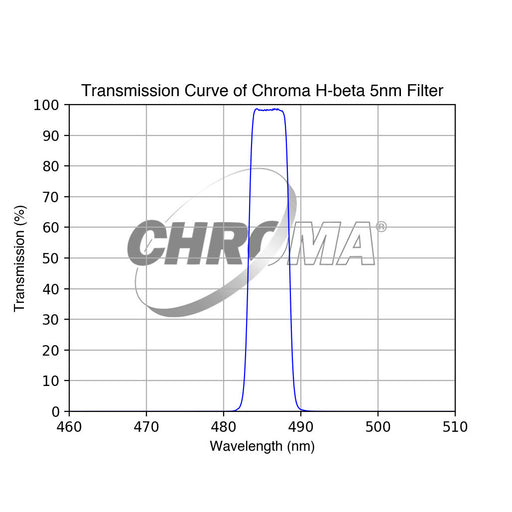
Chroma H-beta Filter - 5nm
Options available
H-beta filters are also useful for imaging nebulae and objects rich in ionized hydrogen. At 486.1nm, a narrow-band filter is required to separate H...
View full details
Original price
$460.00
-
Original price
$1,380.00
Original price
$460.00
-
$1,380.00
$460.00
-
$1,380.00
Current price
$460.00
Original price
$775.00
-
Original price
$3,350.00
Original price
$775.00
-
$3,350.00
$775.00
-
$3,350.00
Current price
$775.00
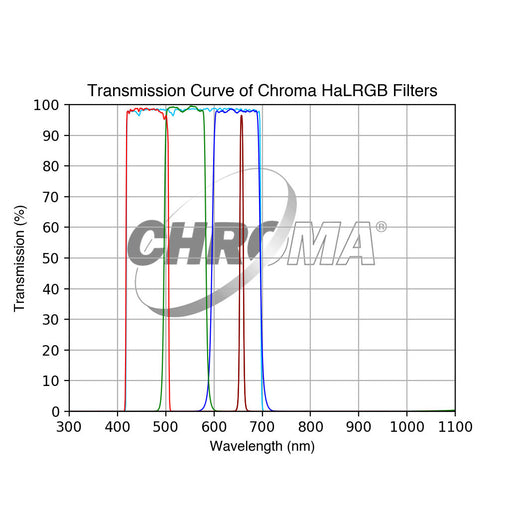
Chroma HaLRGB Filter Set
Options available
8nm H-alpha, Luminance, Red, Green, and Blue astronomy filter set Filters designed for use with CCD and for f/4.0 or slower No reflections leading ...
View full details
Original price
$775.00
-
Original price
$3,350.00
Original price
$775.00
-
$3,350.00
$775.00
-
$3,350.00
Current price
$775.00
Original price
$275.00
-
Original price
$725.00
Original price
$275.00
-
$725.00
$275.00
-
$725.00
Current price
$275.00
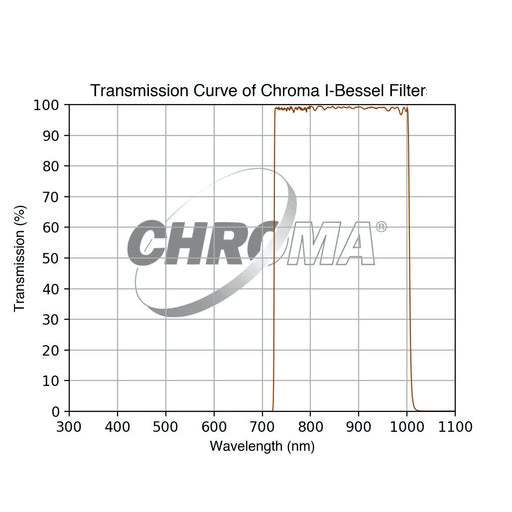
Chroma I-Bessel Filter
Options available
NIR photometric filter in UVBRI series Filters designed for use with CCD and for f/4.0 or slower No reflections leading to image distortions or ""b...
View full details
Original price
$275.00
-
Original price
$725.00
Original price
$275.00
-
$725.00
$275.00
-
$725.00
Current price
$275.00
Original price
$275.00
-
Original price
$790.00
Original price
$275.00
-
$790.00
$275.00
-
$790.00
Current price
$275.00
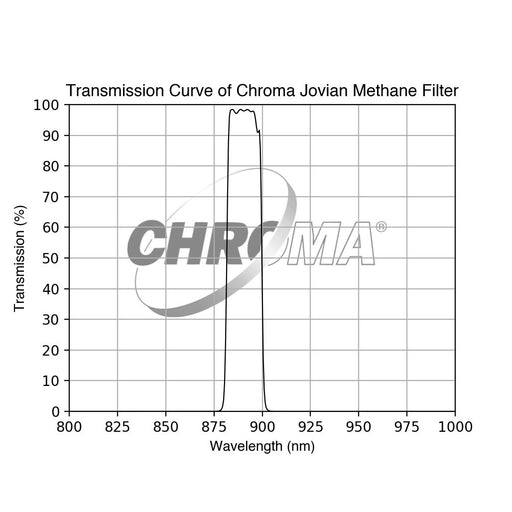
Chroma Jovian Methane Filter
Options available
Methane absorption band filter. This filter enhances contrast when imaging objects containing significant levels of methane. Methane-rich component...
View full details
Original price
$275.00
-
Original price
$790.00
Original price
$275.00
-
$790.00
$275.00
-
$790.00
Current price
$275.00
Original price
$275.00
-
Original price
$550.00
Original price
$275.00
-
$550.00
$275.00
-
$550.00
Current price
$275.00
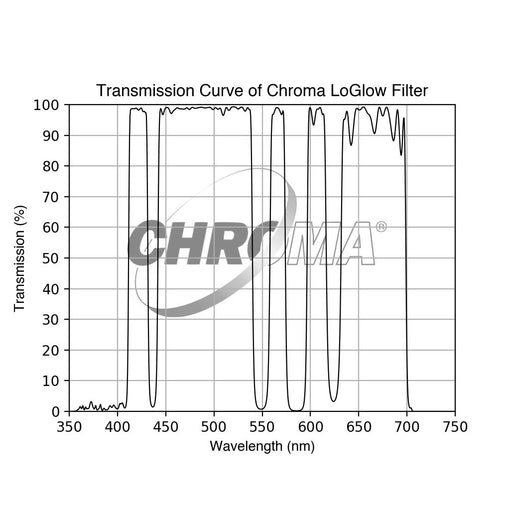
Chroma LoGlow Filter
Options available
Blocks common spectral lines from lighting sources. This filter provides balanced color for the visible spectrum while blocking most emission from ...
View full details
Original price
$275.00
-
Original price
$550.00
Original price
$275.00
-
$550.00
$275.00
-
$550.00
Current price
$275.00
Original price
$525.00
-
Original price
$1,925.00
Original price
$525.00
-
$1,925.00
$525.00
-
$1,925.00
Current price
$525.00
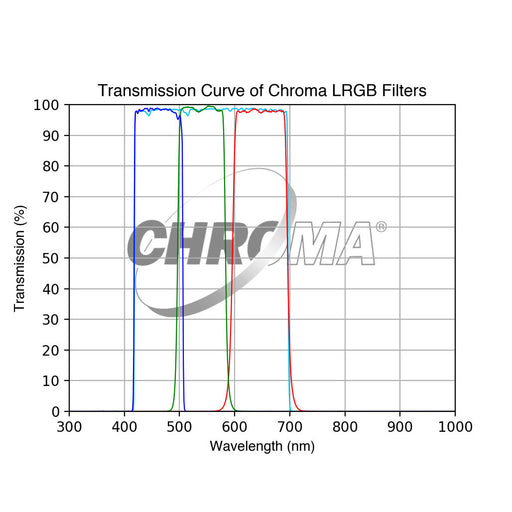
Chroma LRGB Filter Set
Options available
Luminance, Red, Green, and Blue astronomy filter set Filters designed for use with CCD and for f/4.0 or slower No reflections leading to image dist...
View full details
Original price
$525.00
-
Original price
$1,925.00
Original price
$525.00
-
$1,925.00
$525.00
-
$1,925.00
Current price
$525.00
Original price
$150.00
-
Original price
$500.00
Original price
$150.00
-
$500.00
$150.00
-
$500.00
Current price
$150.00
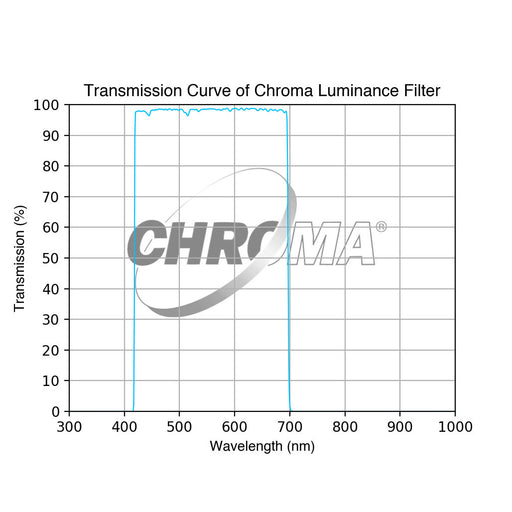
Chroma Luminance Filter
Options available
Luminance filter for enhancing color rendering with RGB set Filters designed for use with CCD and for f/4.0 or slower No reflections leading to ima...
View full details
Original price
$150.00
-
Original price
$500.00
Original price
$150.00
-
$500.00
$150.00
-
$500.00
Current price
$150.00
Original price
$575.00
-
Original price
$1,550.00
Original price
$575.00
-
$1,550.00
$575.00
-
$1,550.00
Current price
$575.00
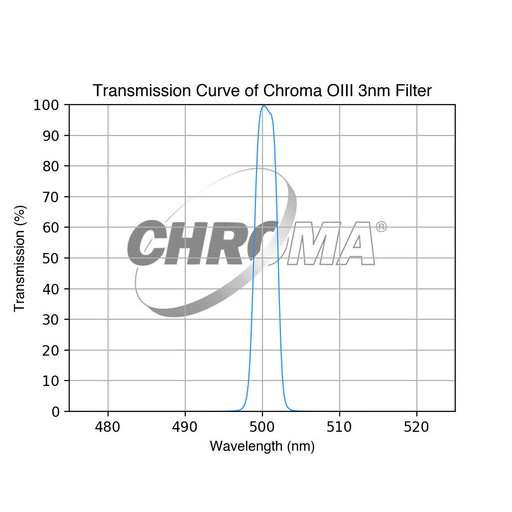
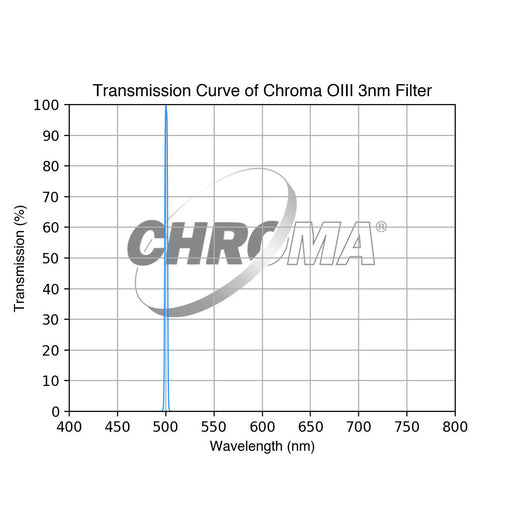
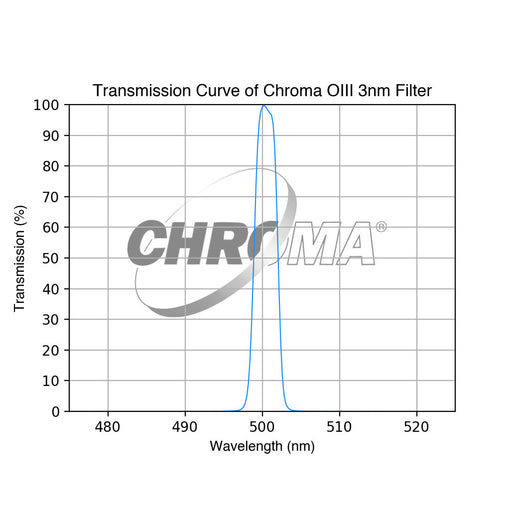
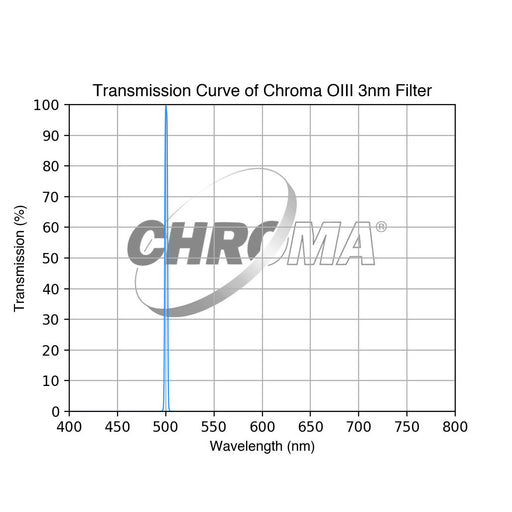
Chroma OIII Filter - 3nm
Options available
Chroma’s OIII filters isolate the 500.7nm primary emission line of doubly ionized oxygen. After H-alpha, this is the next most common emission when...
View full details
Original price
$575.00
-
Original price
$1,550.00
Original price
$575.00
-
$1,550.00
$575.00
-
$1,550.00
Current price
$575.00
Original price
$460.00
-
Original price
$1,380.00
Original price
$460.00
-
$1,380.00
$460.00
-
$1,380.00
Current price
$460.00
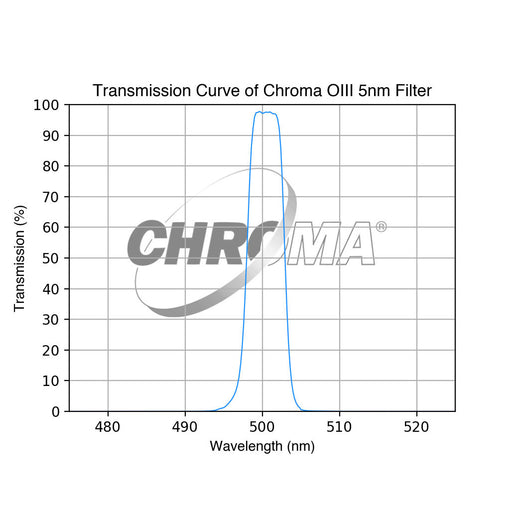
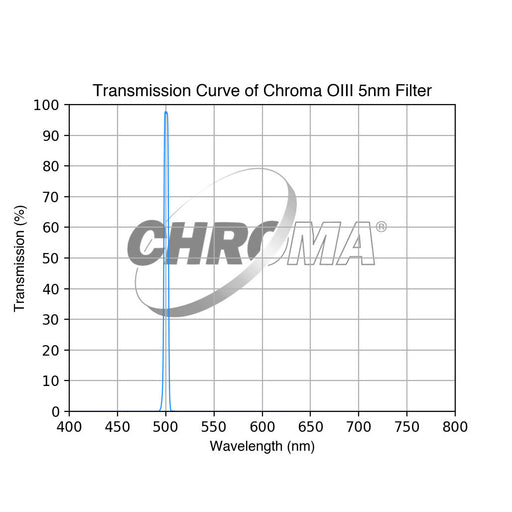
Chroma OIII Filter - 5nm
Options available
Chroma’s OIII filters isolate the 500.7nm primary emission line of doubly ionized oxygen. After H-alpha, this is the next most common emission when...
View full details
Original price
$460.00
-
Original price
$1,380.00
Original price
$460.00
-
$1,380.00
$460.00
-
$1,380.00
Current price
$460.00
Original price
$275.00
-
Original price
$830.00
Original price
$275.00
-
$830.00
$275.00
-
$830.00
Current price
$275.00
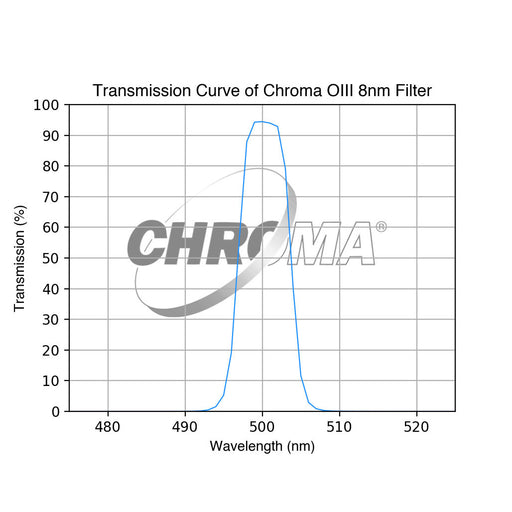
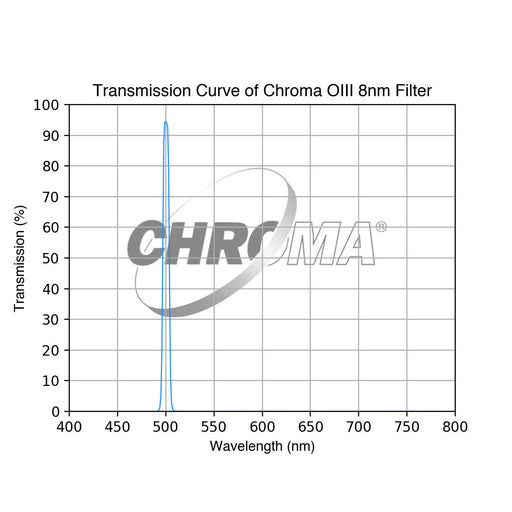
Chroma OIII Filter - 8nm
Options available
Chroma’s OIII filters isolate the 500.7nm primary emission line of doubly ionized oxygen. After H-alpha, this is the next most common emission when...
View full details
Original price
$275.00
-
Original price
$830.00
Original price
$275.00
-
$830.00
$275.00
-
$830.00
Current price
$275.00
Original price
$575.00
-
Original price
$1,550.00
Original price
$575.00
-
$1,550.00
$575.00
-
$1,550.00
Current price
$575.00
Chroma OIII Filter Optimized for f/3 - 3nm
Options available
Chroma’s OIII filters isolate the 500.7nm primary emission line of doubly ionized oxygen. After H-alpha, this is the next most common emission when...
View full details
Original price
$575.00
-
Original price
$1,550.00
Original price
$575.00
-
$1,550.00
$575.00
-
$1,550.00
Current price
$575.00

Original price
$275.00
-
Original price
$725.00
Original price
$275.00
-
$725.00
$275.00
-
$725.00
Current price
$275.00
Chroma R-Bessel Filter
Options available
Red photometric filter in UVBRI series Filters designed for use with CCD and for f/4.0 or slower No reflections leading to image distortions or ""b...
View full details
Original price
$275.00
-
Original price
$725.00
Original price
$275.00
-
$725.00
$275.00
-
$725.00
Current price
$275.00
Original price
$150.00
-
Original price
$500.00
Original price
$150.00
-
$500.00
$150.00
-
$500.00
Current price
$150.00
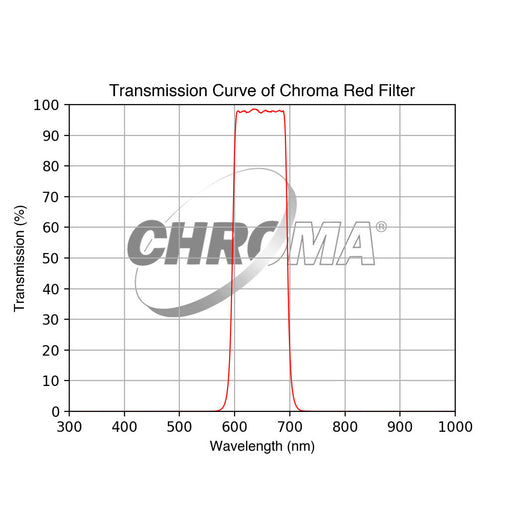
Chroma Red Filter
Options available
Red filter for color rendering with RGB set Filters designed for use with CCD and for f/4.0 or slower No reflections leading to image distortions o...
View full details
Original price
$150.00
-
Original price
$500.00
Original price
$150.00
-
$500.00
$150.00
-
$500.00
Current price
$150.00


Original price
$575.00
-
Original price
$1,550.00
Original price
$575.00
-
$1,550.00
$575.00
-
$1,550.00
Current price
$575.00
Chroma SII Filter - 3nm
Options available
SII filters isolate the spectral emission of singly ionized sulfur atoms, also common in nebulae. Emission is at two lines occurring as a doublet, ...
View full details
Original price
$575.00
-
Original price
$1,550.00
Original price
$575.00
-
$1,550.00
$575.00
-
$1,550.00
Current price
$575.00


Original price
$460.00
-
Original price
$1,380.00
Original price
$460.00
-
$1,380.00
$460.00
-
$1,380.00
Current price
$460.00
Chroma SII Filter - 5nm
Options available
SII filters isolate the spectral emission of singly ionized sulfur atoms, also common in nebulae. Emission is at two lines occurring as a doublet, ...
View full details
Original price
$460.00
-
Original price
$1,380.00
Original price
$460.00
-
$1,380.00
$460.00
-
$1,380.00
Current price
$460.00