
Scientific Filters
Scientific filters are specified against published standards rather than against how pleasing the resulting image looks. A photometric filter's value lies entirely in how accurately its transmission curve matches the reference passband, because that is what makes your measurement comparable to everyone else's. David Astro carries scientific filters in Canada, in Canadian inventory and shipped domestically.
If you are contributing to variable star, exoplanet transit or supernova monitoring programmes, the filter standard your programme expects determines the purchase. Tell us the programme and we will match it.


Original price
CA$1,960.00
-
Original price
CA$1,960.00
Original price
CA$1,960.00
CA$1,960.00
-
CA$1,960.00
Current price
CA$1,960.00
Antlia Photometrics Sloan griz (4pcs) Filter Set
ANT-PHOTOMETRICS-SLOAN-RD50
Includes 4 Sloan Digital Sky Survey (SDSS) photometric filters: g', r', i', z' Peak transmission of 98% for r', i', z' filters and 95% for the g' ...
View full details
Original price
CA$1,960.00
-
Original price
CA$1,960.00
Original price
CA$1,960.00
CA$1,960.00
-
CA$1,960.00
Current price
CA$1,960.00
Original price
CA$1,018.00
-
Original price
CA$4,776.00
Original price
CA$1,018.00
-
CA$4,776.00
CA$1,018.00
-
CA$4,776.00
Current price
CA$1,018.00
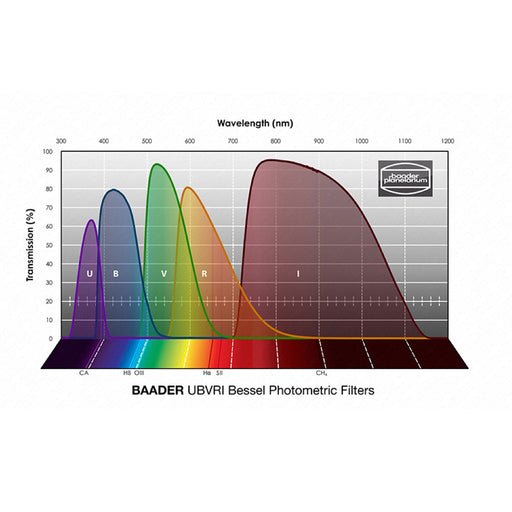
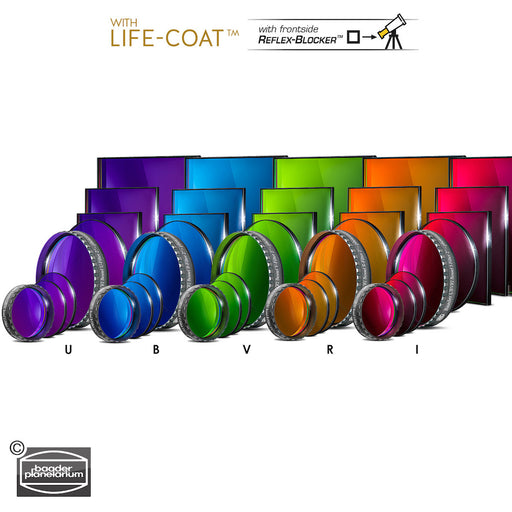
Baader Photometric UBVRI Filter Set
Options available
Standardized UBVRI Bessel passbands for scientific photometry Enables measurement of variable stars, asteroids, and exoplanet transits Precision p...
View full details
Original price
CA$1,018.00
-
Original price
CA$4,776.00
Original price
CA$1,018.00
-
CA$4,776.00
CA$1,018.00
-
CA$4,776.00
Current price
CA$1,018.00
Original price
CA$204.00
-
Original price
CA$982.00
Original price
CA$204.00
-
CA$982.00
CA$204.00
-
CA$982.00
Current price
CA$204.00
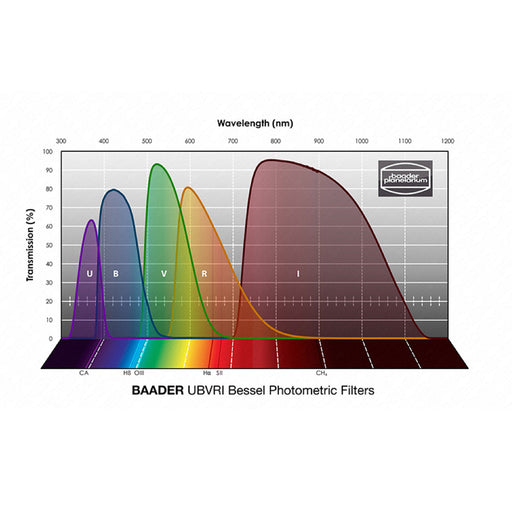
Baader Photometric UBVRI-B Individual Filter
Options available
Conforms to the standardized Johnson-Cousins/Bessel B-band passband Designed for research-grade scientific photometry Advanced anti-reflection and...
View full details
Original price
CA$204.00
-
Original price
CA$982.00
Original price
CA$204.00
-
CA$982.00
CA$204.00
-
CA$982.00
Current price
CA$204.00
Original price
CA$231.00
-
Original price
CA$1,041.00
Original price
CA$231.00
-
CA$1,041.00
CA$231.00
-
CA$1,041.00
Current price
CA$231.00
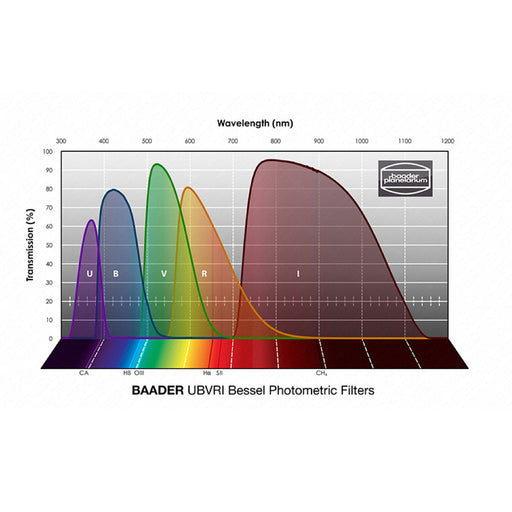
Baader Photometric UBVRI-I Individual Filter
Options available
Conforms to the Johnson-Cousins UBVRI Photometric System Optimized for the Bessel I-Band (Infrared) Homofocal Design for Parfocal Operation with o...
View full details
Original price
CA$231.00
-
Original price
CA$1,041.00
Original price
CA$231.00
-
CA$1,041.00
CA$231.00
-
CA$1,041.00
Current price
CA$231.00
Original price
CA$203.00
-
Original price
CA$983.00
Original price
CA$203.00
-
CA$983.00
CA$203.00
-
CA$983.00
Current price
CA$203.00
Baader Photometric UBVRI-R Individual Filter
Options available
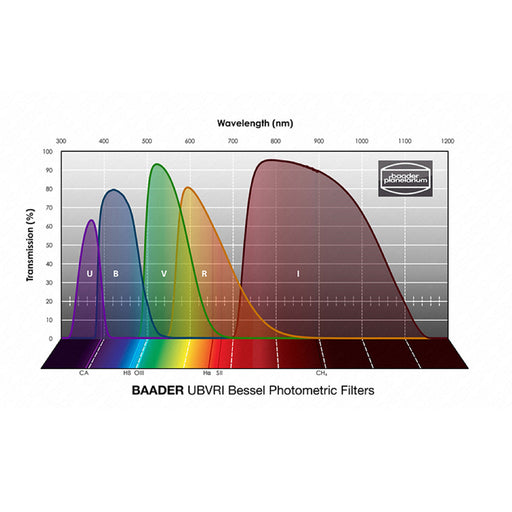
Conforms to the Johnson-Cousins-Bessel R-Band Photometric Standard Engineered for Scientific Photometry and Data Collection Plane-Parallel Substra...
View full details
Original price
CA$203.00
-
Original price
CA$983.00
Original price
CA$203.00
-
CA$983.00
CA$203.00
-
CA$983.00
Current price
CA$203.00
Original price
CA$231.00
-
Original price
CA$1,056.00
Original price
CA$231.00
-
CA$1,056.00
CA$231.00
-
CA$1,056.00
Current price
CA$231.00
Baader Photometric UBVRI-U Individual Filter
Options available
1 variants in stock
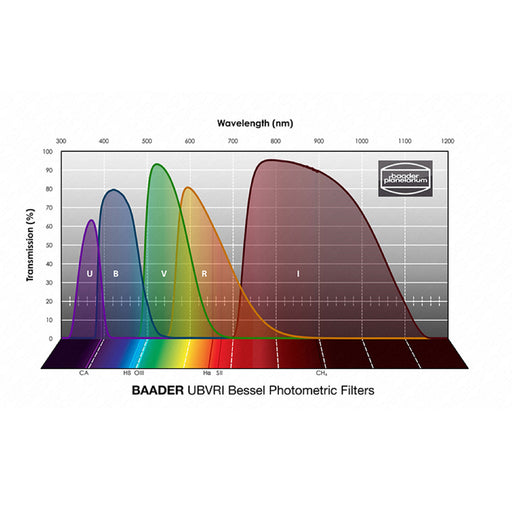
Conforms to the Johnson-Cousins/Bessel U-Band Photometric Standard Designed for Scientific Photometry of Variable Stars and Stellar Classification...
View full details
Original price
CA$231.00
-
Original price
CA$1,056.00
Original price
CA$231.00
-
CA$1,056.00
CA$231.00
-
CA$1,056.00
Current price
CA$231.00
Original price
CA$206.00
-
Original price
CA$979.00
Original price
CA$206.00
-
CA$979.00
CA$206.00
-
CA$979.00
Current price
CA$206.00
Baader Photometric UBVRI-V Individual Filter
Options available
1 variants in stock
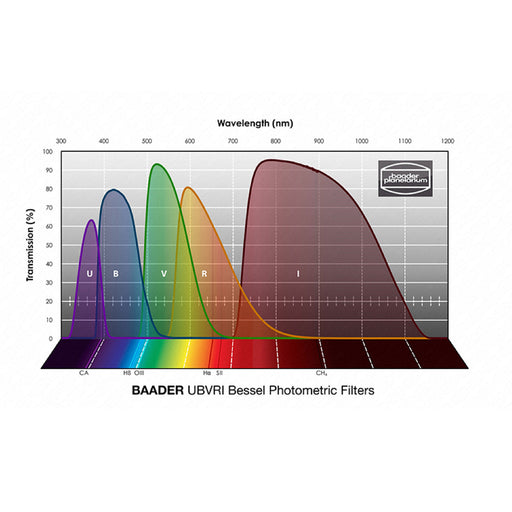
Bessel V-Band Standard: Precisely conforms to the internationally recognized Johnson-Cousins-Bessel V-band for consistent, scientific-grade magni...
View full details
Original price
CA$206.00
-
Original price
CA$979.00
Original price
CA$206.00
-
CA$979.00
CA$206.00
-
CA$979.00
Current price
CA$206.00
Original price
CA$385.00
-
Original price
CA$1,015.00
Original price
CA$385.00
-
CA$1,015.00
CA$385.00
-
CA$1,015.00
Current price
CA$385.00
Chroma B-Bessell Filter
Options available
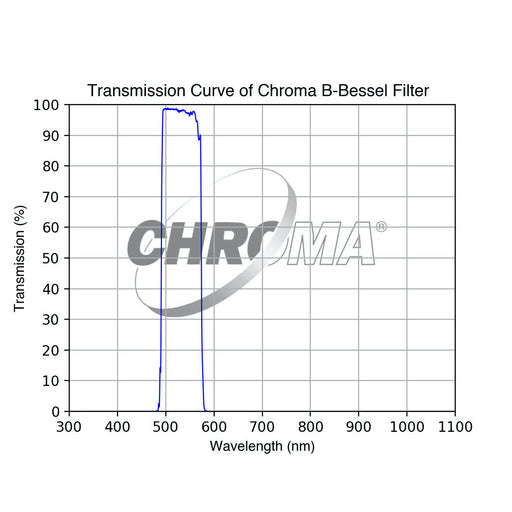
Standard B-Bessell photometric filter for UBVRI measurements 3.0 mm thick substrate, parfocal with other Chroma astronomy filters Transmitted wave...
View full details
Original price
CA$385.00
-
Original price
CA$1,015.00
Original price
CA$385.00
-
CA$1,015.00
CA$385.00
-
CA$1,015.00
Current price
CA$385.00
Original price
CA$385.00
-
Original price
CA$1,015.00
Original price
CA$385.00
-
CA$1,015.00
CA$385.00
-
CA$1,015.00
Current price
CA$385.00
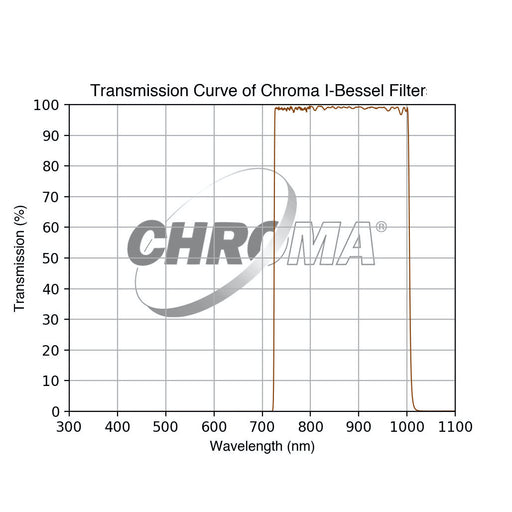
Chroma I-Bessell Filter
Options available
Standard I-Bessell filter for scientific photometry Durable sputtered hard coatings on a single substrate 3.0 mm substrate, parfocal with other Ch...
View full details
Original price
CA$385.00
-
Original price
CA$1,015.00
Original price
CA$385.00
-
CA$1,015.00
CA$385.00
-
CA$1,015.00
Current price
CA$385.00

Original price
CA$385.00
-
Original price
CA$1,015.00
Original price
CA$385.00
-
CA$1,015.00
CA$385.00
-
CA$1,015.00
Current price
CA$385.00
Chroma R-Bessell Filter
Options available
Standardized R-Bessell band for scientific photometry 3.0 mm thick substrate, parfocal with other Chroma astronomy filters (except LoGlow) Transmi...
View full details
Original price
CA$385.00
-
Original price
CA$1,015.00
Original price
CA$385.00
-
CA$1,015.00
CA$385.00
-
CA$1,015.00
Current price
CA$385.00
Original price
CA$385.00
-
Original price
CA$1,015.00
Original price
CA$385.00
-
CA$1,015.00
CA$385.00
-
CA$1,015.00
Current price
CA$385.00
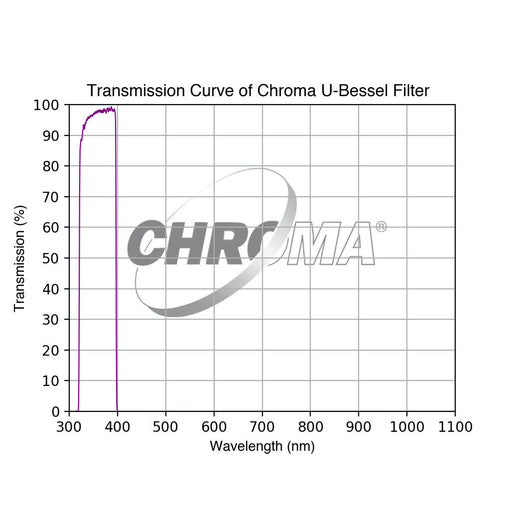
Chroma U-Bessell Filter
Options available
Bessell U-Band Photometric Filter 3.0 mm Substrate Thickness Parfocal with other Chroma Astronomy Filters (except LoGlow) Transmitted Wavefront be...
View full details
Original price
CA$385.00
-
Original price
CA$1,015.00
Original price
CA$385.00
-
CA$1,015.00
CA$385.00
-
CA$1,015.00
Current price
CA$385.00

Original price
CA$1,645.00
-
Original price
CA$4,795.00
Original price
CA$1,645.00
-
CA$4,795.00
CA$1,645.00
-
CA$4,795.00
Current price
CA$1,645.00
Chroma UBVRI Filter Set
Options available
Complete 5-filter Bessell UBVRI photometric set (Johnson-Cousins system) 3.0 mm thick substrates, parfocal with other Chroma astronomy filters (ex...
View full details
Original price
CA$1,645.00
-
Original price
CA$4,795.00
Original price
CA$1,645.00
-
CA$4,795.00
CA$1,645.00
-
CA$4,795.00
Current price
CA$1,645.00
Original price
CA$385.00
-
Original price
CA$1,015.00
Original price
CA$385.00
-
CA$1,015.00
CA$385.00
-
CA$1,015.00
Current price
CA$385.00
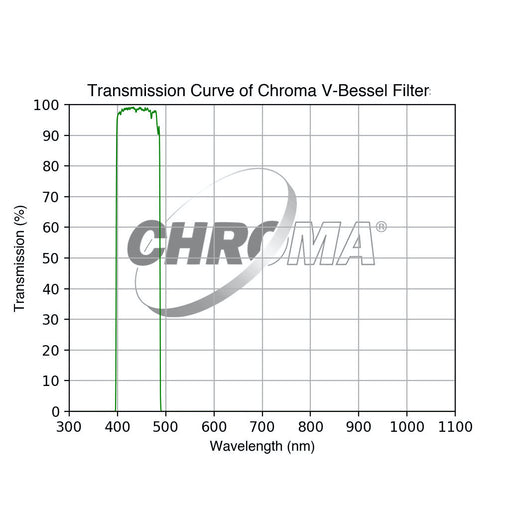
Chroma V-Bessell Filter
Options available
Standard V-Bessell photometric filter for scientific measurement 3.0 mm thick substrate ensures parfocality with other Chroma filters Transmitted ...
View full details
Original price
CA$385.00
-
Original price
CA$1,015.00
Original price
CA$385.00
-
CA$1,015.00
CA$385.00
-
CA$1,015.00
Current price
CA$385.00
Original price
CA$210.00
-
Original price
CA$210.00
Original price
CA$210.00
CA$210.00
-
CA$210.00
Current price
CA$210.00
QHYCCD 1200-1800nm SWIR Filter
QHY-040028
1200-1800nm SWIR Bandpass Designed for QHYCCD InGaAs Cameras Compatible with QHY990 Series Description FAQ Specifications In the Box Warranty ...
View full details
Original price
CA$210.00
-
Original price
CA$210.00
Original price
CA$210.00
CA$210.00
-
CA$210.00
Current price
CA$210.00