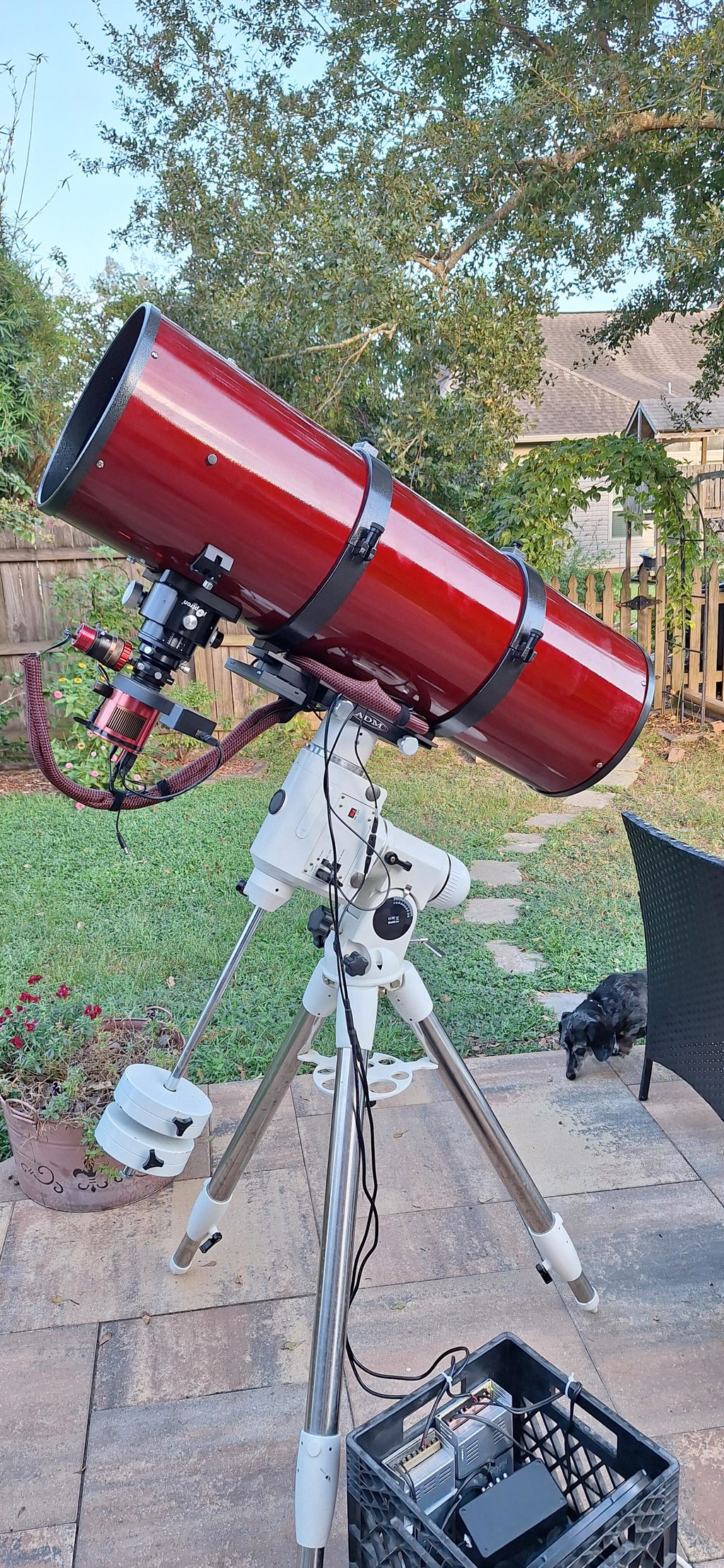
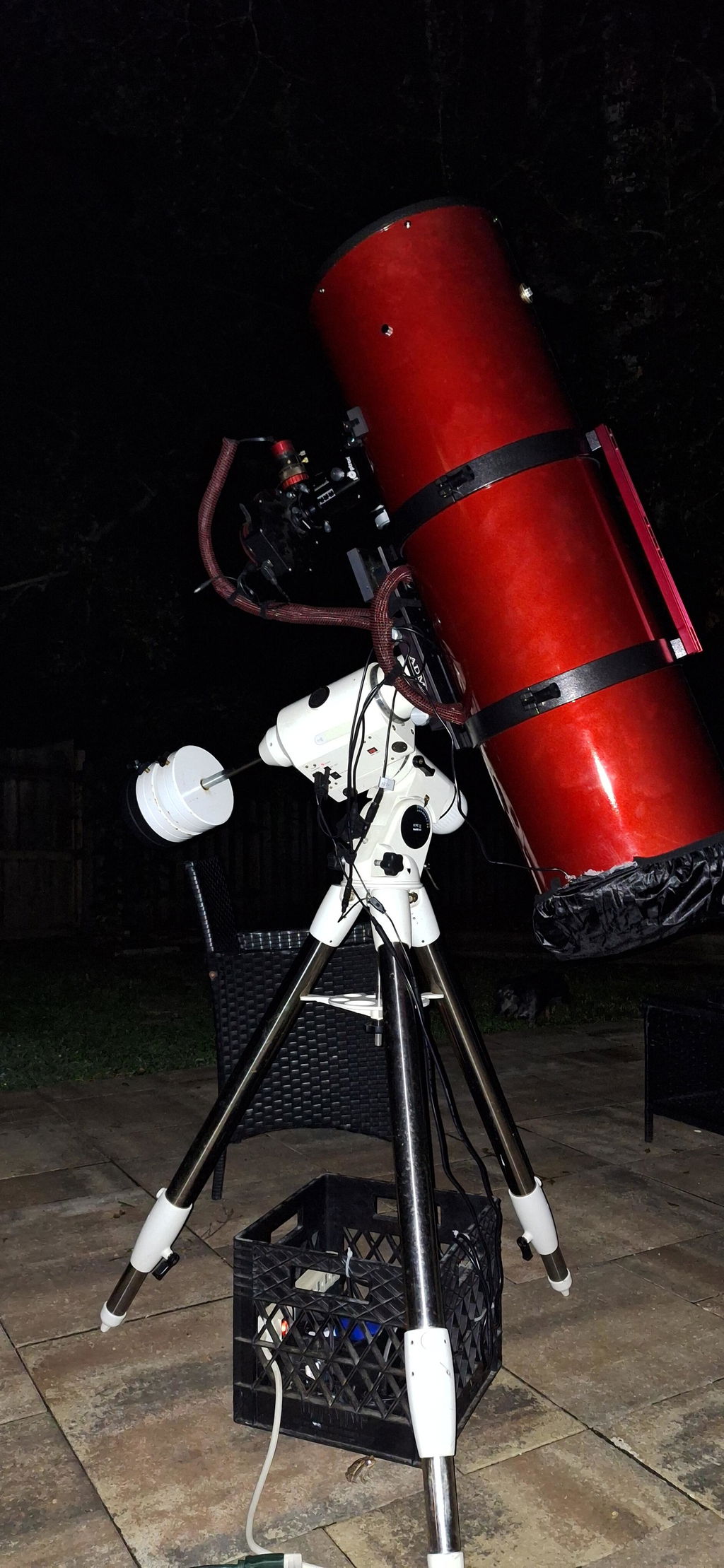
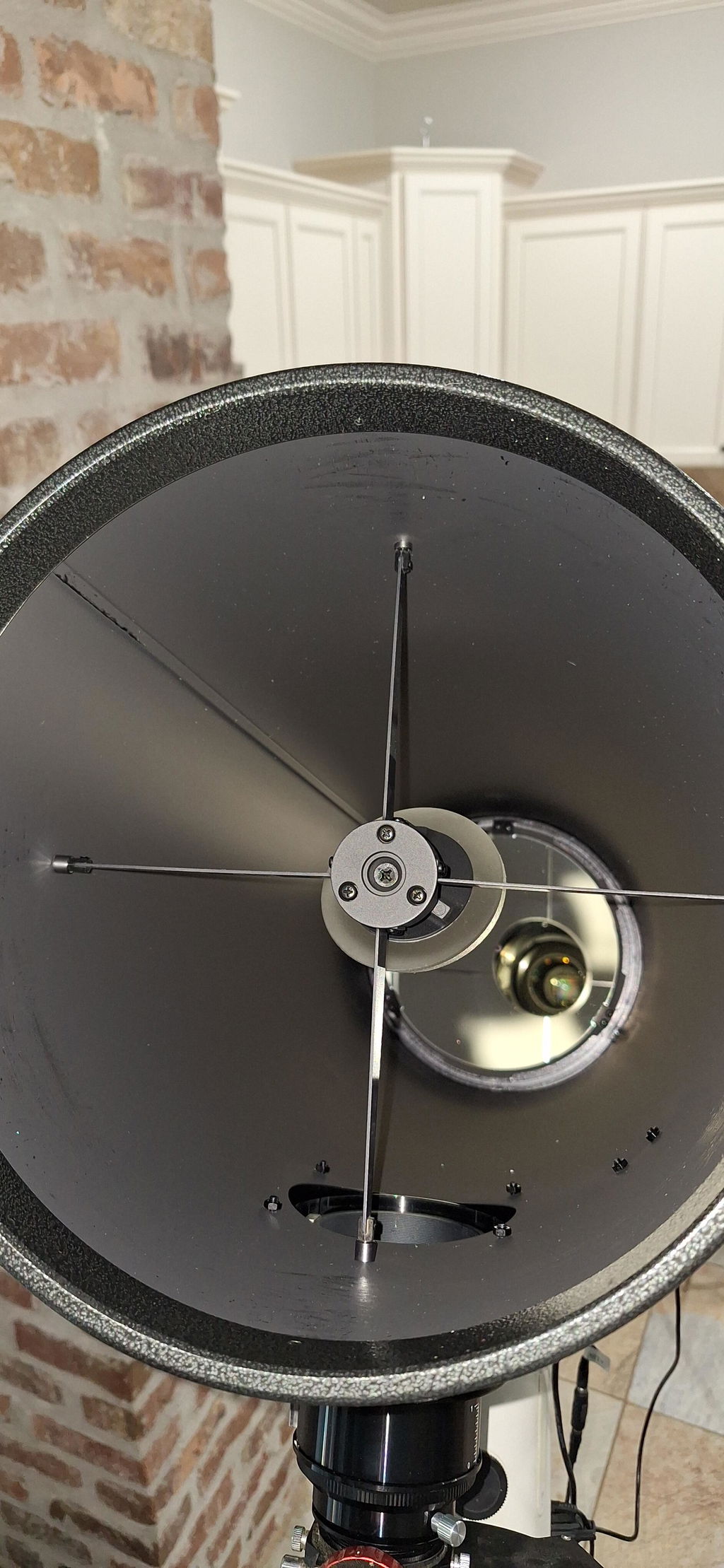
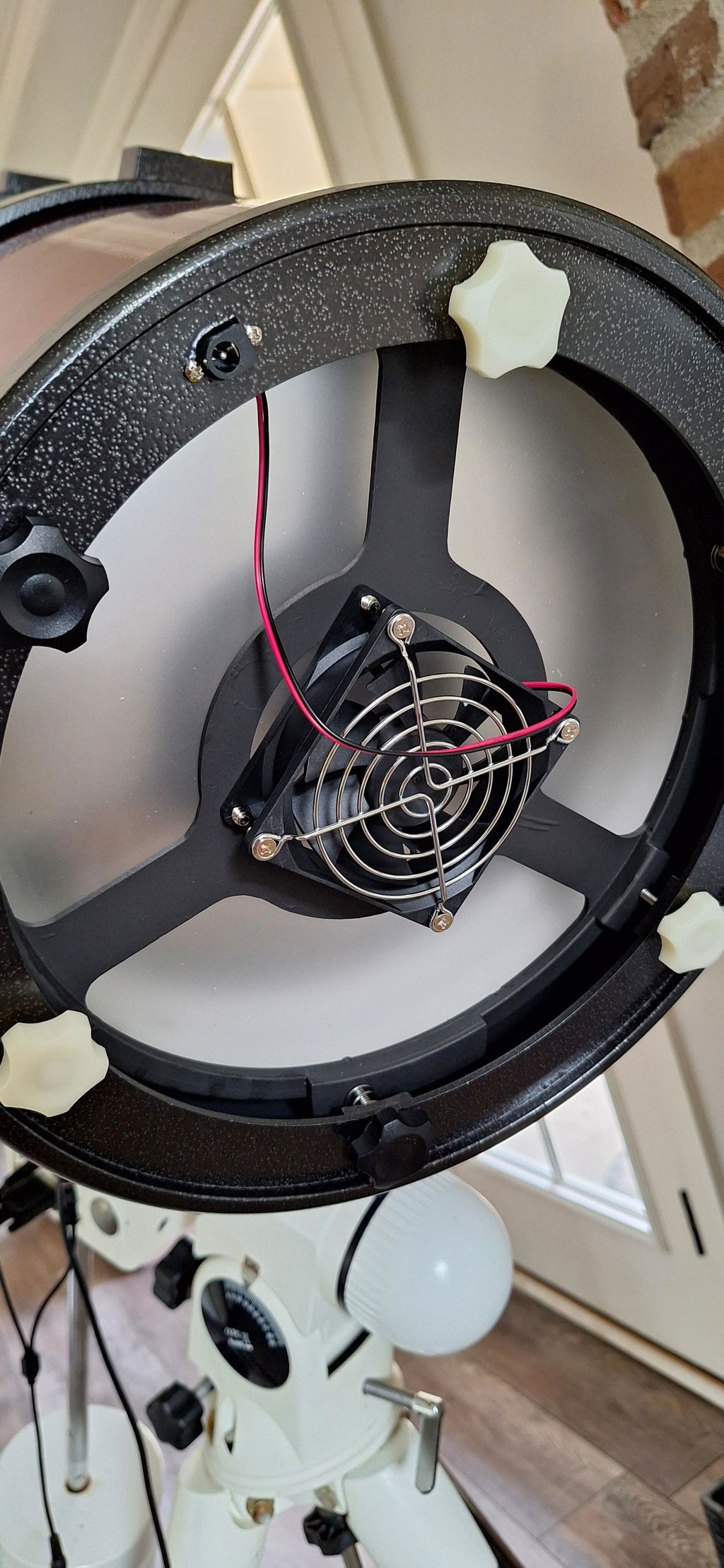
iOptron 250mm f/4 Imaging Newtonian
- 250mm (10") Parabolic Primary Mirror
- 1000mm Focal Length
- Fast f/4 Focal Ratio
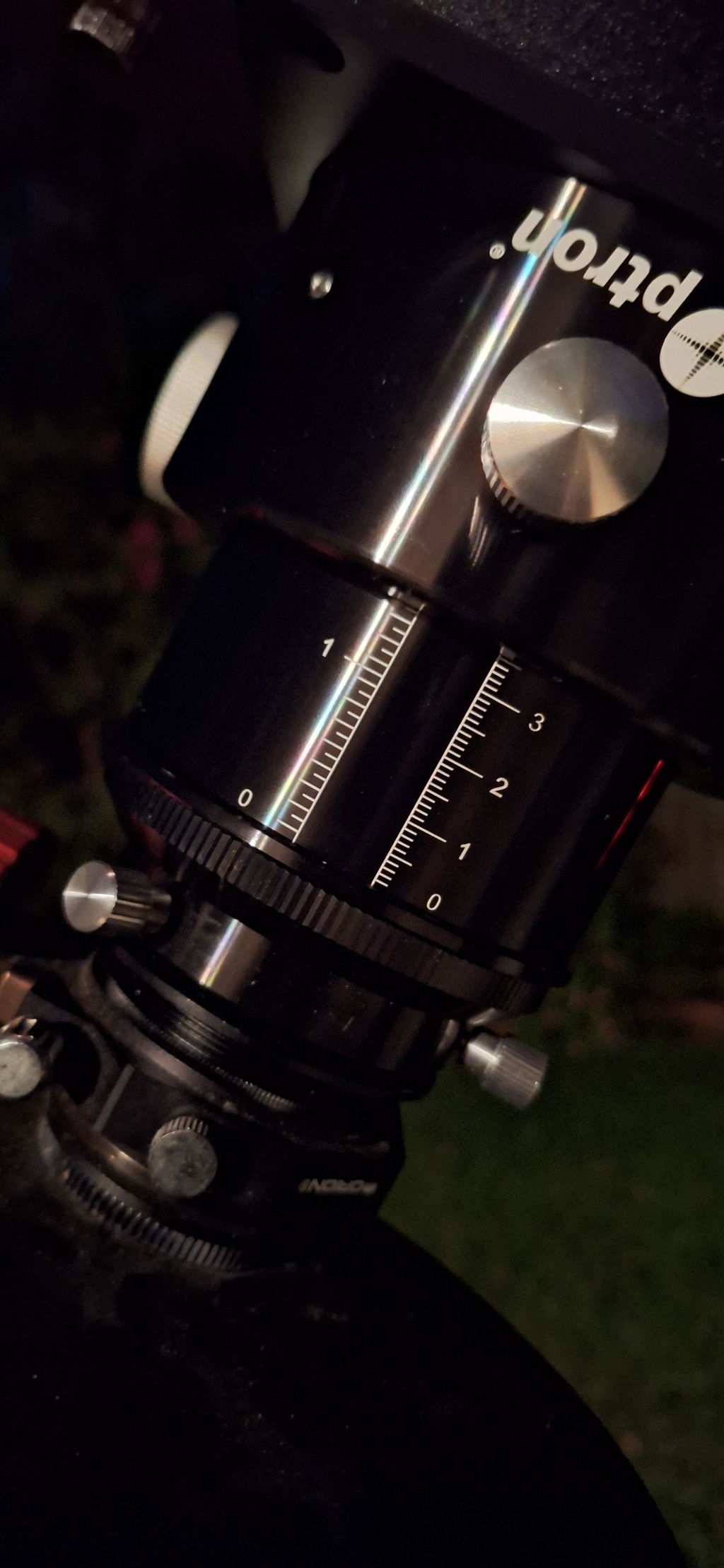
- 10:1 Dual-Speed Focuser
- 34 lb 1 oz Optical Tube Assembly Weight
See exactly how your targets fit with the iOptron 250mm f/4 Imaging Newtonian, on real sky survey data.
Launch Imaging AssistantCheck which filter and adapter sizes clear the sensor with the iOptron 250mm f/4 Imaging Newtonian, and how much light the corners lose.
Check vignettingThe iOptron 250mm f/4 Imaging Newtonian combines a massive 250mm aperture with a fast f/4 optical system to create a powerful instrument for deep-sky astrophotography. Its 1000mm focal length provides an ideal image scale for capturing galaxies and nebulae, while the 34 lb 1 oz optical tube assembly is built for serious imaging platforms. Fine focusing is achieved with a 10:1 dual-speed focuser, and the telescope is iEAF compatible.
The heart of this telescope is its 250mm (10-inch) primary mirror. This large aperture gathers a tremendous amount of light, allowing you to resolve faint details in distant celestial objects. Paired with a fast f/4 focal ratio, this Newtonian drastically reduces required exposure times compared to slower f/8 or f/10 systems, letting you collect more data in a single night.
The 1000mm focal length suits galaxies and nebulae of moderate size, and large targets like the Andromeda Galaxy (M31) or the North American Nebula (NGC 7000) need a mosaic to be framed in full. For imagers using modern CMOS or DSLR cameras, this combination of aperture and speed is purpose-built for capturing high-signal, low-noise images of the deep sky.
Engineered for astrophotography, this OTA includes critical features for obtaining the best results. The 10:1 dual-speed focuser allows for precise, minute adjustments, which is essential for achieving perfect focus at a fast f/4 focal ratio. An included 2-inch, 35mm long extension tube helps ensure your camera can reach focus with various imaging train configurations.
At 34 lb 1 oz, the optical tube requires a substantial equatorial mount with sufficient payload capacity to ensure stable, accurate tracking for long exposures. The 12-inch outside diameter means standard, widely available tube rings and accessories will be compatible with this instrument.
When choosing an imaging Newtonian, aperture is a primary consideration. Compared to a smaller 200mm (8-inch) Newtonian, the iOptron 250mm model offers a significant step up in light-gathering capability.
With an optical tube weight of 34 lb 1 oz, you will need a robust equatorial mount. For imaging, a good rule of thumb is to keep the payload at 50-60% of the mount's stated capacity. Therefore, a mount in the 60-70 lb payload class (like an iOptron CEM70 or similar) is recommended for stable, precise tracking.
The f/4 focal ratio is considered very fast in astrophotography. Compared to an f/8 system of the same aperture, an f/4 system is four times faster. This means you can capture the same amount of signal in one-quarter of the time, allowing you to complete projects more quickly or go deeper on faint targets.
While designed for imaging, this telescope is also a capable visual instrument. The large 250mm aperture will provide stunning, bright views of deep-sky objects. However, the f/4 focal ratio will be demanding on eyepieces and will show significant coma away from the center of the field without a visual coma corrector.
This product is an Optical Tube Assembly (OTA) only. To begin imaging, you will need to supply several key components separately:
The 1000mm focal length combined with the f/4 speed makes it an excellent choice for large targets like M31. When paired with a camera sensor like an APS-C or even full-frame (with a suitable coma corrector), you can frame the bright core and inner disk of the galaxy (the faint outer arms, which span about 3 degrees, need a mosaic), while the 250mm aperture resolves dust lanes and star-forming regions within its spiral structure.
Yes, for imaging, a coma corrector is considered mandatory for an f/4 Newtonian. Coma is an optical aberration inherent to parabolic mirrors that makes stars at the edge of the field appear comet-shaped. A coma corrector is a lens assembly that corrects this, ensuring pinpoint stars across your entire camera sensor.
| Optical Design | Newtonian |
| Clear Aperture | 250mm |
| Focal Length | 1000mm |
| Focal Ratio | f/4 |
| Focuser | 10:1 dual-speed |
| OTA Weight | 34lb. 1oz |
| Outside Diameter | 12 inches |
| Extension Tube | 2" diameter, 35mm long |
| Gross Weight (Shipping) | 48 lbs |
| Shipping Dimensions | 44 x 20 x 18 in |
| Resolving Power | 0.46 arcsec |
| Mount | No |
10" f/4 Newtonian OTA
× 1
2" diameter, 35mm long extension tube
× 1