
Narrowband Filters
Narrowband imaging is what makes deep-sky astrophotography possible from a Canadian city. By passing only a few nanometres around a specific emission line, these filters reject almost all artificial light and most moonlight, so a nebula that is invisible visually from a suburban driveway becomes a viable multi-hour imaging target. David Astro stocks narrowband filters in Canada, held in Canadian inventory.
Bandwidth choice interacts with your telescope's focal ratio in ways that catch people out. Tell us your optic and camera and we will recommend a bandwidth that will actually perform in your system.


Original price
CA$64.00
-
Original price
CA$78.00
Original price
CA$64.00
-
CA$78.00
CA$64.00
-
CA$78.00
Current price
CA$64.00
SVBONY SV115 18nm OIII Narrowband Filter
Options available
4 variants in stock
2-inch diameter filter for standard eyepieces and accessories 18nm bandpass isolates key Oxygen-III emission lines 90% peak transmittance at 495.9...
View full details
Original price
CA$64.00
-
Original price
CA$78.00
Original price
CA$64.00
-
CA$78.00
CA$64.00
-
CA$78.00
Current price
CA$64.00


Original price
CA$66.00
-
Original price
CA$73.00
Original price
CA$66.00
-
CA$73.00
CA$66.00
-
CA$73.00
Current price
CA$66.00
SVBONY SV132 25nm H-Beta Narrowband Filter
Options available
4 variants in stock
Targets the 486nm Hydrogen-Beta emission line 25nm bandpass for enhanced contrast 80% peak transmittance at the H-Beta wavelength Blocks Mercury (...
View full details
Original price
CA$66.00
-
Original price
CA$73.00
Original price
CA$66.00
-
CA$73.00
CA$66.00
-
CA$73.00
Current price
CA$66.00


Original price
CA$168.00
-
Original price
CA$350.00
Original price
CA$168.00
-
CA$350.00
CA$168.00
-
CA$350.00
Current price
CA$168.00
SVBONY SV220 3nm H-Alpha & OIII Dual Narrowband Filter
Options available
3 variants in stock
3nm Dual-Bandpass: Isolates H-Alpha (656.3 nm) and OIII (500.7 nm) emission lines with extreme prejudice against light pollution. ≥85% Peak Tran...
View full details
Original price
CA$168.00
-
Original price
CA$350.00
Original price
CA$168.00
-
CA$350.00
CA$168.00
-
CA$350.00
Current price
CA$168.00


Original price
CA$131.00
-
Original price
CA$131.00
Original price
CA$131.00
CA$131.00
-
CA$131.00
Current price
CA$131.00
SVBONY SV227 H-Alpha 5nm Narrowband Filter - 2"
SV-W9187DB
Isolates the 656.3nm H-Alpha wavelength Aggressive 5nm Full Width at Half Maximum (FWHM) bandpass Peak transmittance of ≥90% for high signal throu...
View full details
Original price
CA$131.00
-
Original price
CA$131.00
Original price
CA$131.00
CA$131.00
-
CA$131.00
Current price
CA$131.00


Original price
CA$131.00
-
Original price
CA$131.00
Original price
CA$131.00
CA$131.00
-
CA$131.00
Current price
CA$131.00
SVBONY SV227 OIII 5nm Narrowband Filter - 2"
SV-W9187DC
Isolates the Oxygen III emission line at 500.7nm Extremely narrow 5nm Full Width at Half Maximum (FWHM) bandpass Achieves ≥90% peak light transmit...
View full details
Original price
CA$131.00
-
Original price
CA$131.00
Original price
CA$131.00
CA$131.00
-
CA$131.00
Current price
CA$131.00


Original price
CA$235.00
-
Original price
CA$235.00
Original price
CA$235.00
CA$235.00
-
CA$235.00
Current price
CA$235.00
SVBONY SV227 SHO 5nm H-Alpha OIII SII Narrowband Filter Set - 1.25"
SV-W9187A
Complete 1.25-inch SHO (SII, H-Alpha, OIII) filter set Tight 5nm bandpass for high-contrast imaging Peak transmission rate of ≥90% at key waveleng...
View full details
Original price
CA$235.00
-
Original price
CA$235.00
Original price
CA$235.00
CA$235.00
-
CA$235.00
Current price
CA$235.00


Original price
CA$131.00
-
Original price
CA$131.00
Original price
CA$131.00
CA$131.00
-
CA$131.00
Current price
CA$131.00
SVBONY SV227 SII 5nm Narrowband Filter - 2"
SV-W9187DA
Captures Sulfur-II (SII) emission at a 672nm center wavelength Extremely narrow 5nm bandpass for maximum contrast Peak light transmission of ≥90% ...
View full details
Original price
CA$131.00
-
Original price
CA$131.00
Original price
CA$131.00
CA$131.00
-
CA$131.00
Current price
CA$131.00


Original price
CA$126.00
-
Original price
CA$168.00
Original price
CA$126.00
-
CA$168.00
CA$126.00
-
CA$168.00
Current price
CA$126.00
SVBONY SV240 Near-Infrared Multi-Narrowband Light Pollution Filter
Options available
Designed for urban astrophotography with one-shot color cameras Passes H-Alpha, OIII, H-Beta, and Near-Infrared (NIR) wavelengths Peak transmittan...
View full details
Original price
CA$126.00
-
Original price
CA$168.00
Original price
CA$126.00
-
CA$168.00
CA$126.00
-
CA$168.00
Current price
CA$126.00


Original price
CA$660.00
-
Original price
CA$660.00
Original price
CA$660.00
CA$660.00
-
CA$660.00
Current price
CA$660.00
William Optics STC Astro Duo-Narrowband Filter
WO-YF-STC-ADN
Dual-Bandpass for H-Alpha and Oxygen-III Suppresses Urban Light Pollution Ion Beam-Assisted Deposition (IBAD) Coatings High Durability and Easy-to...
View full details
Original price
CA$660.00
-
Original price
CA$660.00
Original price
CA$660.00
CA$660.00
-
CA$660.00
Current price
CA$660.00
Original price
CA$139.00
-
Original price
CA$239.00
Original price
CA$139.00
-
CA$239.00
CA$139.00
-
CA$239.00
Current price
CA$139.00
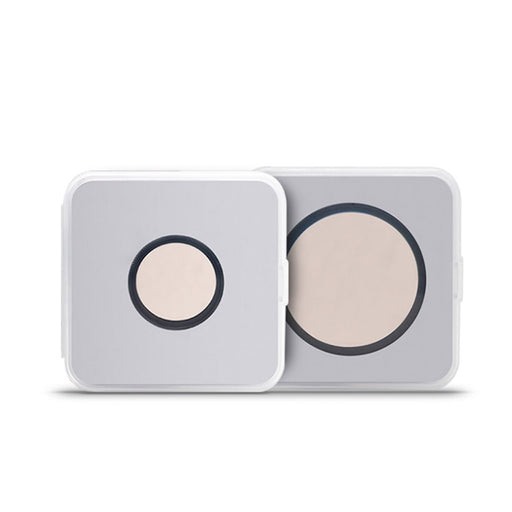
ZWO Duo-Band Filter
Options available
7 variants in stock
Passes H-Alpha (15nm) and OIII (35nm) Wavelengths Designed for One-Shot Color (OSC) Cameras 1.25" Threaded Cell Over 80% Ha & 90% OIII Transmi...
View full details
Original price
CA$139.00
-
Original price
CA$239.00
Original price
CA$139.00
-
CA$239.00
CA$139.00
-
CA$239.00
Current price
CA$139.00
Original price
CA$517.00
-
Original price
CA$979.00
Original price
CA$517.00
-
CA$979.00
CA$517.00
-
CA$979.00
Current price
CA$517.00
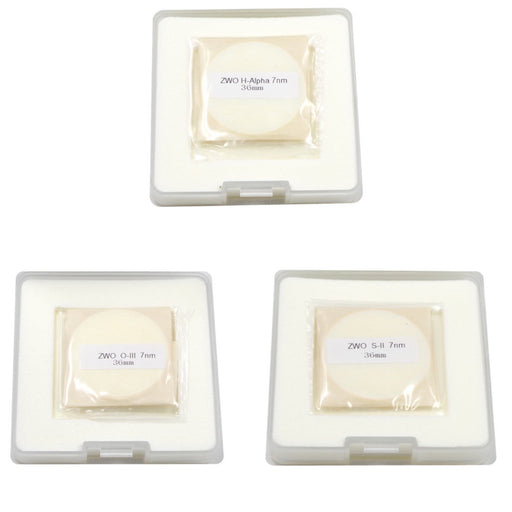
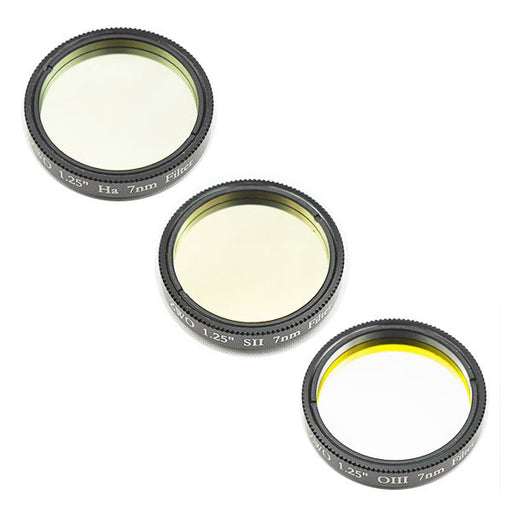
ZWO Narrowband Filter Set - 7nm H-alpha, OIII & SII
Options available
1 variants in stock
Includes 1.25" H-alpha, OIII, and SII filters 7nm bandpass for high-contrast imaging Ideal for creating "Hubble Palette" images Fine-optically pol...
View full details
Original price
CA$517.00
-
Original price
CA$979.00
Original price
CA$517.00
-
CA$979.00
CA$517.00
-
CA$979.00
Current price
CA$517.00
Original price
CA$181.00
-
Original price
CA$349.00
Original price
CA$181.00
-
CA$349.00
CA$181.00
-
CA$349.00
Current price
CA$181.00
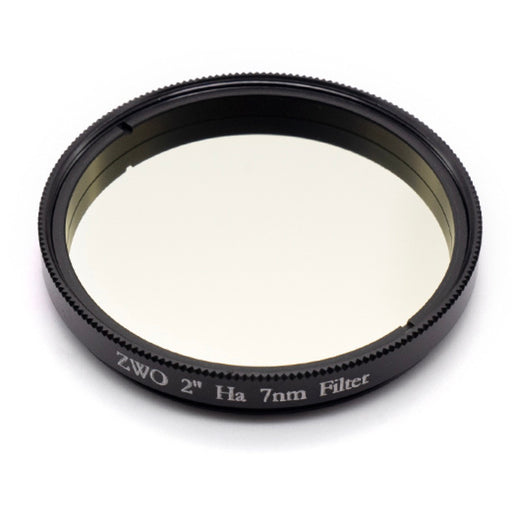
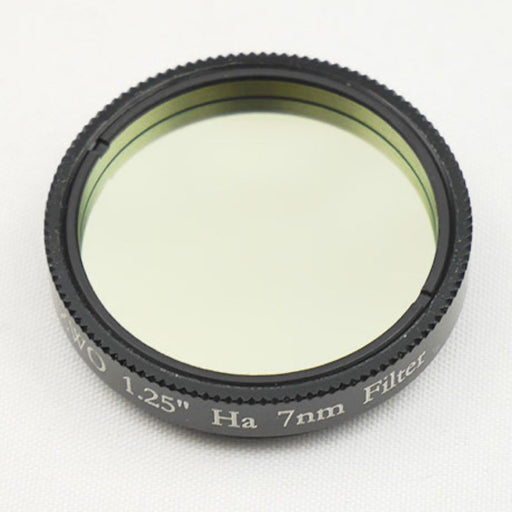
ZWO Narrowband H-alpha Filter - 7nm
Options available
Isolates Hydrogen-Alpha light at a 7nm bandpass Standard 1.25" threaded metal cell Blocks light pollution and moonlight for extreme contrast Multi...
View full details
Original price
CA$181.00
-
Original price
CA$349.00
Original price
CA$181.00
-
CA$349.00
CA$181.00
-
CA$349.00
Current price
CA$181.00
Original price
CA$181.00
-
Original price
CA$349.00
Original price
CA$181.00
-
CA$349.00
CA$181.00
-
CA$349.00
Current price
CA$181.00
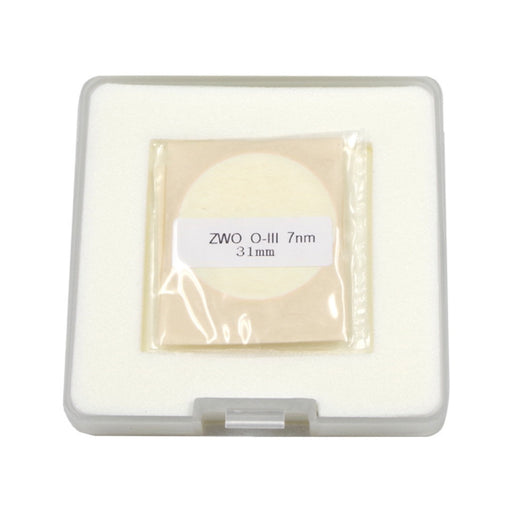
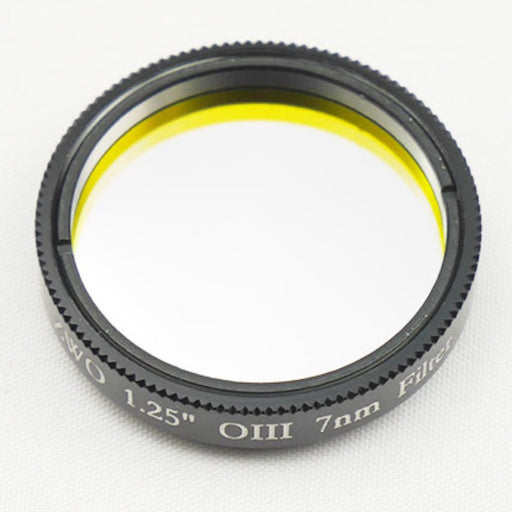
ZWO Narrowband OIII Filter - 7nm
Options available
2 variants in stock
7nm Bandpass at OIII Emission Line Isolates Planetary Nebulae and Supernova Remnants Standard 1.25" Threaded Filter Cell 1/4 Wave Optical Substrat...
View full details
Original price
CA$181.00
-
Original price
CA$349.00
Original price
CA$181.00
-
CA$349.00
CA$181.00
-
CA$349.00
Current price
CA$181.00
Original price
CA$181.00
-
Original price
CA$349.00
Original price
CA$181.00
-
CA$349.00
CA$181.00
-
CA$349.00
Current price
CA$181.00
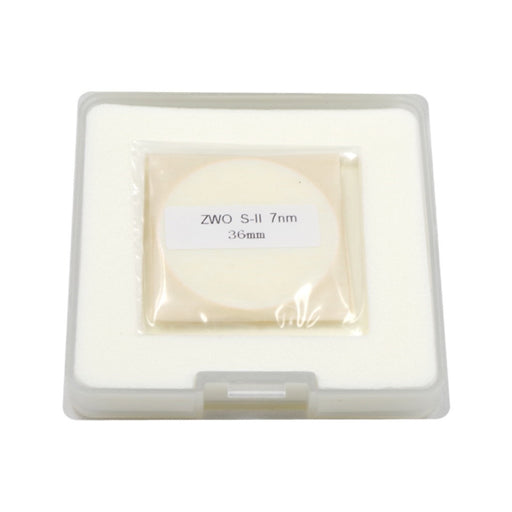
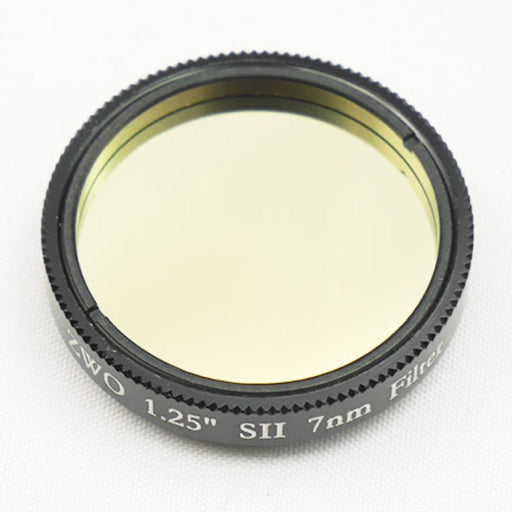
ZWO Narrowband SII Filter - 7nm
Options available
2 variants in stock
Isolates the 672nm Sulfur-II emission line 7nm bandpass for high-contrast imaging Standard 1.25" threaded metal cell 1/4 wave polished substrate w...
View full details
Original price
CA$181.00
-
Original price
CA$349.00
Original price
CA$181.00
-
CA$349.00
CA$181.00
-
CA$349.00
Current price
CA$181.00