How does the 11 lb capacity of the ZWO EAFN benefit imaging with an SCT?
Schmidt-Cassegrain telescopes often require moving a heavy primary mirror for focusing. The ZWO EAFN's 11 lb (5kg) payload capacity provides ample torque to move the mirror assembly smoothly and without motor strain, even with a heavy camera, filter wheel, and focal reducer attached. This prevents mirror shift and ensures autofocus routines are consistent.
What software do I need to use the ZWO EAFN's autofocus?
The ZWO EAFN integrates seamlessly with ZWO's own ASIAIR devices. For PC or Mac-based control, it is fully compatible with any software that supports the ASCOM (Windows) or INDI (Mac/Linux) platforms, including popular applications like N.I.N.A., Sequence Generator Pro, and KStars/Ekos.
Can I use the ZWO EAFN for visual observing without a computer?
Yes. While its primary function is for automated imaging, the ZWO EAFN features physical In/Out buttons on the device itself for manual control. For more ergonomic control away from the telescope, you can also connect the optional ZWO Hand Controller (sold separately).
Will the ZWO EAFN work with my William Optics refractor during a multi-night run of the Andromeda Galaxy (M31)?
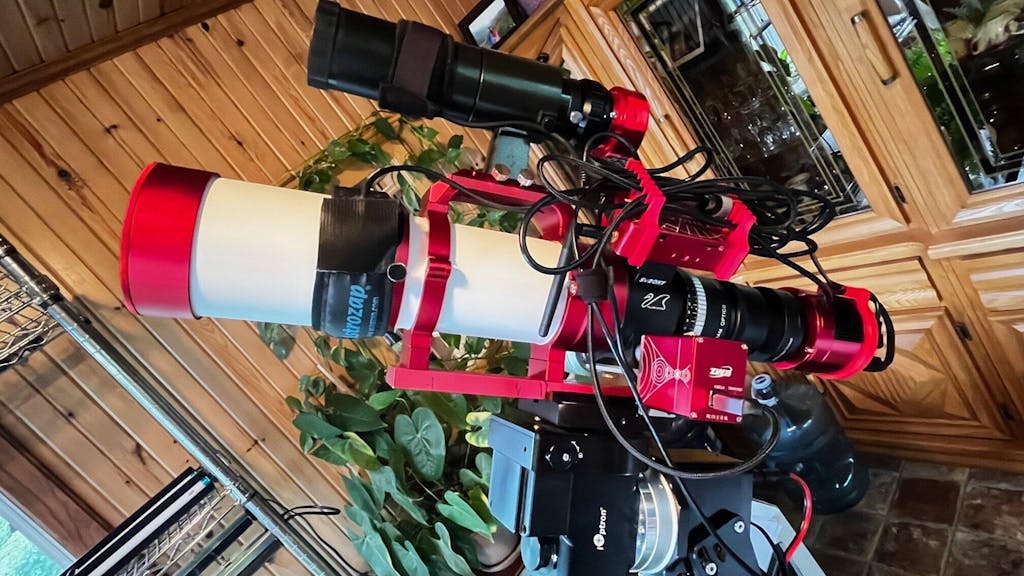
Absolutely. The ZWO EAFN is compatible with most William Optics focusers. For a multi-night project on M31, you can program your imaging software (like N.I.N.A. or ASIAIR) to automatically re-run the autofocus routine at set intervals, after every filter change, or after a meridian flip, ensuring your focus remains sharp across multiple nights.
Does the ZWO EAFN require a separate 12V power supply?
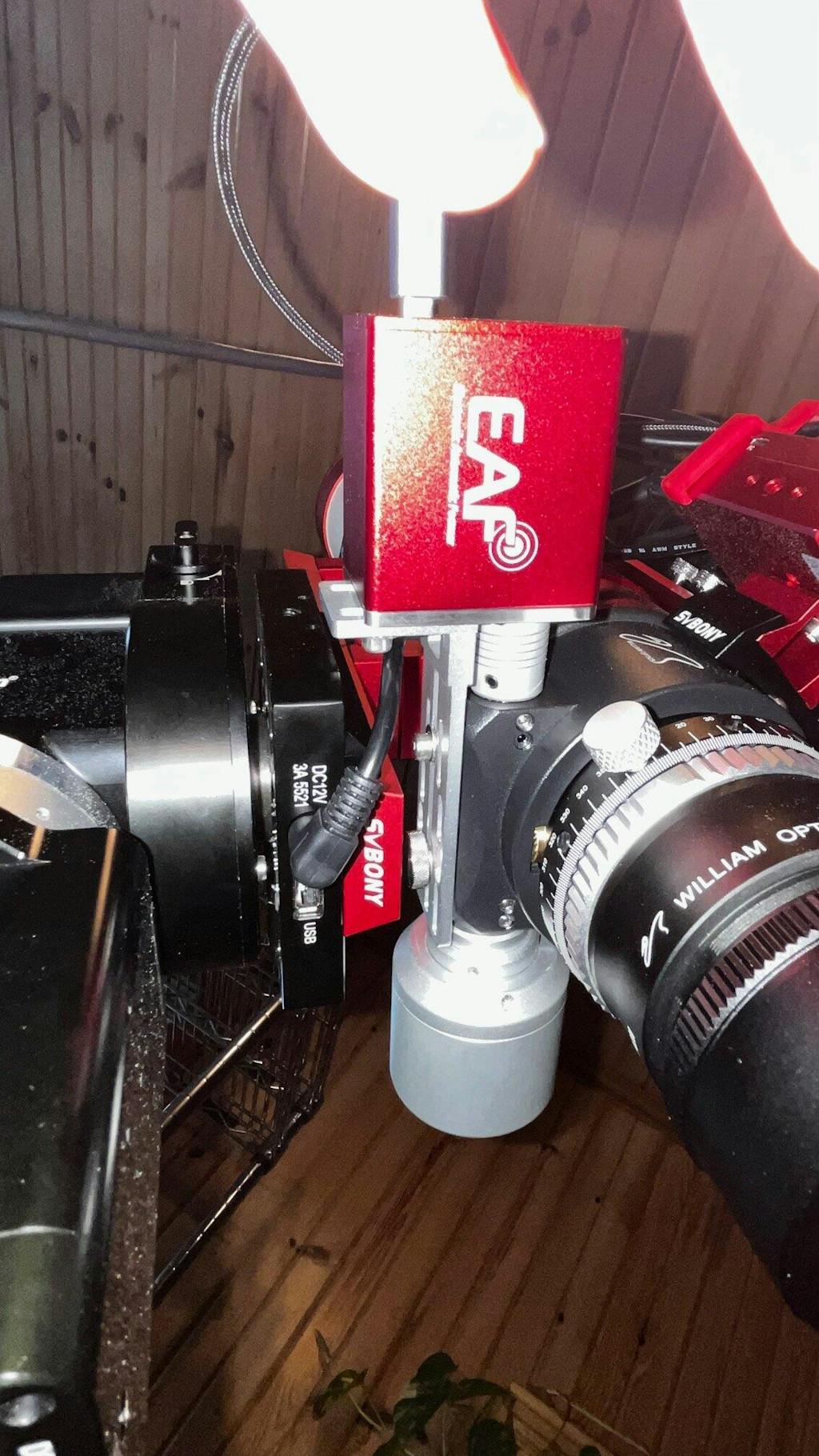
No, the ZWO EAFN simplifies cable management by drawing both power and data through its single USB-C port when connected to a computer or ASIAIR. The older ZWO EAF model required a separate 12V power input in addition to its USB data cable.
What is the main advantage of the ZWO EAFN over the older ZWO EAF model?
The two main advantages are payload and connectivity. The ZWO EAFN supports an 11 lb payload, double that of the original EAF, making it suitable for much heavier imaging trains. It also uses a single USB-C cable for both power and data, whereas the original required two separate cables (USB-B and a 12V DC barrel jack).