
Filters
A filter decides what light reaches your sensor or your eye, and under Canadian suburban skies that decision often matters more than aperture. The right narrowband filter can make a nebula imageable from a driveway that visually shows almost nothing. David Astro carries filters in Canada — narrowband, LRGB, light pollution, planetary, solar and scientific — in 1.25", 2", 31 mm, 36 mm and unmounted formats, shipped from Canadian stock.
Filter selection is where our team spends a lot of time, because bandwidth, f-ratio and sensor size interact in ways that are not obvious from a product page. Tell us your telescope and camera and we will recommend a set that works together.
Original price
CA$401.00
-
Original price
CA$605.00
Original price
CA$401.00
-
CA$605.00
CA$401.00
-
CA$605.00
Current price
CA$401.00
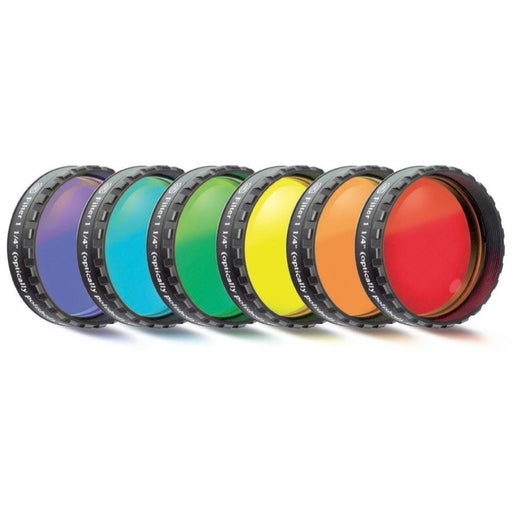
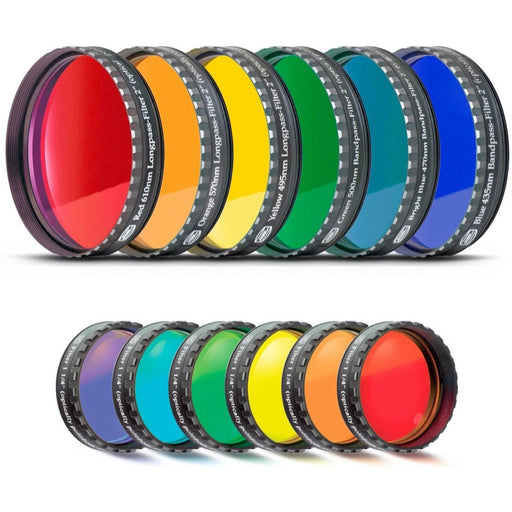
Baader Color Filter Set - 6 Colors
Options available
Set of 6 essential color filters for lunar and planetary observing Planeoptically polished to maintain image sharpness at high magnification Doubl...
View full details
Original price
CA$401.00
-
Original price
CA$605.00
Original price
CA$401.00
-
CA$605.00
CA$401.00
-
CA$605.00
Current price
CA$401.00
Original price
CA$130.00
-
Original price
CA$209.00
Original price
CA$130.00
-
CA$209.00
CA$130.00
-
CA$209.00
Current price
CA$130.00
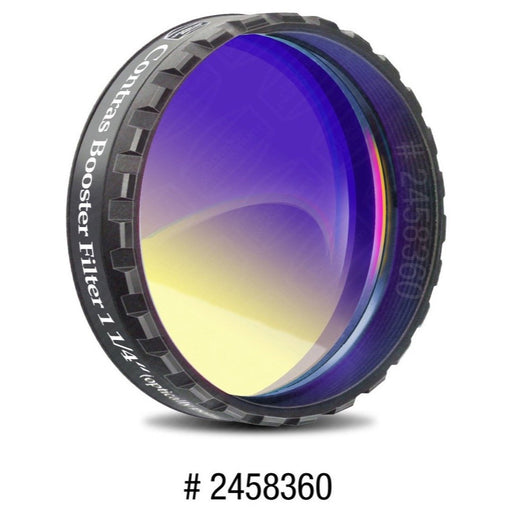
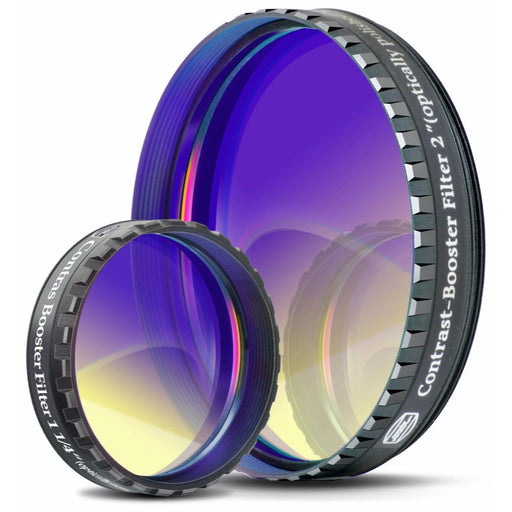
Baader Contrast-Booster Filter
Options available
2 variants in stock
Enhances contrast for lunar and planetary observing Significantly darkens skyglow background Reveals subtle details in Jupiter's cloud belts and M...
View full details
Original price
CA$130.00
-
Original price
CA$209.00
Original price
CA$130.00
-
CA$209.00
CA$130.00
-
CA$209.00
Current price
CA$130.00
Original price
CA$134.00
-
Original price
CA$194.00
Original price
CA$134.00
-
CA$194.00
CA$134.00
-
CA$194.00
Current price
CA$134.00
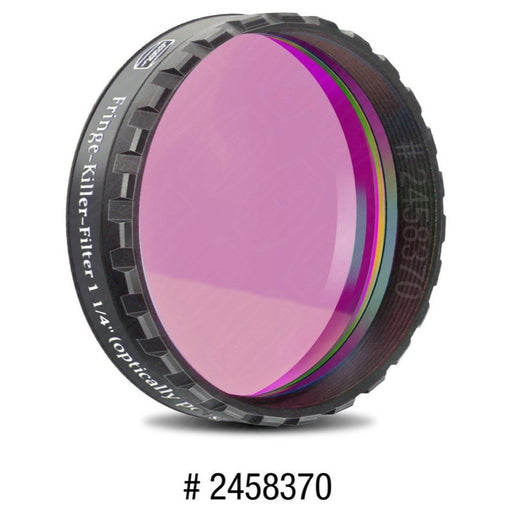
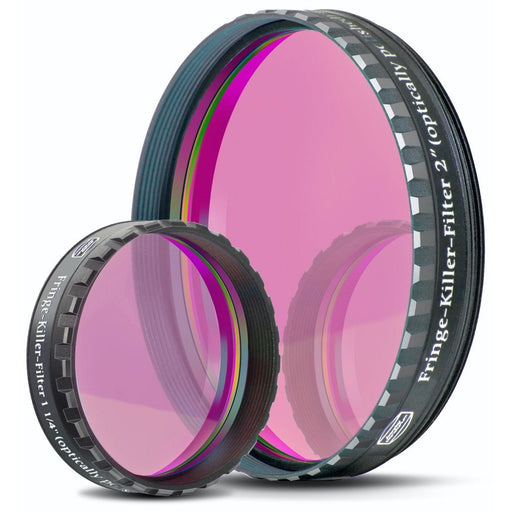
Baader Fringe-Killer Filter
Options available
2 variants in stock
Reduces violet/blue color fringing in achromatic refractors Blocks unfocused near-infrared (NIR) light for sharper digital images Maintains a natu...
View full details
Original price
CA$134.00
-
Original price
CA$194.00
Original price
CA$134.00
-
CA$194.00
CA$134.00
-
CA$194.00
Current price
CA$134.00

Original price
CA$153.00
-
Original price
CA$370.00
Original price
CA$153.00
-
CA$370.00
CA$153.00
-
CA$370.00
Current price
CA$153.00
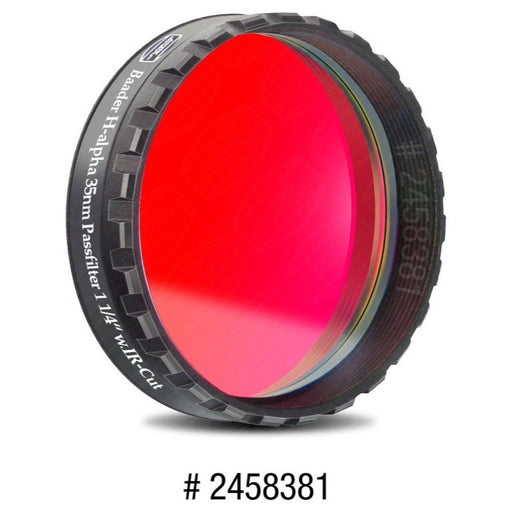
Baader H-Alpha CCD Filter -35nm
Options available
Premium grade H-alpha interline chip CCD-filter for fast optical systems f/10 to f/2.8 IR-blocked NO halos, NO reflections, NO ghosting Non-aging ...
View full details
Original price
CA$153.00
-
Original price
CA$370.00
Original price
CA$153.00
-
CA$370.00
CA$153.00
-
CA$370.00
Current price
CA$153.00
Original price
CA$75.00
-
Original price
CA$110.00
Original price
CA$75.00
-
CA$110.00
CA$75.00
-
CA$110.00
Current price
CA$75.00
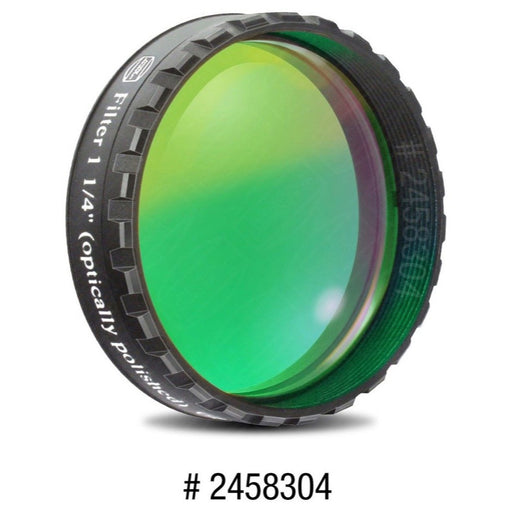
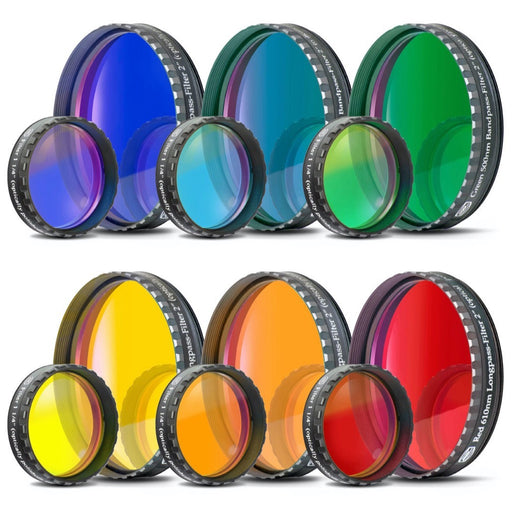
Baader Individual Color Filter - Dark Blue, Bright Blue, Green, Yellow, Red, Orange
Options available
Available in 6 distinct colors for targeted planetary observation Planeoptically polished to 30 arcseconds for zero image degradation 7-layer anti...
View full details
Original price
CA$75.00
-
Original price
CA$110.00
Original price
CA$75.00
-
CA$110.00
CA$75.00
-
CA$110.00
Current price
CA$75.00
Original price
CA$132.00
-
Original price
CA$209.00
Original price
CA$132.00
-
CA$209.00
CA$132.00
-
CA$209.00
Current price
CA$132.00
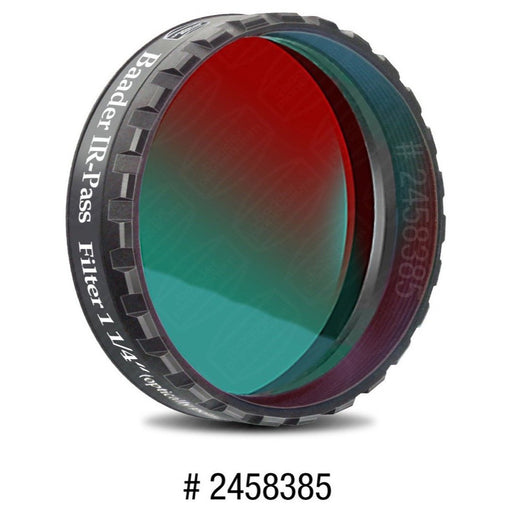
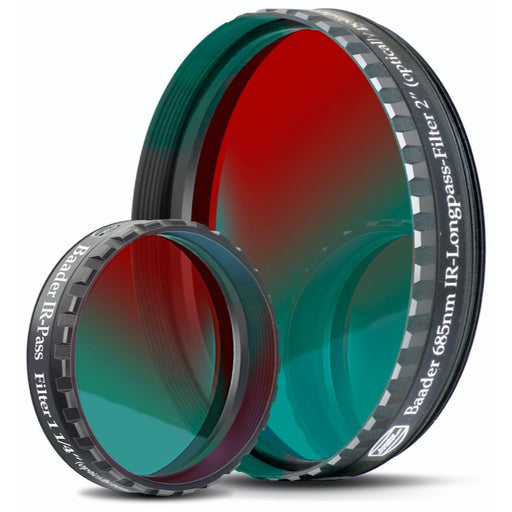
Baader IR-Pass Filter 685nm
Options available
1 variants in stock
685nm Infrared (IR) Pass Filter Transmits deep-red light starting from 670nm Dramatically reduces the image-blurring effects of atmospheric seeing...
View full details
Original price
CA$132.00
-
Original price
CA$209.00
Original price
CA$132.00
-
CA$209.00
CA$132.00
-
CA$209.00
Current price
CA$132.00
Original price
CA$436.00
-
Original price
CA$1,216.00
Original price
CA$436.00
-
CA$1,216.00
CA$436.00
-
CA$1,216.00
Current price
CA$436.00
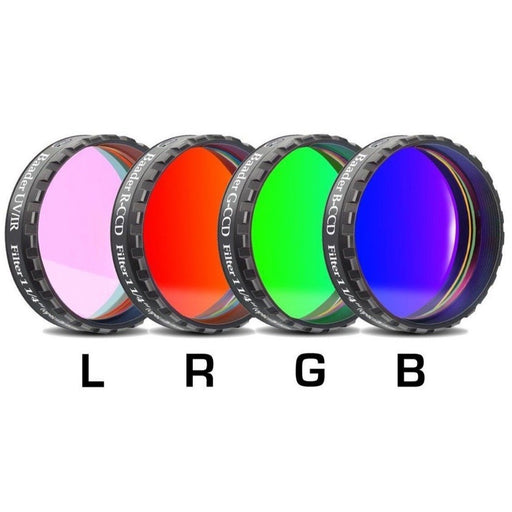
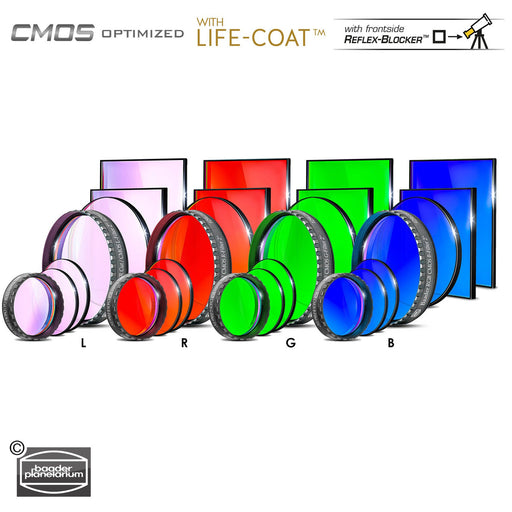
Baader LRGB Filter Set - CMOS-Optimized
Options available
Designed specifically to eliminate reflections and halos with modern CMOS sensors Balanced RGB transmission enables simplified 1:1:1 exposure rati...
View full details
Original price
CA$436.00
-
Original price
CA$1,216.00
Original price
CA$436.00
-
CA$1,216.00
CA$436.00
-
CA$1,216.00
Current price
CA$436.00
Original price
CA$348.00
-
Original price
CA$348.00
Original price
CA$348.00
CA$348.00
-
CA$348.00
Current price
CA$348.00
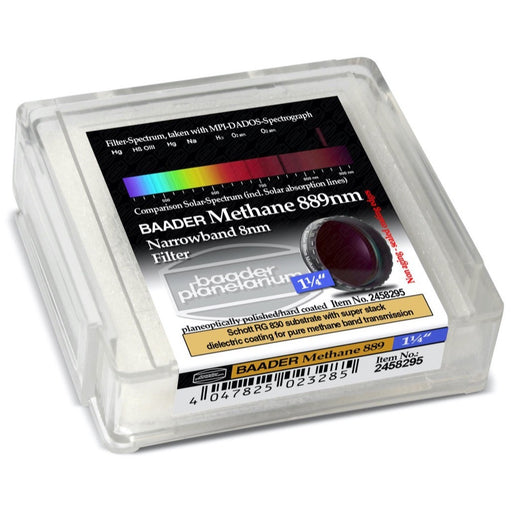
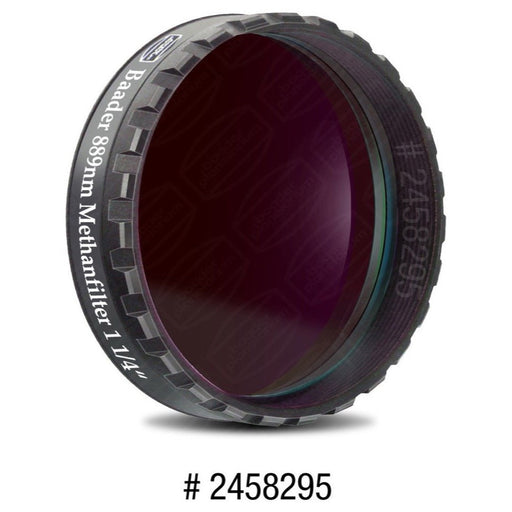
Baader Methane Filter 889nm - 8nm 1.25"
BAA-2458295
889nm Center Wavelength 8nm Bandwidth (FWHM) Targets Methane Absorption Band High-Contrast Planetary Imaging 1.25" Filter Format Description FA...
View full details
Original price
CA$348.00
-
Original price
CA$348.00
Original price
CA$348.00
CA$348.00
-
CA$348.00
Current price
CA$348.00
Original price
CA$130.00
-
Original price
CA$213.00
Original price
CA$130.00
-
CA$213.00
CA$130.00
-
CA$213.00
Current price
CA$130.00
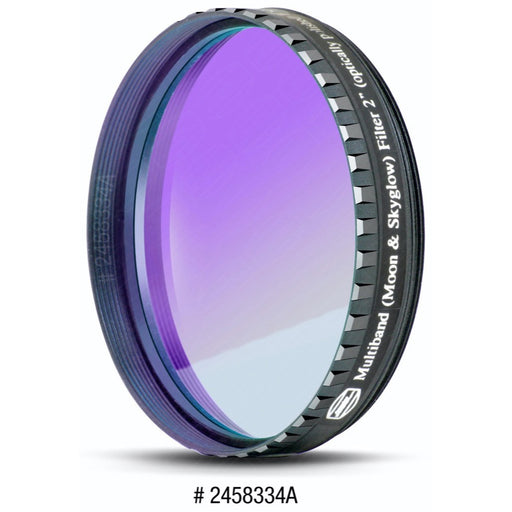
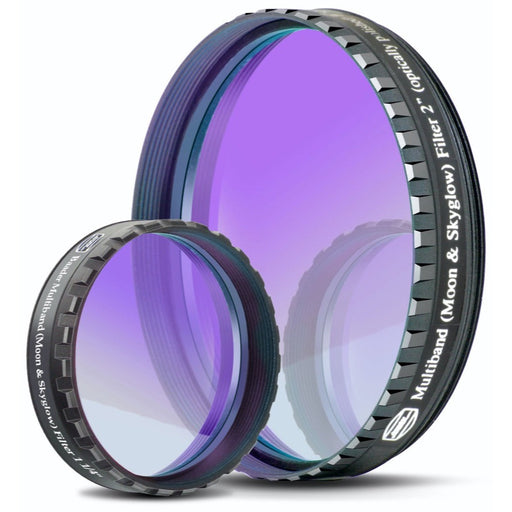
Baader Moon & Skyglow Filter
Options available
Enhances lunar and planetary contrast with a Neodymium glass substrate Suppresses skyglow from artificial lighting without aggressive color shifti...
View full details
Original price
CA$130.00
-
Original price
CA$213.00
Original price
CA$130.00
-
CA$213.00
CA$130.00
-
CA$213.00
Current price
CA$130.00
Original price
CA$70.00
-
Original price
CA$118.00
Original price
CA$70.00
-
CA$118.00
CA$70.00
-
CA$118.00
Current price
CA$70.00
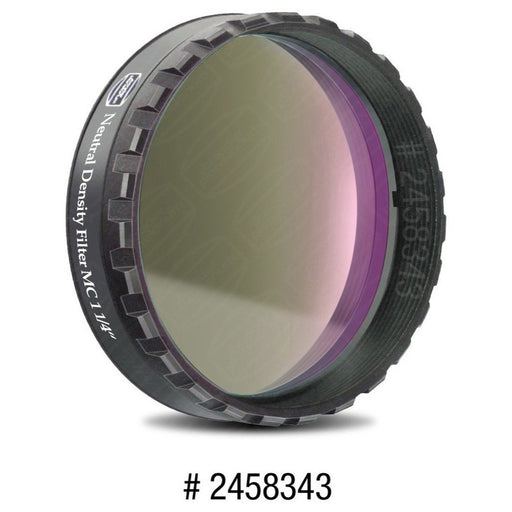
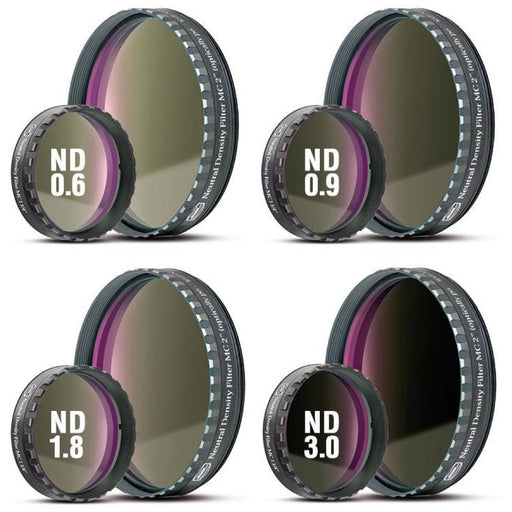
Baader Neutral Density Filter - ND 0.6/0.9/1.8/3.0
Options available
6 variants in stock
Four Neutral Density Options: ND 0.6, ND 0.9, ND 1.8, and ND 3.0 Two Standard Sizes: 1.25" and 2" round mounted cells Coatings: Baader Planetarium...
View full details
Original price
CA$70.00
-
Original price
CA$118.00
Original price
CA$70.00
-
CA$118.00
CA$70.00
-
CA$118.00
Current price
CA$70.00
Original price
CA$216.00
-
Original price
CA$1,005.00
Original price
CA$216.00
-
CA$1,005.00
CA$216.00
-
CA$1,005.00
Current price
CA$216.00
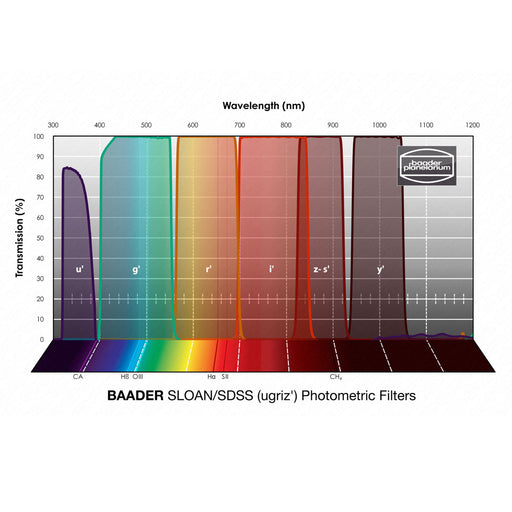
Baader Photometric SLOAN/SDSS g' Individual Filter
Options available
SLOAN/SDSS g' Bandpass: Conforms to the modern standard for astronomical photometry. Photometric Grade: Produces scientifically valid data for r...
View full details
Original price
CA$216.00
-
Original price
CA$1,005.00
Original price
CA$216.00
-
CA$1,005.00
CA$216.00
-
CA$1,005.00
Current price
CA$216.00
Original price
CA$212.00
-
Original price
CA$1,011.00
Original price
CA$212.00
-
CA$1,011.00
CA$212.00
-
CA$1,011.00
Current price
CA$212.00
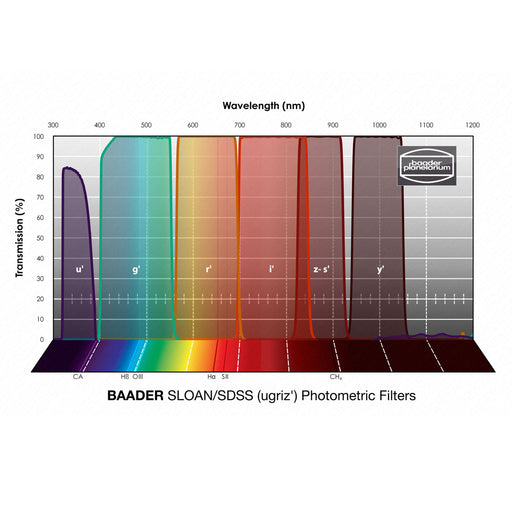
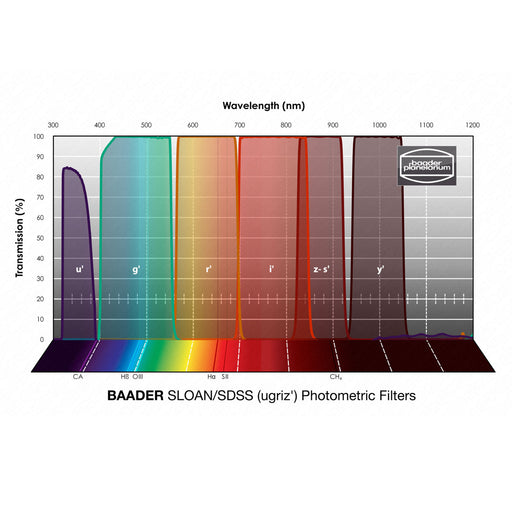
Baader Photometric SLOAN/SDSS i' Individual Filter
Options available
SLOAN/SDSS i' Standard: Conforms to the standardized Sloan Digital Sky Survey photometric system for consistent, comparable scientific data. Pho...
View full details
Original price
CA$212.00
-
Original price
CA$1,011.00
Original price
CA$212.00
-
CA$1,011.00
CA$212.00
-
CA$1,011.00
Current price
CA$212.00
Original price
CA$217.00
-
Original price
CA$1,008.00
Original price
CA$217.00
-
CA$1,008.00
CA$217.00
-
CA$1,008.00
Current price
CA$217.00
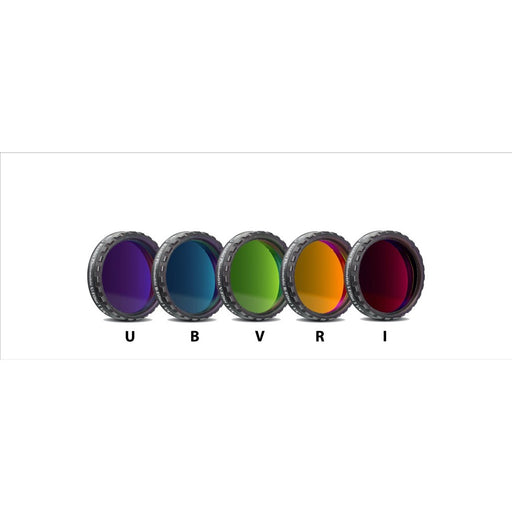
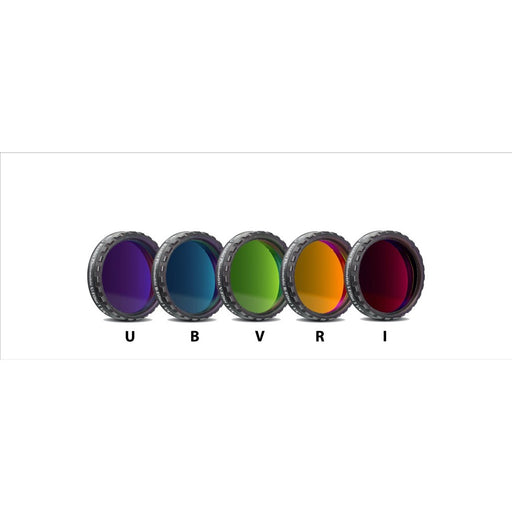
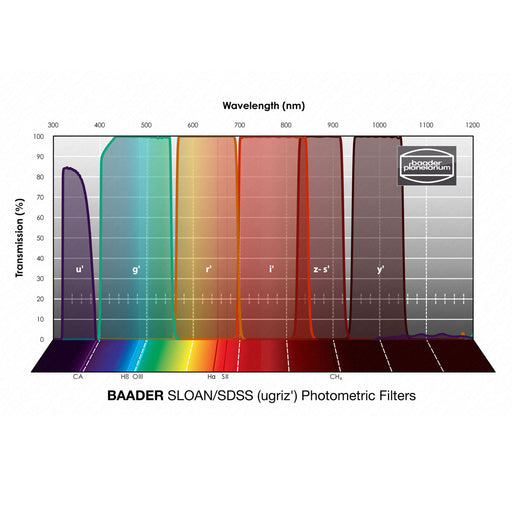
Baader Photometric SLOAN/SDSS r' Individual Filter
Options available
Conforms to the scientific SLOAN/SDSS r' photometric system Engineered for professional and amateur astronomical research Available in 8 formats, ...
View full details
Original price
CA$217.00
-
Original price
CA$1,008.00
Original price
CA$217.00
-
CA$1,008.00
CA$217.00
-
CA$1,008.00
Current price
CA$217.00
Original price
CA$225.00
-
Original price
CA$1,012.00
Original price
CA$225.00
-
CA$1,012.00
CA$225.00
-
CA$1,012.00
Current price
CA$225.00
Baader Photometric SLOAN/SDSS u' Individual Filter
Options available
Standardized SLOAN/SDSS u'-band photometric filter Isolates the near-ultraviolet (UV) spectrum for scientific analysis Designed for repeatable, hi...
View full details
Original price
CA$225.00
-
Original price
CA$1,012.00
Original price
CA$225.00
-
CA$1,012.00
CA$225.00
-
CA$1,012.00
Current price
CA$225.00
Original price
CA$1,158.00
-
Original price
CA$5,751.00
Original price
CA$1,158.00
-
CA$5,751.00
CA$1,158.00
-
CA$5,751.00
Current price
CA$1,158.00
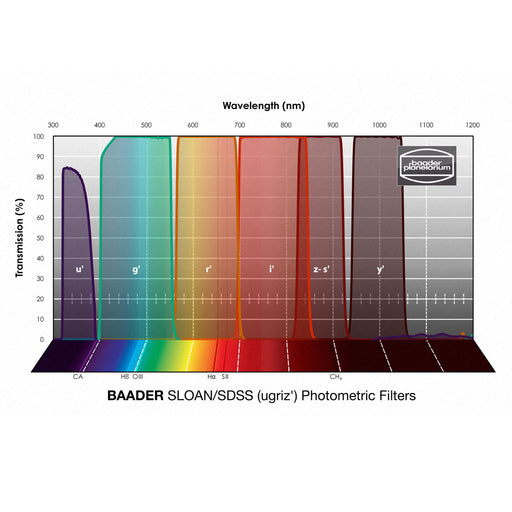
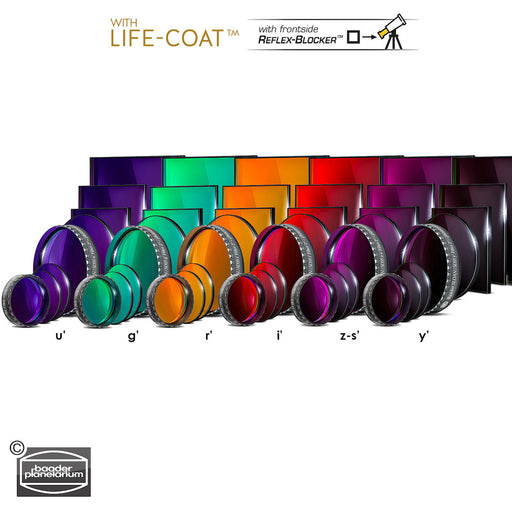
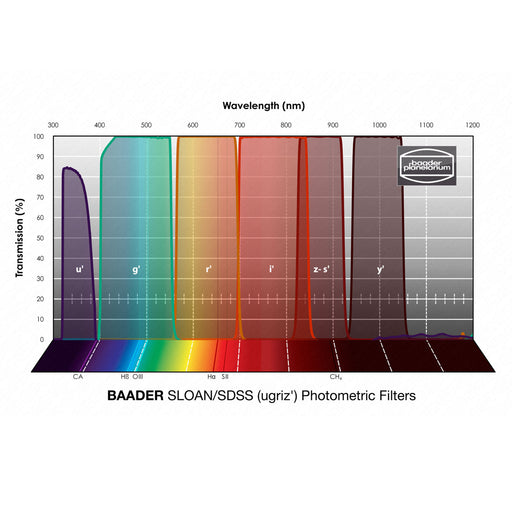
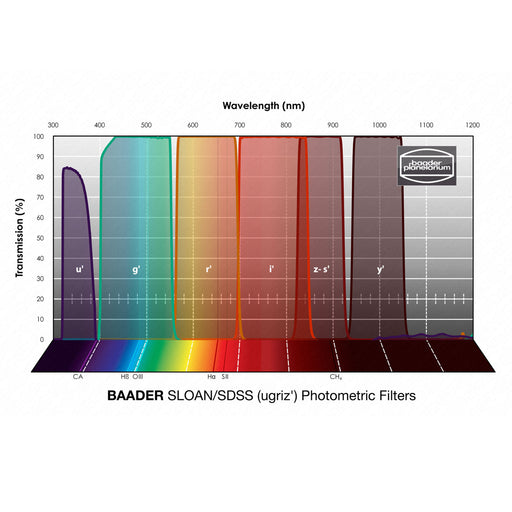
Baader Photometric SLOAN/SDSS ugriz' Filter Set
Options available
Conforms to the Sloan Digital Sky Survey (SDSS) photometric system Includes five filters: u' (ultraviolet), g' (green), r' (red), i' (infrared), a...
View full details
Original price
CA$1,158.00
-
Original price
CA$5,751.00
Original price
CA$1,158.00
-
CA$5,751.00
CA$1,158.00
-
CA$5,751.00
Current price
CA$1,158.00
Original price
CA$206.00
-
Original price
CA$1,017.00
Original price
CA$206.00
-
CA$1,017.00
CA$206.00
-
CA$1,017.00
Current price
CA$206.00
Baader Photometric SLOAN/SDSS y' Individual Filter
Options available
Conforms to the SLOAN/SDSS y' photometric standard Designed for scientific magnitude measurements Ideal for variable star and exoplanet transit re...
View full details
Original price
CA$206.00
-
Original price
CA$1,017.00
Original price
CA$206.00
-
CA$1,017.00
CA$206.00
-
CA$1,017.00
Current price
CA$206.00
Original price
CA$204.00
-
Original price
CA$1,014.00
Original price
CA$204.00
-
CA$1,014.00
CA$204.00
-
CA$1,014.00
Current price
CA$204.00
Baader Photometric SLOAN/SDSS z-s' Individual Filter
Options available
Photometric filter for the SLOAN/SDSS z-s' bandpass Conforms to the Sloan Digital Sky Survey photometric system standard Enables calibrated, scien...
View full details
Original price
CA$204.00
-
Original price
CA$1,014.00
Original price
CA$204.00
-
CA$1,014.00
CA$204.00
-
CA$1,014.00
Current price
CA$204.00
Original price
CA$1,018.00
-
Original price
CA$4,776.00
Original price
CA$1,018.00
-
CA$4,776.00
CA$1,018.00
-
CA$4,776.00
Current price
CA$1,018.00
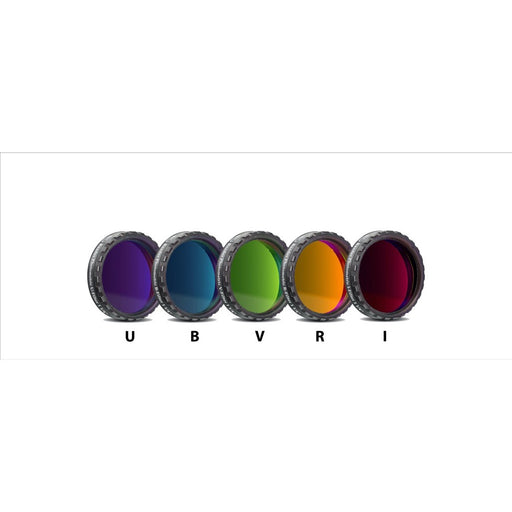
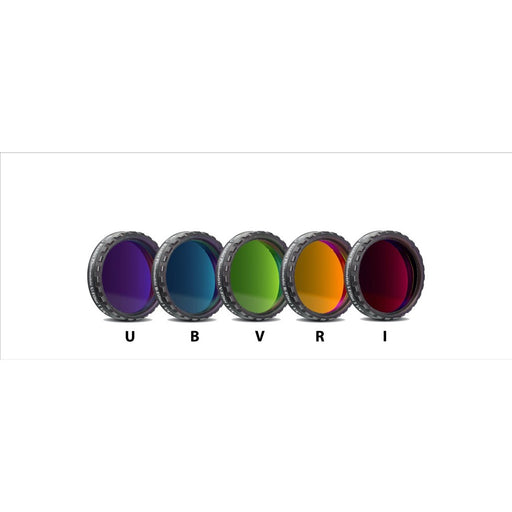
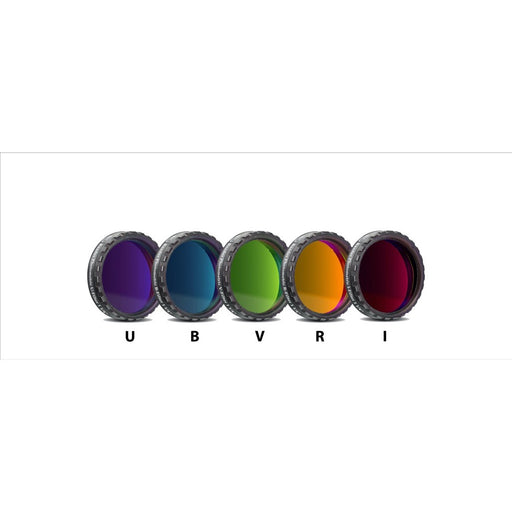
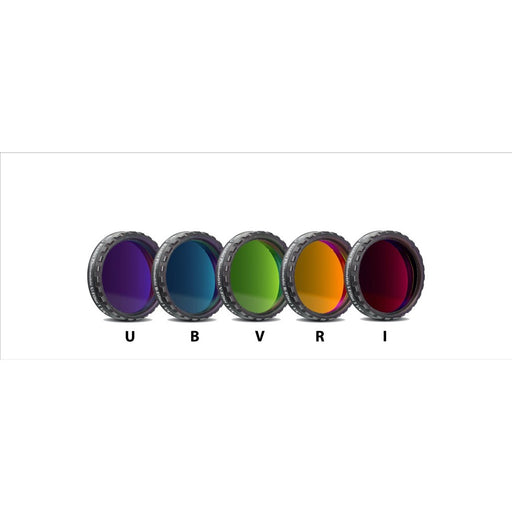
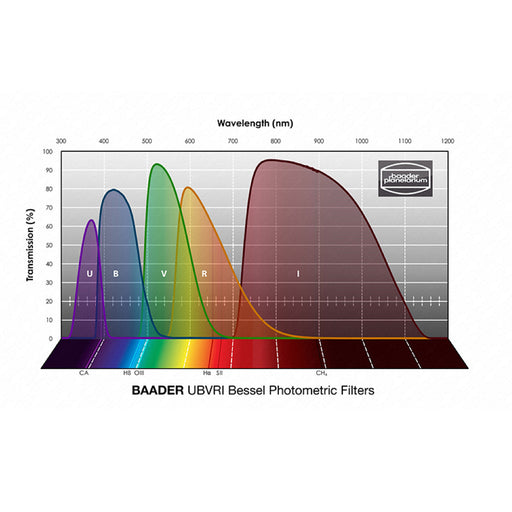
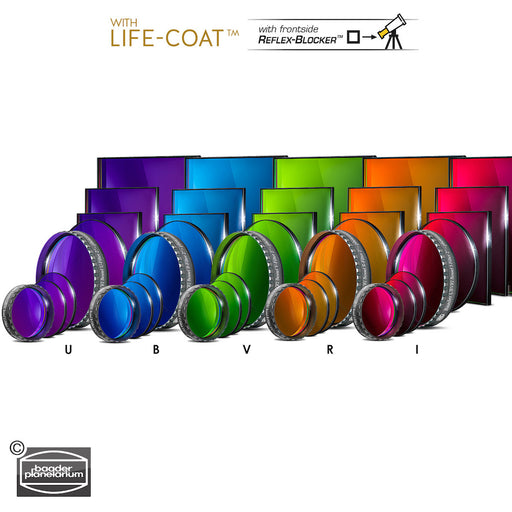
Baader Photometric UBVRI Filter Set
Options available
Standardized UBVRI Bessel passbands for scientific photometry Enables measurement of variable stars, asteroids, and exoplanet transits Precision p...
View full details
Original price
CA$1,018.00
-
Original price
CA$4,776.00
Original price
CA$1,018.00
-
CA$4,776.00
CA$1,018.00
-
CA$4,776.00
Current price
CA$1,018.00
Original price
CA$204.00
-
Original price
CA$982.00
Original price
CA$204.00
-
CA$982.00
CA$204.00
-
CA$982.00
Current price
CA$204.00
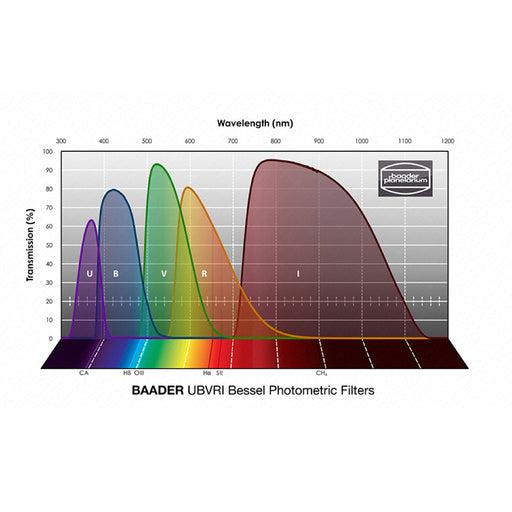
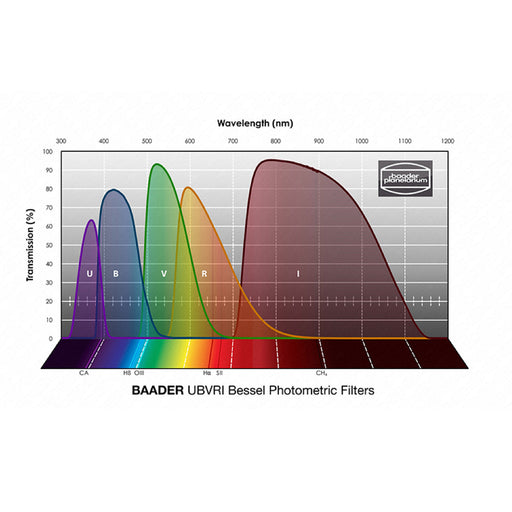
Baader Photometric UBVRI-B Individual Filter
Options available
Conforms to the standardized Johnson-Cousins/Bessel B-band passband Designed for research-grade scientific photometry Advanced anti-reflection and...
View full details
Original price
CA$204.00
-
Original price
CA$982.00
Original price
CA$204.00
-
CA$982.00
CA$204.00
-
CA$982.00
Current price
CA$204.00
Original price
CA$231.00
-
Original price
CA$1,041.00
Original price
CA$231.00
-
CA$1,041.00
CA$231.00
-
CA$1,041.00
Current price
CA$231.00
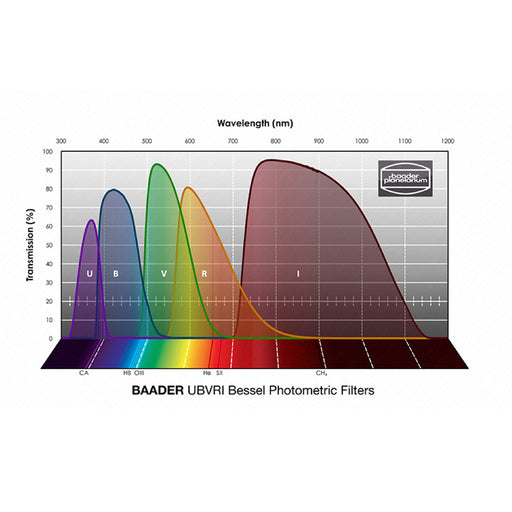
Baader Photometric UBVRI-I Individual Filter
Options available
Conforms to the Johnson-Cousins UBVRI Photometric System Optimized for the Bessel I-Band (Infrared) Homofocal Design for Parfocal Operation with o...
View full details
Original price
CA$231.00
-
Original price
CA$1,041.00
Original price
CA$231.00
-
CA$1,041.00
CA$231.00
-
CA$1,041.00
Current price
CA$231.00
Original price
CA$203.00
-
Original price
CA$983.00
Original price
CA$203.00
-
CA$983.00
CA$203.00
-
CA$983.00
Current price
CA$203.00
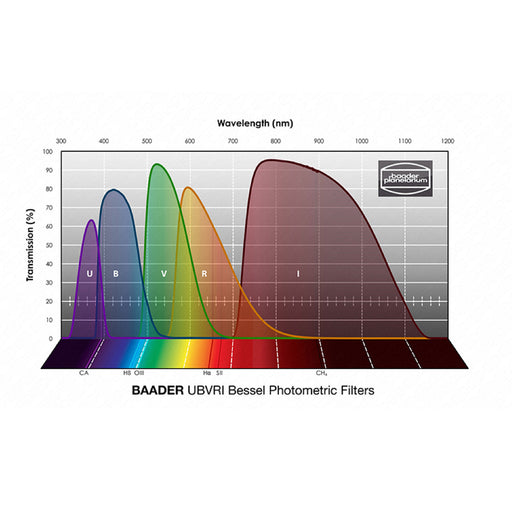
Baader Photometric UBVRI-R Individual Filter
Options available
Conforms to the Johnson-Cousins-Bessel R-Band Photometric Standard Engineered for Scientific Photometry and Data Collection Plane-Parallel Substra...
View full details
Original price
CA$203.00
-
Original price
CA$983.00
Original price
CA$203.00
-
CA$983.00
CA$203.00
-
CA$983.00
Current price
CA$203.00
Original price
CA$231.00
-
Original price
CA$1,056.00
Original price
CA$231.00
-
CA$1,056.00
CA$231.00
-
CA$1,056.00
Current price
CA$231.00
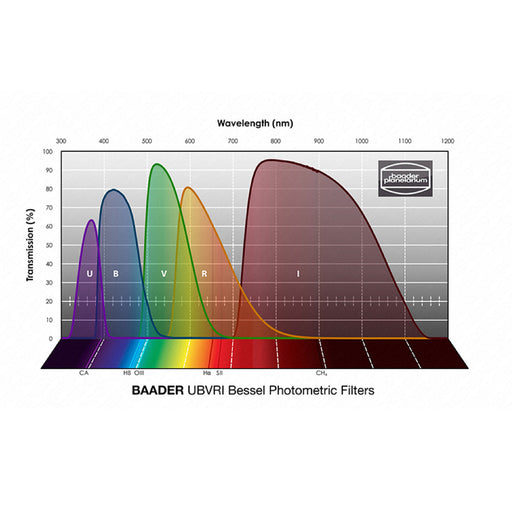
Baader Photometric UBVRI-U Individual Filter
Options available
1 variants in stock
Conforms to the Johnson-Cousins/Bessel U-Band Photometric Standard Designed for Scientific Photometry of Variable Stars and Stellar Classification...
View full details
Original price
CA$231.00
-
Original price
CA$1,056.00
Original price
CA$231.00
-
CA$1,056.00
CA$231.00
-
CA$1,056.00
Current price
CA$231.00
Original price
CA$206.00
-
Original price
CA$979.00
Original price
CA$206.00
-
CA$979.00
CA$206.00
-
CA$979.00
Current price
CA$206.00
Baader Photometric UBVRI-V Individual Filter
Options available
1 variants in stock
Bessel V-Band Standard: Precisely conforms to the internationally recognized Johnson-Cousins-Bessel V-band for consistent, scientific-grade magni...
View full details
Original price
CA$206.00
-
Original price
CA$979.00
Original price
CA$206.00
-
CA$979.00
CA$206.00
-
CA$979.00
Current price
CA$206.00


Original price
CA$1,130.00
-
Original price
CA$2,457.00
Original price
CA$1,130.00
-
CA$2,457.00
CA$1,130.00
-
CA$2,457.00
Current price
CA$1,130.00
Baader Planetarium 3.5 / 4nm f/3 Ultra-Highspeed Filter-Set – CMOS-optimized (H-alpha / O-III / S-II)
Options available
3.5 / 4nm Ultra-Narrow H-alpha, O-III & S-II Bandpasses Pre-Shifted for Fast f/3 "Ultra-Highspeed" Optical Systems CMOS-Optimized with Anti-Re...
View full details
Original price
CA$1,130.00
-
Original price
CA$2,457.00
Original price
CA$1,130.00
-
CA$2,457.00
CA$1,130.00
-
CA$2,457.00
Current price
CA$1,130.00